
classical
adjective classical
ˈklæsɪkl
Relating to ancient Greek or Latin literature, art or culture.
She studied classical civilizations in university.
classical
ˈklæsɪkl
Loading…
ˈklæsɪkl
Relating to ancient Greek or Latin literature, art or culture.
She studied classical civilizations in university.
ˈklæsɪkl
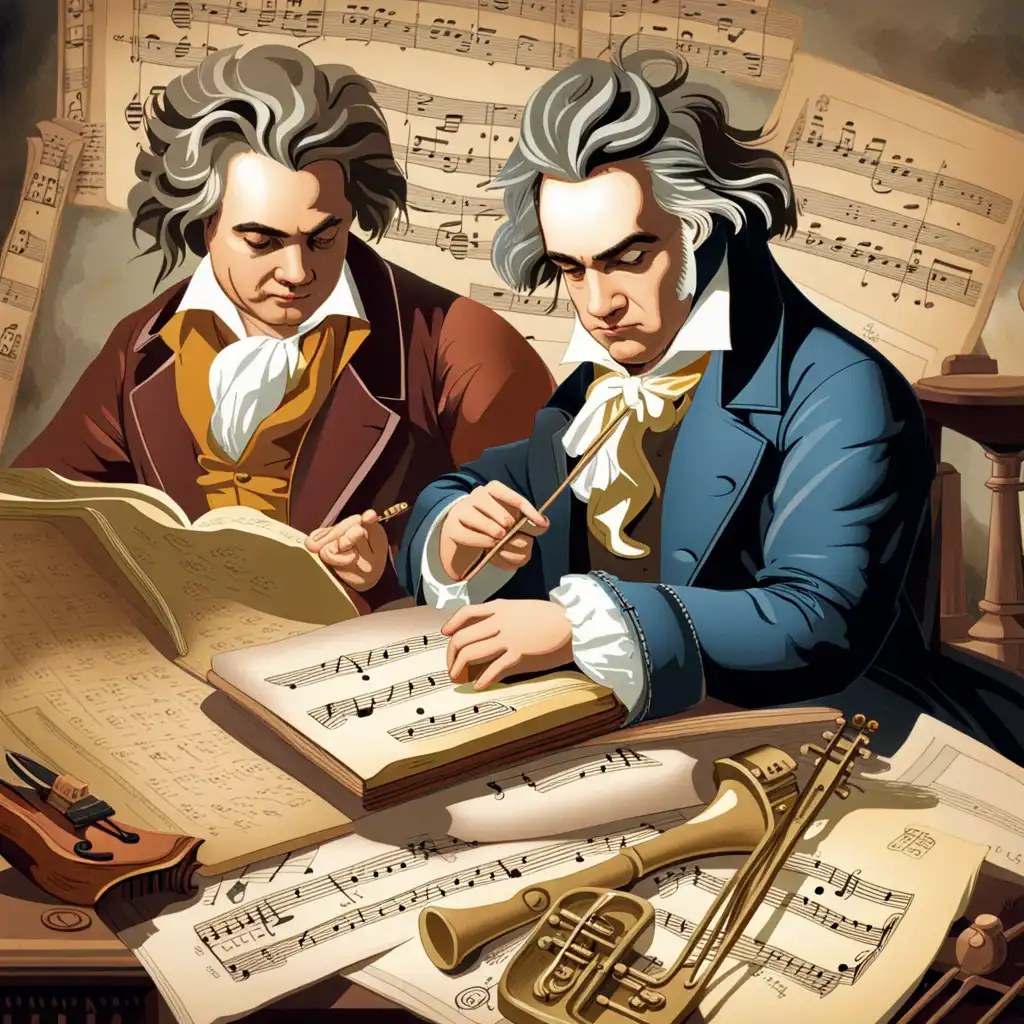
Describing the style of music that is serious or traditional, often instrumental and written by famous composers.
Beethoven and Mozart are classical composers.

ˈklæsɪkl
Typical or accepted as the highest standard, usually measured against things of the same kind.
The classical symptoms of the disease include fever and fatigue.
ˈklæsɪkl
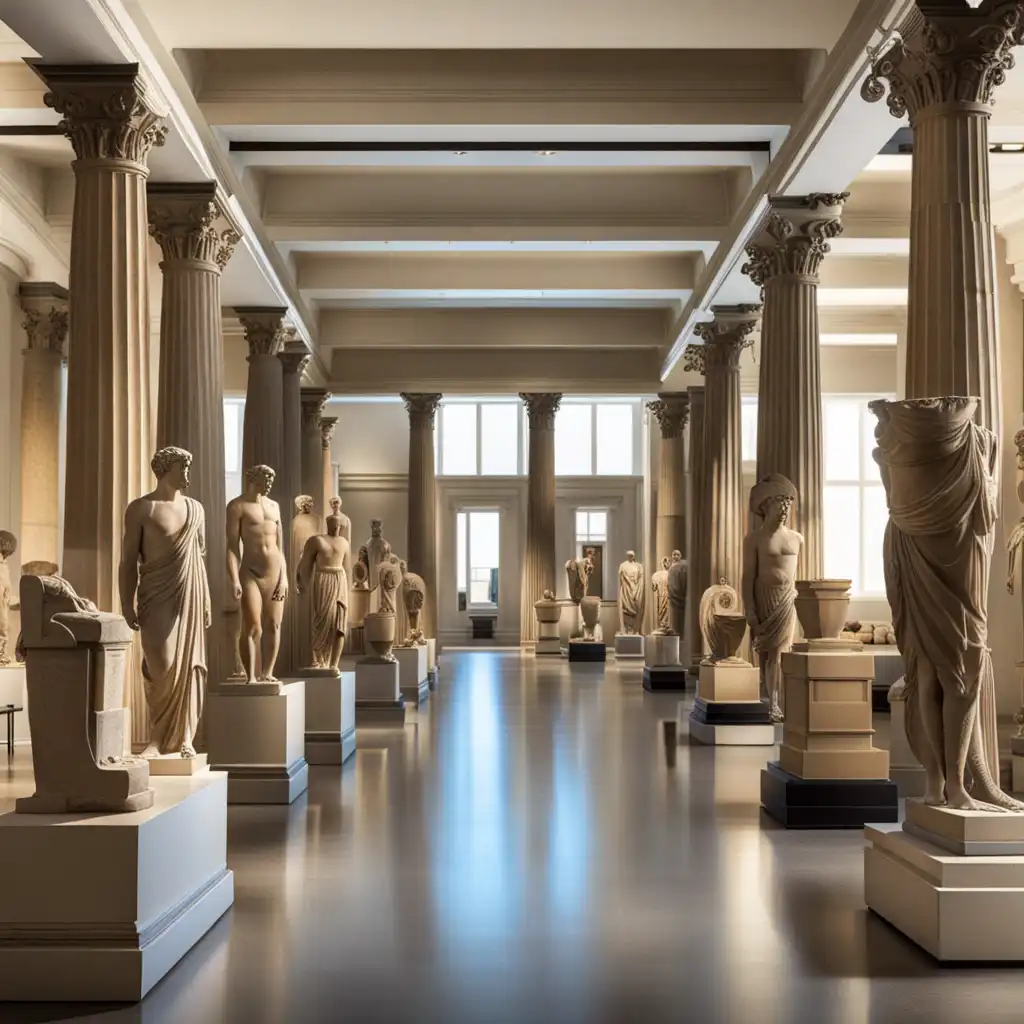
Relating to the principles and styles of ancient Greek and Roman architecture.
The museum has a collection of classical sculptures.

ˈklæsɪkl
Referring to the sciences that describe the nature of the universe, such as physics, before the development of quantum theory.
Her lecture was about classical physics.
Audio could not be loaded. Please try again later.
The word 'classical' is used in different ways depending on the context. In music, it refers to a style of music that was popular a long time ago, like Beethoven or Mozart. For art, it means artwork from ancient Greece or Rome, such as sculpted statues or painted vases. In literature, it refers to books or stories that have been around for a long time and are considered important, like Shakespeare plays. Overall, classical is an adjective that describes something old or traditional that is still considered great today. So, if you hear someone talking about classical music, art or literature, they are referring to something that has been around for a long time and is still popular and appreciated by people.
Ancient refers to something that is very old and belongs to the earliest period of history or human society.
For example, ancient civilizations such as the Egyptians or Greeks.
Ancient can describe artifacts, buildings, or societies that existed a long time ago.
To summarize, ancient refers to something that is very old, while classical refers to something of the highest quality in a particular field.
Open word: Ancient →Classic refers to something that has enduring quality or worth, and is generally used to describe books, movies, or music that have stood the test of time and are still popular or highly regarded today.
For example, a classic novel like Pride and Prejudice by Jane Austen would be considered a classic because it has remained popular despite being written over 200 years ago.
Classical typically refers to things related to the ancient Greek and Roman cultures, or to a particular style of art, music, or literature that is considered traditional or highly formal.
For instance, classical music generally refers to works composed in the 18th and 19th centuries by famous composers like Bach, Beethoven, and Mozart.
Classic usually describes something that has stood the test of time and is widely respected, while classical is typically used to describe things that are formal, traditional, or related to ancient Greek and Roman cultures.
Open word: Classic →Establish means to create, start, or set up something. This can refer to a business, organization, or just a system or process.
To put it simply, classical is about things that have been around for a long time and are considered timeless, while establish is about creating something new and setting it up.
Open word: Establish →Historic, on the other hand, is more commonly used to describe something that is related to history, or the past.
This can include things like historic buildings, historic events, and historic artifacts.
Classical describes something that is timeless and has lasting cultural significance, while historic describes something that is important because of its connection to a specific time period or event.
Open word: Historic →Retro encompasses things that are old-fashioned or outdated in a nostalgic way. It usually refers to a music, fashion, or design style that was popular in a particular era, often the 50s, 60s, or 70s.
Classical refers to something that has always been around and is traditionally appreciated, while retro refers to something that was popular in the past and has made a comeback as a nostalgic trend.
Open word: Retro →Timeless refers to something that is not affected by time and can be appreciated or used in any era. For example, a piece of artwork may be considered timeless if its significance and beauty can still be appreciated many years after it was created.
Classical refers to something that is a particular style or tradition while timeless refers to something that is enduring and not limited by time.
Open word: Timeless →Traditional refers to customs, beliefs, or practices that have been passed down from generation to generation, often within a particular community or culture.
However, classical usually refers to something that is esteemed for its high quality or intellectual significance, while traditional refers more to the continuation of a cultural practice.
Open word: Traditional →Classical refers to something that represents the highest standard of excellence or is from ancient times, whereas the word vintage refers to something that is old or from a previous era, typically of high quality.
Vintage is often used to describe clothing, cars, or furniture that is from a previous era, typically with a style or design that is no longer common or available, but is highly sought after for its unique or classic look.
Open word: Vintage →To complete the teleport, we need a digital message to help interpret the qubit at the receiving end. Two bits of data created by measuring the first particle. These digital bits must be transmitted by a classical channel
Watch on YouTube ↗It takes a lifetime and a half to master the classical guitar.
Now there's a similar situation in the classical music world, because there are some people who think that classical music is dying. And there are some of us who think you ain't seen nothing yet. And rather than go into statistics and trends,
Watch on YouTube ↗I've paid my dues in the classical trenches.
it out what about you at home more importantly did you do any better than the first time you tried this any faster when we tested our participants before they listened to the classical music nobody got more than one right but after just 20 seconds of classical music
Watch on YouTube ↗I love many kinds of music: world music, jazz, classical, pop.
about computation this is the simplest possible machine that has the capacity to emulate any computer in the world any classical computer so it's not just fun and games here if you think about the history of computation all the way from the jacquard looms to the Babbage
Watch on YouTube ↗Classical music presents some of the world's most challenging pieces.
you might think that having a coat of spines on your back would be something of a handicap when it comes to the intimacies of courtship and indeed classical naturalists thought
Watch on YouTube ↗My favorite song is called 'Reachout.' There are so many different stories told in that song. I think anyone who listens to it will gather a different meaning, but each answer is true. I also like the sound of it, period - there are a lot of classical influences.
you see around you all the time. The everyday world you know and love behaves according to the laws of classical mechanics. But systems on the scale of atoms behave according to the laws of quantum mechanics.
Watch on YouTube ↗Although my music is electronic, it has a lot of influences from my past, which is all sorts of genres; I've been in a rock-metal band for a long time, and I still feel like, personally, I have a lot of influence from that. My classical influence, you can find spots here and there.
and has since helped save 167 people in similar circumstances. From ancient soldiers on the battlefield to modern day warriors on the gridiron, exertional heat stroke or sunstroke has long been a serious concern. And unlike classical heat stroke which affects vulnerable people such as infants and the elderly during heat waves,
Watch on YouTube ↗I have observed, too, that the people of the many countries that I have visited are showing an ever increasing interest in the classical and traditional music of their own cultures.
and speaks her cultural language. It might also be said that the history of what we call art is a conversation that continues on, as our contemporary present passes into what will be some future generation's classical past. It's a conversation that reflects the ideologies mythologies belief systems and taboos
Watch on YouTube ↗I wanted to give people - which is fairly bizarre considering my whole life is contemporary dance really - I wanted to give people a really fulfilling sense that they had seen a white classical ballet - in a very pure form.
which meant that classical books that praised physical pleasures were not copied or protected. Without protection they became the victims of natural decay, fire, flooding, or pests. And without the help of monks transcribing new copies, these texts and the philosophies they carried
Watch on YouTube ↗Personally, I cain't stand classical stuff, but I don't tell the world about it. I just turn the radio off. Now, why cain't these folks who don't like my kind of music do the same?
It'll turn out to be another emergent phenomenon like traffic jams like hurricanes, like life and we'll figure it out. The classical cases of emergence are all cases of emergent behavior,
Watch on YouTube ↗I had been exposed to classical music my whole life; even before I was born.