Impossible de charger l’audio. Réessayez plus tard.
Comment l’utiliser
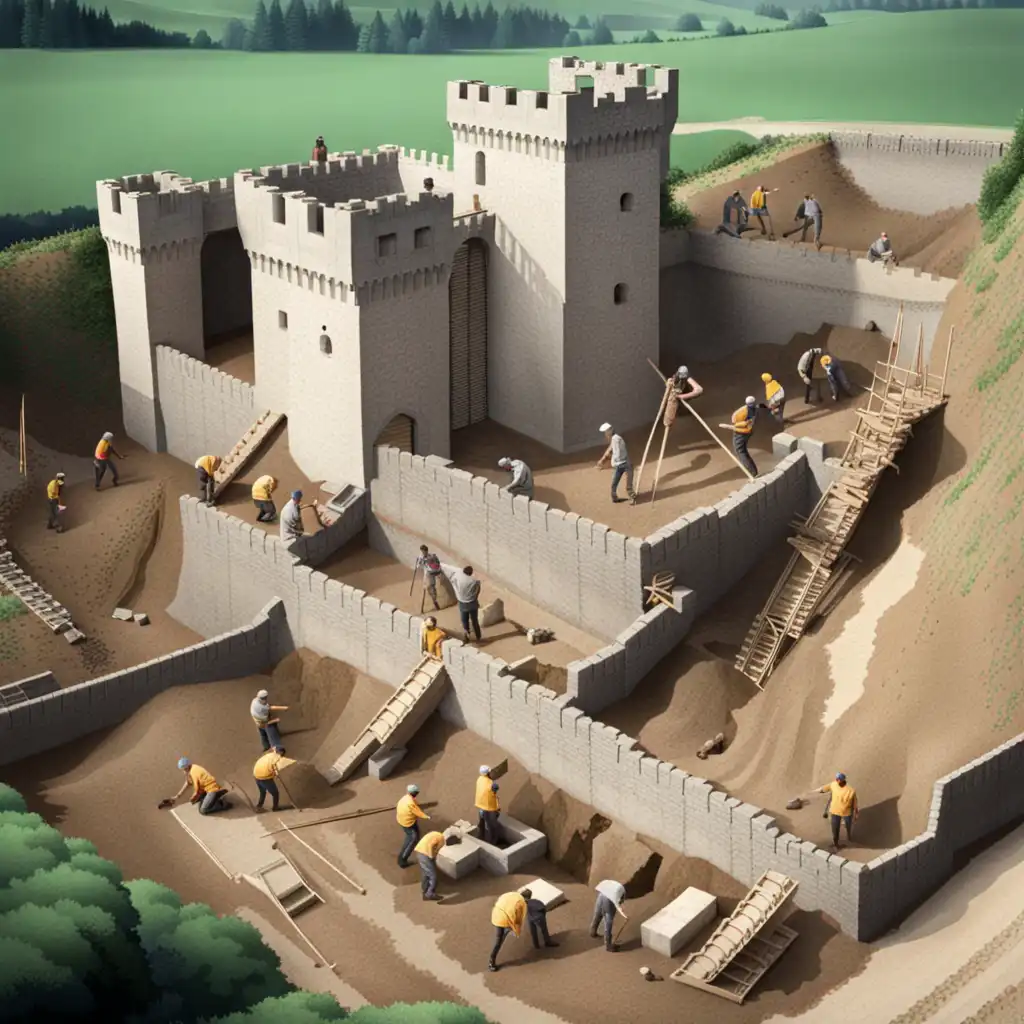
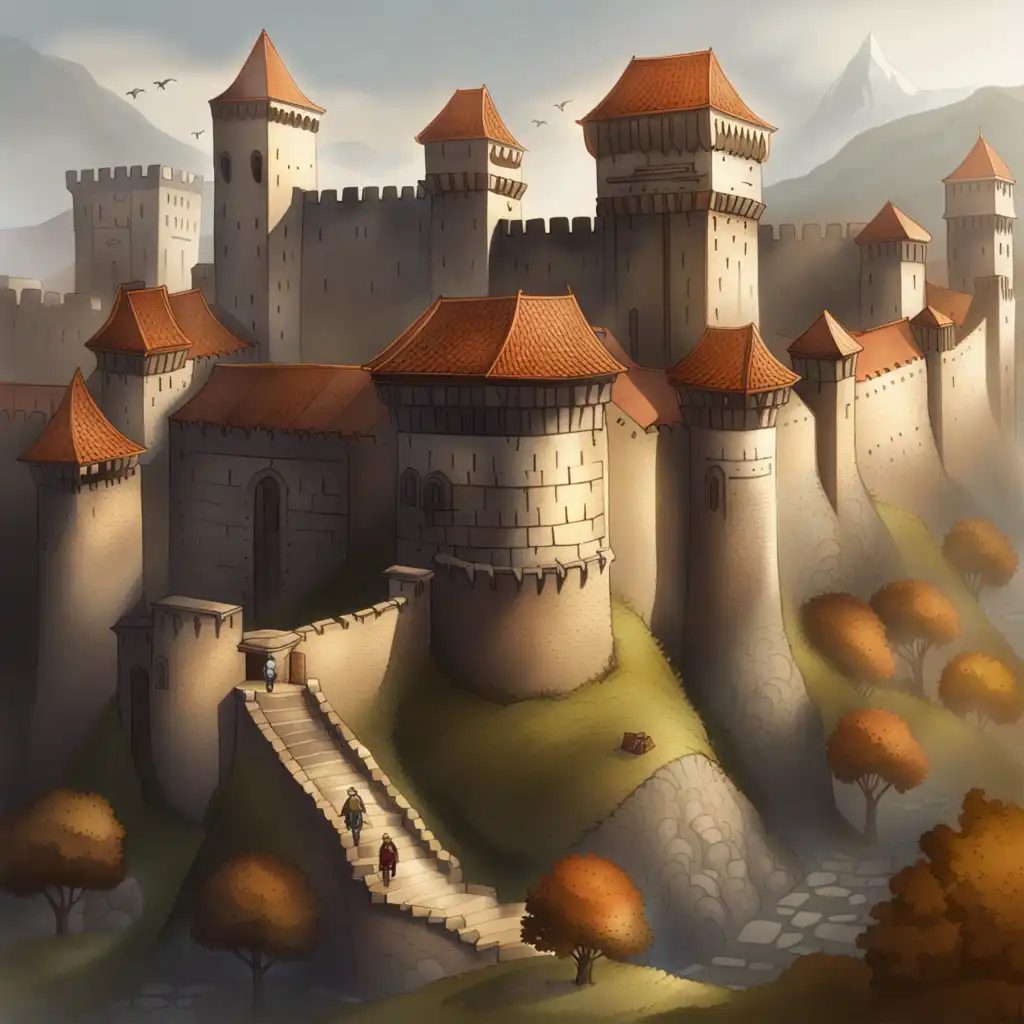
Fortification refers to the process of strengthening or reinforcing something, such as a structure or a food with added nutrients. It can also be used to describe the act of building a defensive structure, like a fortress or a wall, to protect against enemies or natural disasters. In everyday conversation, people may talk about fortified breakfast cereals, fortified wine, or fortified milk, which means that these foods have been enriched with added vitamins and minerals to make them healthier.
A barricade is a temporary barrier that is set up quickly and can be easily removed.
It is typically used to block off an area, street, or path for safety or security reasons. For example, a police officer might set up a barricade to prevent people from getting too close to a dangerous situation.
A fortification is a permanent or semi-permanent structure that is built to protect something or someone from attack. It is generally much stronger and more permanent than a barricade.
A barricade is a quick and temporary barrier used to block off an area for safety reasons, while a fortification is a permanent or semi-permanent structure built to protect something from attack.
A bulwark is a defensive barrier that provides protection from external threats, such as a wall or embankment.
It is usually made of natural materials like earth, wood, or stone. For example, a riverbank might be a bulwark against floodwaters.
A bulwark is a defensive barrier that offers protection from external threats, while a fortification is a structure built specifically for defence.
A bulwark is applicable in natural settings, while a fortification is applicable in settings where external threats are expected, such as military bases, castles or borders.
Defence generally refers to actions taken to protect oneself or one's country from an attack or invasion. This includes the use of weapons, tactics, and strategies to prevent an enemy from gaining access or causing harm.
Defence can involve both offensive and defensive maneuvers, depending on the circumstances.
The goal of fortification is to make it difficult or impossible for an enemy to breach the defenses.
In summary, defense is a broader term that includes all actions taken to protect oneself or one's country, while fortification refers specifically to strengthening a position against attack.
Defence can involve both offensive and defensive maneuvers, while fortification is focused on making a location difficult to breach.
An embankment is an artificial mound or hill made of earth, stones or brick that is constructed to hold back water or to support a roadway or a railway line.
An embankment is used to prevent water from flooding an area or to create a stable foundation for construction, while a fortification is used to protect against military attacks.
Protection, on the other hand, refers to the act of safeguarding or shielding something from harm or danger. This term is more broad than fortification, and can apply to physical, emotional, or mental well-being.
Fortification involves strengthening a specific location or position to prevent attack or intrusion, while protection encompasses a wider range of strategies for keeping someone or something safe from harm.
Fortification and rampart are both terms used to describe defensive structures.
A rampart specifically refers to a raised embankment or wall that is used as a defensive barrier. Ramparts were often used in medieval times to protect castles and fortresses, and they were typically built on the outer edges of the fortification.
So, while both fortification and rampart can describe defensive structures, rampart specifically refers to a type of defensive wall.
Reinforcement refers to strengthening or supporting something that already exists, such as adding extra steel beams to a building to make it stronger.
In simpler terms, fortification is like building a fortress to protect something, while reinforcement is like adding extra support to something that already exists.
Strengthen refers to the act of making something stronger or more resilient through internal improvements or reinforcement.
Fortification is about creating a defensive perimeter or structure, while strengthening is about improving the internal strength and resilience of something.
A stronghold is a specific location or structure that is fortified to protect against attack, such as a castle or fortress.
Both fortification and stronghold are applicable in military or defensive situations.
In simpler terms, fortification is the act of making something stronger, and a stronghold is a specific place that has been made stronger to protect against attack.
I was born and spent my first five years in Chester, an ancient city that retains some of its Roman walls and fortifications and contains a great medieval cathedral, as well as Tudor, Stuart and early 19th century architecture. Visiting these things was free, and my parents - who had little money - made the most of this.
In 1940, Germany toppled France in 20 days, and the panzerdivizion symbolized war's shift from drawn-out conflicts using massive fortifications to rapid-fire engagements built around manned, motorized armor.