cumulus
noun cumulus
ˈkjuːmjələs
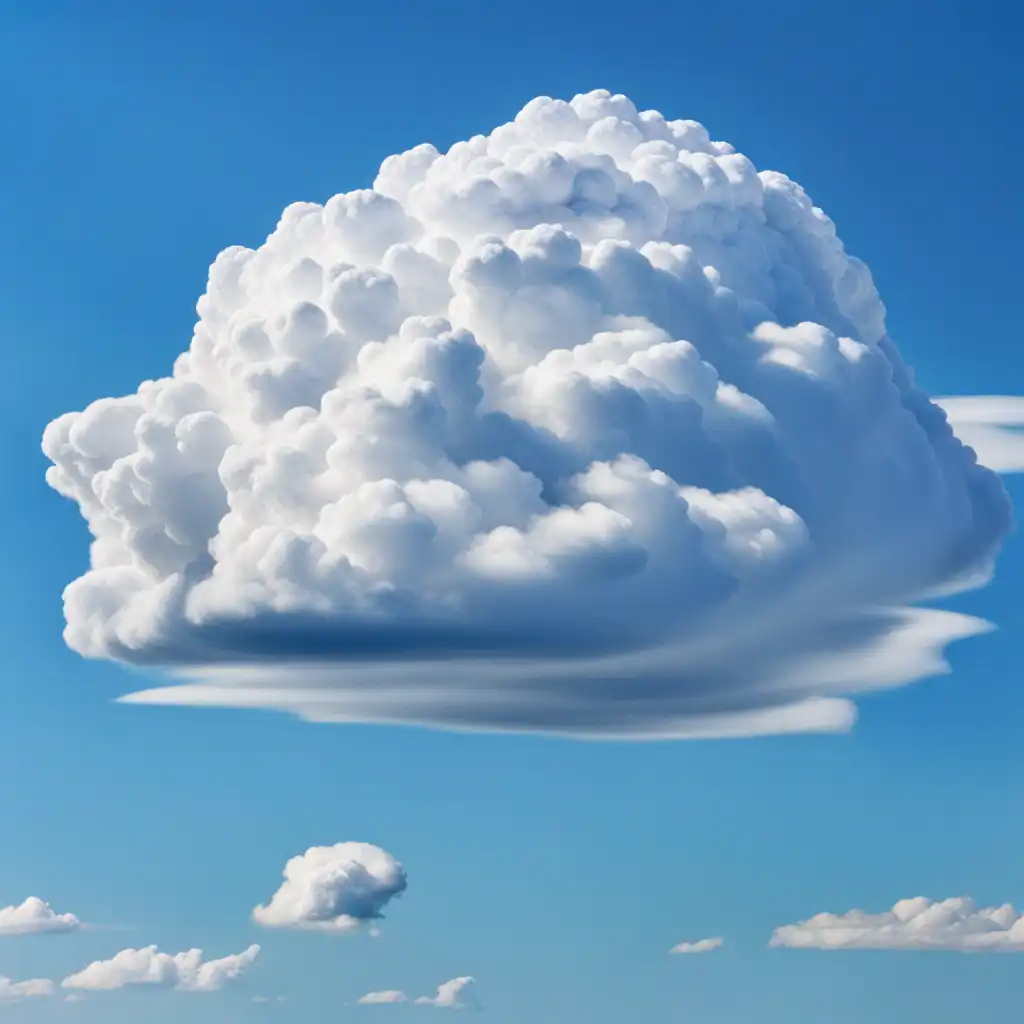
A type of cloud that is large, white, round, and fluffy
We saw a beautiful cumulus cloud in the sky this morning.
cumulus
ˈkjuːmjələs
加载中…
ˈkjuːmjələs
A type of cloud that is large, white, round, and fluffy
We saw a beautiful cumulus cloud in the sky this morning.

ˈkjuːmjələs
A pile or heap of things
A huge cumulus of old newspapers was stacked in the corner.
音频无法加载,请稍后再试。
The word 'cumulus' is usually used to describe a type of cloud. A cumulus cloud is a big, white, fluffy cloud that you might see on a sunny day. It looks a bit like a cotton ball! You can say "Look at the cumulus cloud in the sky!" or "I love seeing cumulus clouds on a beautiful day."
Aggregate and cumulus are both words used to describe collections of a particular thing, but they have different applications.
Aggregate refers to a collection of many individual parts or elements that are grouped together. For example, a pile of rocks is an aggregate of individual rocks.
To summarize, aggregate refers to a collection of many individual parts, while cumulus is a specific type of cloud.
打开单词: Aggregate →Bunch refers to a cluster or group of things that are close together.
Bunch is applicable when referring to a cluster of objects or things, while cumulus is applicable when referring to a type of cloud.
打开单词: Bunch →Clouds are visible masses of water droplets or ice crystals that float in the atmosphere. They come in a variety of shapes, such as wispy stratus clouds, puffy cumulus clouds, and long, thin cirrus clouds.
The term cloud is a general one that refers to any visible mass of suspended moisture in the atmosphere.
Cumulus clouds are a specific type of cloud that are often described as "fluffy" or "cotton-like." They are typically low-lying and appear white or gray in color.
Cumulus clouds form when warm, moist air rises and cools, causing water vapor to condense into visible droplets. These clouds are common on warm, sunny days but may also be associated with thunderstorms.
Cloud is a broad term that refers to any visible mass of suspended moisture in the atmosphere, while cumulus is a specific type of cloud that is low-lying, fluffy, and often associated with fair weather.
打开单词: Cloud →Cluster usually refers to a group of similar or related items, such as a cluster of grapes, a cluster of stars, or a cluster of buildings.
It can also refer to a group of things that are tightly packed together, like a cluster of people on a crowded street.
Cluster is a general term for a group of things, while cumulus is a specific term used to describe a type of cloud.
打开单词: Cluster →Both cumulus and heap refer to a pile or collection of something, but cumulus specifically refers to a type of cloud that is puffy and rounded, while heap can refer to any type of messy pile of objects.
In other words, cumulus is only applicable to describing certain types of clouds, while heap can describe any type of disorganized pile.
打开单词: Heap →Cumulus and mass are both words that describe a group of something, but they have different meanings.
Mass can refer to a large group of things that are together in one place. For example, you might say "there was a mass of people at the concert last night." This means there were a lot of people all in one place.
So while both words describe a group of something, cumulus is specific to clouds, while mass can describe any large group of things.
打开单词: Mass →Both cumulus and stack refer to formations of clouds.
Stack is often used to describe tall, vertical clouds that can be associated with thunderstorms or other severe weather.
Cumulus clouds might often be seen on a sunny day, while a stack cloud might indicate a coming storm.
打开单词: Stack →How did clouds get their...
在 YouTube 上观看 ↗Gavin Pretor-Pinney:...
在 YouTube 上观看 ↗