leviathan
noun leviathan
ləˈvaɪəθən
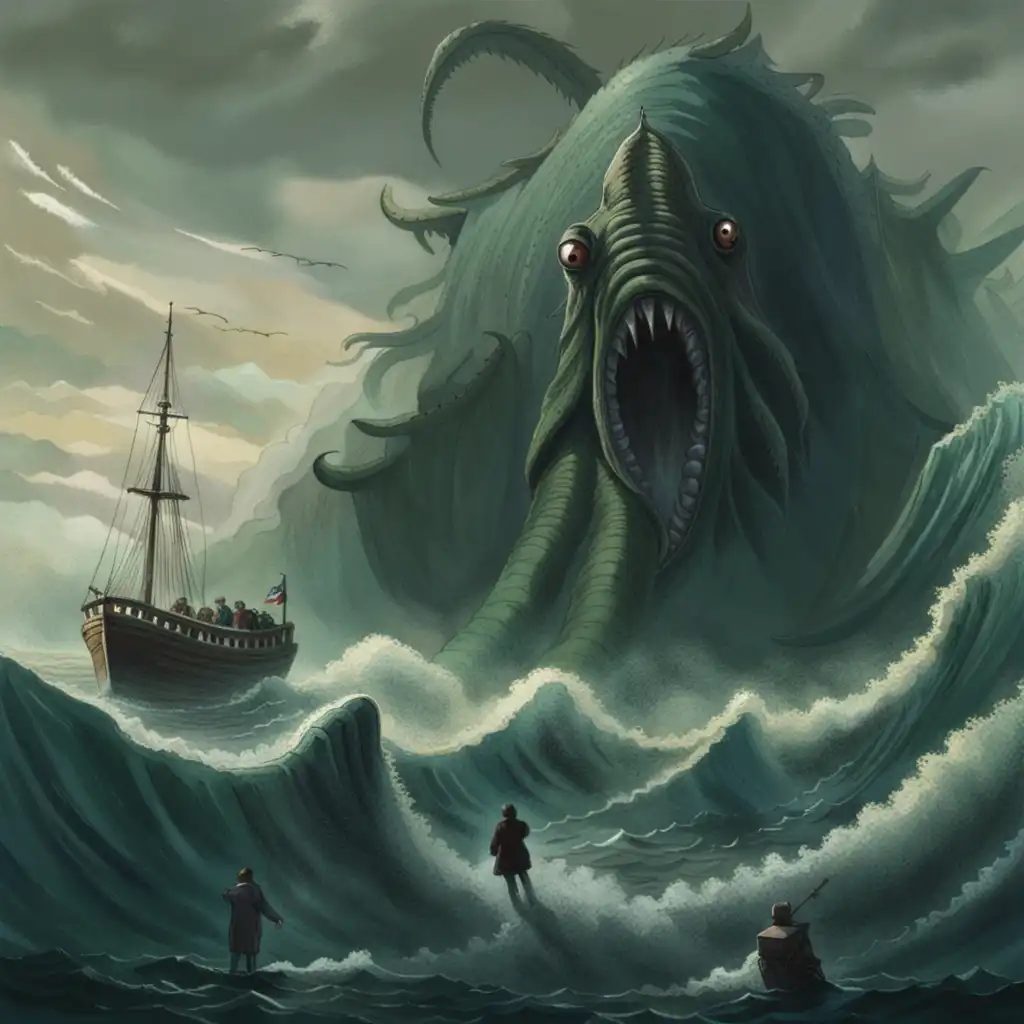
A sea monster from the Bible.
In the Bible, leviathan is a large and scary sea monster.
leviathan
ləˈvaɪəθən
लोड हो रहा है…
ləˈvaɪəθən
A sea monster from the Bible.
In the Bible, leviathan is a large and scary sea monster.

ləˈvaɪəθən
A huge or powerful person, thing or organization.
The corporation has grown into a leviathan that controls many industries.
ləˈvaɪəθən
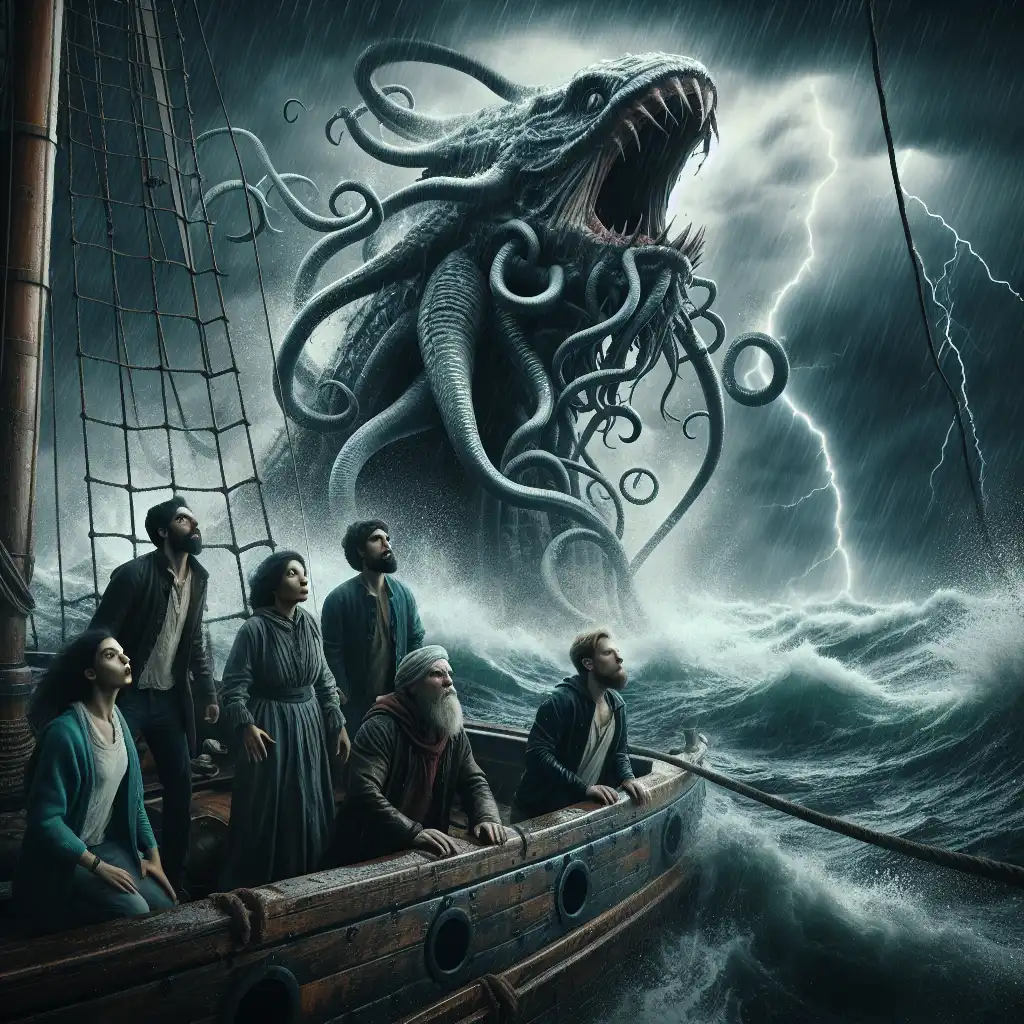
A large sea creature in literature or myths.
The sailors were terrified of the legendary leviathan said to live in these waters.
ऑडियो लोड नहीं हो सका। कृपया बाद में फिर कोशिश करें।
The word 'leviathan' refers to something that is incredibly big, powerful, and possibly even scary. It can be used to describe things like a gigantic animal, a huge ship, or a powerful organization. The word is often used in a figurative sense, to describe something that is overwhelming or seemingly impossible to overcome. For example, you might hear someone say that a particular problem is a "leviathan" that they're struggling to solve.
Behemoth typically refers to a large and powerful creature, often used to describe something that is awe-inspiring or monstrous.
For example, "The new skyscraper in the city is a behemoth of a building."
Behemoth can refer to any large and powerful entity, while leviathan specifically refers to sea monsters or creatures in a religious or mythical context.
शब्द खोलें: Behemoth →Both colossus and leviathan refer to something that is huge and impressive, but they differ slightly in their connotations and usage.
Colossus refers to a massive and impressive statue or structure, or to a person or organization that is powerful and influential.
For example, the Colossus of Rhodes was a gigantic statue that stood over 30 meters tall and was considered one of the seven wonders of the ancient world.
In modern times, a company that dominates its industry might be called a colossus.
Colossus is often applied to indicate something that is impressive, stable and strong, while leviathan implies something that is massive and powerful, yet with an element of danger or unpredictability.
शब्द खोलें: Colossus →Demon and Leviathan are both supernatural creatures, but they have different origins and characteristics.
A demon is typically associated with evil or malevolence and is believed to be a disembodied spirit or an fallen angel.
Demons are often depicted as tempting individuals to commit sins, possessing people, or causing other forms of harm.
Demon is a term used to describe a malevolent supernatural being, while Leviathan refers specifically to a sea monster from Jewish mythology.
शब्द खोलें: Demon →Dragon typically refers to a mythical creature resembling a large, fire-breathing reptile with wings and sharp teeth.
Dragons are often associated with medieval folklore and are commonly depicted in literature, movies, and video games.
Leviathan is a Hebrew word that refers to a giant sea monster mentioned in the Bible. While it is sometimes depicted as a dragon-like creature, it is more commonly described as a gigantic aquatic beast or serpent.
In modern usage, dragon is more commonly applied to fictional creatures in works of fantasy, while leviathan is typically used in a more symbolic or metaphorical context to refer to an overwhelming or oppressive force, such as a government or corporation.
शब्द खोलें: Dragon →Both words refer to something very large, but giant generally refers to any very large thing, while leviathan specifically refers to a sea monster or a very large and powerful creature.
Giant can be used in many contexts, such as describing a person (e.g. "a giant basketball player"), an animal (e.g. "a giant elephant"), or an object (e.g.
"a giant skyscraper").
शब्द खोलें: Giant →Both kraken and leviathan are creatures from mythology and folklore, with different origins.
Kraken is a giant sea monster in Scandinavian folklore that is said to dwell off the coasts of Norway and Greenland.
It is often depicted as a huge octopus or squid, capable of capsizing ships and dragging sailors to their doom. The Kraken is more closely associated with terrorizing sailors or causing destruction and chaos, it is used in popular culture in horror films, novels, and video games.
In summary, Kraken is a giant sea monster from Scandinavian mythology that is often portrayed as an octopus or squid and the focus is usually on fear and destruction.
शब्द खोलें: Kraken →Monster typically refers to any large, frightening or imaginary creature.
The term leviathan is generally used in a specific context to describe a very specific type of creature, while monster can be used more broadly to describe any type of scary or unusual creature.
शब्द खोलें: Monster →Leviathan and ogre are both descriptions of monstrous creatures, but they have different origins and connotations.
Ogre comes from European folklore and children's stories. It usually refers to a large, ugly, and intimidating humanoid creature, often portrayed as the villain in tales.
An ogre is typically thought of as being cruel and evil, and preying on humans.
It's a symbol of chaos and destruction, and sometimes also of Satan or evil. Unlike an ogre, a leviathan is not always humanoid in shape, and is usually seen as a natural disaster or a force of nature, rather than a single creature with its own intentions.
In summary, ogres are humanoid monsters with evil intentions, while leviathans are mythical creatures or symbols that represent chaos and destruction.
शब्द खोलें: Ogre →Titan refers to a person or thing of great strength, size, or power, often in mythology. Leviathan is mostly applicable in religious or literary contexts, while titan can be used more broadly to describe any powerful entity or object.
In simpler terms, leviathan is a biblical creature and refers to something that is generally considered large and powerful, while titan is a more general term for a powerful entity or object from mythology.
शब्द खोलें: Titan →coincided with the rise of centralized states. So that's a bit of a support for the leviathan theory. Also supporting it is the fact that we today see eruptions of violence in zones of anarchy in failed states collapsed empires,
YouTube पर देखें ↗Probably Hobbes got it right when he said that a leviathan, a third party with a monopoly on the use of legitimate use of force in a territory, might be among the biggest violence reduction techniques ever invented.
made up of adults more than 30 tons of seagoing force killer whales have been known to attack these leviathans but they do so very rarely it's the next wave they're waiting for coming up the
YouTube पर देखें ↗My early exposure to all the leviathans of the Saturday matinee creature features inspired me, when I grew up, to make 'Jurassic Park.
Your city’s puny army is hopelessly outmatched. You think back to the legends. In the stories the ruler of the city saved his people by feeding the creatures a ransom of pearls. The pearls would be split equally between the leviathans lords.
YouTube पर देखें ↗Empirical debunking cannot reach the deepest fear of the reactionary mind, which is that the state - that devouring leviathan - will soon swallow up all traces of human volition and dignity. The conclusion is based on conservative moral convictions that reason can't shake.
How curious that such an outsize man, in physique as well as personality, should be remembered today mainly for giving his name to a small fish. For the 19th century, Bismarck was no herring but a leviathan. Between 1862 and 1890, he created Germany, seeing off first the Austrian empire and then France.