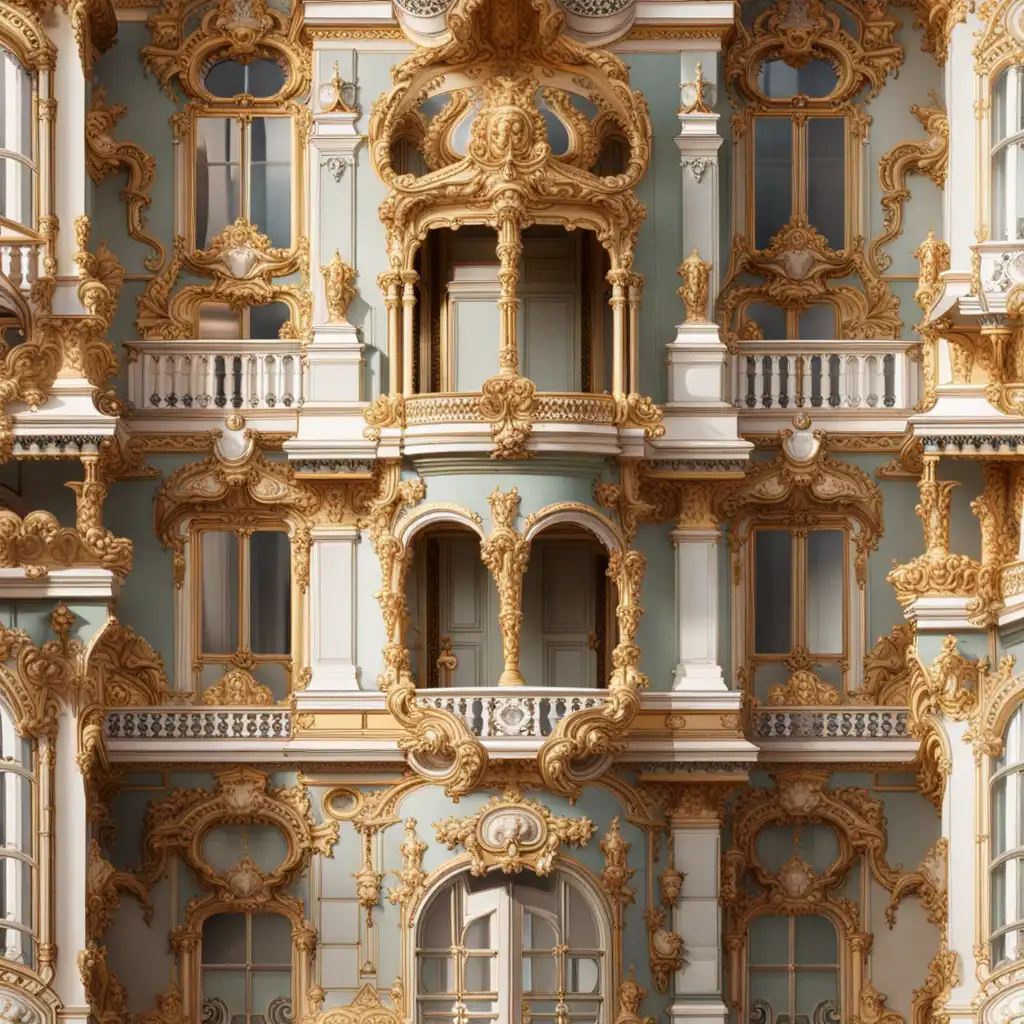
rococo
noun rococo
rəˈkəʊkəʊ
An elaborate 18th century European style of art, architecture and music.
The palace was designed in an elaborate rococo style.
rococo
rəˈkəʊkəʊ
読み込み中…
rəˈkəʊkəʊ
An elaborate 18th century European style of art, architecture and music.
The palace was designed in an elaborate rococo style.
rəˈkəʊkəʊ
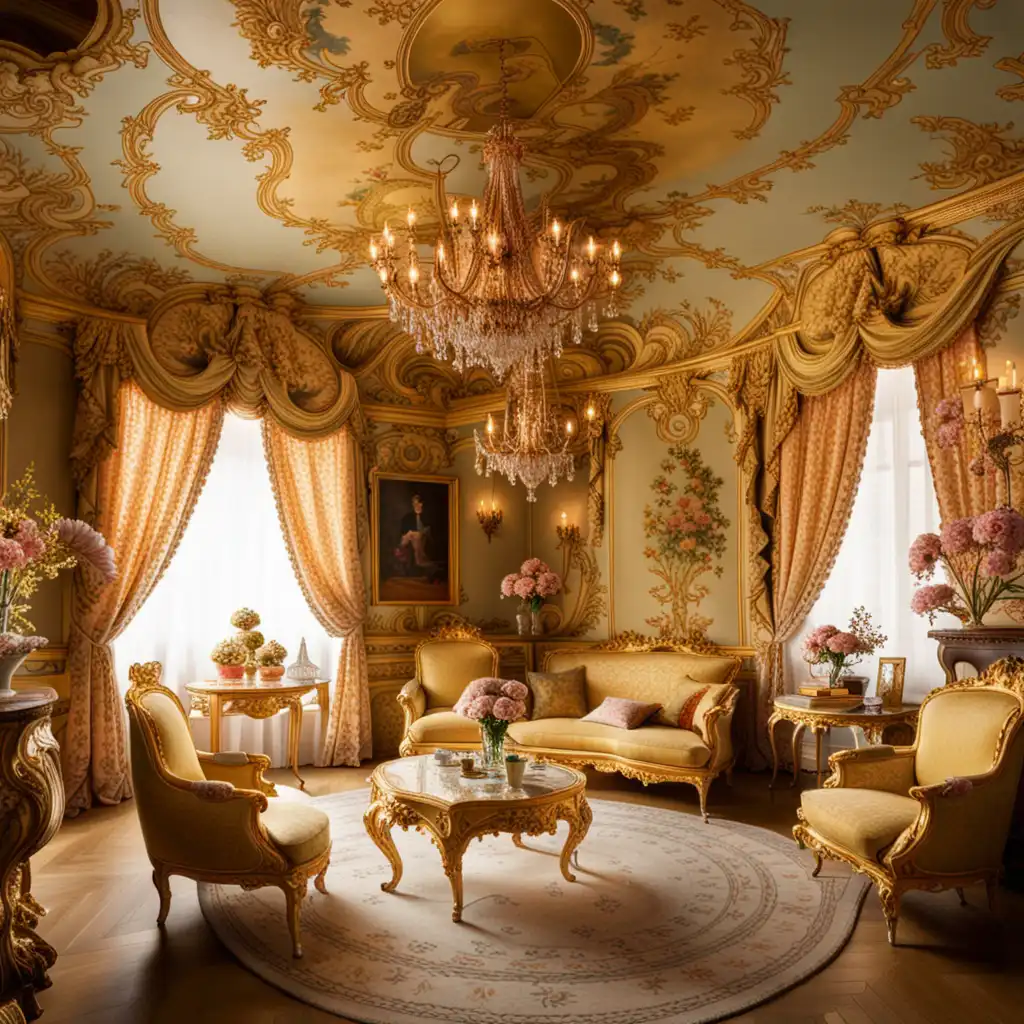
Overly ornate or elaborate, typically referring to art or design.
The living room was decorated in a rococo style, complete with gold leaf and intricate floral motifs.
音声を読み込めませんでした。しばらくしてからもう一度お試しください。
Rococo is a word used to describe a style of art, music, and architecture that was popular in Europe during the 18th century. It is known for the use of decorative and ornate designs, with lots of swirls and curves. You might see rococo-style furniture or paintings with lots of gold and pastel colors. You could use the word rococo to describe something that is overly decorative or ornate. For example, you could say "Her bedroom was decorated in a rococo style with lots of frills and lace."
Baroque and Rococo are two styles of art and architecture that originated in Europe.
Baroque is a style that was popular in the 17th century. It is characterized by grandeur, drama, and a sense of movement.
Baroque art and architecture often feature ornate decorations, intricate details, and dramatic lighting. Baroque style is often associated with the Catholic Church, as many Baroque works were commissioned by the Church to convey religious themes.
On the other hand, Rococo emerged in the 18th century as a reaction against the grandeur of Baroque style. It is characterized by lightness, delicacy, and a focus on decorative motifs.
In general, Baroque style is more dramatic and imposing, while Rococo style is more playful and whimsical.
Baroque is often used in contexts that require grandeur and opulence, such as palaces and churches, while Rococo is often used in more intimate settings, such as salons and boudoirs.
単語を開く: Baroque →Decorative refers to something that is used to make an object or space more appealing, attractive or stylish.
It can be any style or design that is used to enhance an object or space. For example, decorative items such as paintings, sculptures, or wallpaper are used to enhance the beauty of a room or a building.
Rococo is a specific style of decorative art that originated in France in the early 18th century. The term rococo comes from the French word rocaille, which means "shellwork" or "pebblework." Rococo is characterized by its heavily ornamented and intricate decoration, often featuring asymmetrical designs, ornate curves, and decorative motifs such as shells, flowers, and leaves.
Decorative is a general term used to describe any style or design that is used to enhance an object or space, while rococo is a specific style of decorative art characterized by its intricate, ornate, and asymmetrical designs.
単語を開く: Decorative →Detail refers to specific parts or elements that make up a larger whole.
Detail refers to a specific aspect of something, while rococo refers to a style of art and design.
単語を開く: Detail →Excessive means something that is too much, more than what is necessary or reasonable.
Rococo is not typically used to describe things that are simply excessive, but rather things that have a specific ornate and decorative style.
Excessive refers to something that is too much in general, while rococo refers to a specific style of art and architecture with ornate and elaborate decorations.
単語を開く: Excessive →Frill refers to a decorative edge or trim that is added to clothing or other items.
Frills are most commonly found on women's clothing, such as dresses or blouses.
Frill refers to a decorative detail added to clothing or other objects, while rococo is a style of art and architecture known for its elaborate ornamentation and playful, asymmetrical designs.
単語を開く: Frill →Fussy describes someone or something that is very particular or picky about small details. For example, a person who is very fussy might be very selective about what they eat or wear.
Fussy describes a person or thing that is overly picky or decorated, while rococo specifically refers to a style of art and architecture that is ornate and elaborate.
単語を開く: Fussy →Lavish means something that is extravagant, luxurious, or abundant in quantity. It is applicable in describing things like expensive parties or decorations that are very elaborate and excessive.
Lavish is a more general term describing something that is excessive or luxurious, while rococo is a specific artistic style characterized by ornate decorations and curved lines.
単語を開く: Lavish →Ornate means decorated with lots of fancy details or embellishments.
Rococo is a style of art and design that originated in the 18th century. It is characterized by ornate decoration and intricate details that often include curves, shells, and other natural motifs.
Ornate refers to a general level of decoration, while rococo specifically refers to a specific style of decoration popular during a certain period in history.
単語を開く: Ornate →I spend a lot of time looking at rococo books. And almanacs used to be huge sellers - they were pretty much part of the fabric of life. I thought, this is bizarre, I'd love to buy a book like this, and there isn't one. So I thought, all right then, this could be fun. I'll write an almanac.
In the West, we look at art through life. Well, that's one way of living. In the Orient they look at life through art. They even drink their tea without sugar, for the same reason that they don't like a lot of frilly decorations on a painting. I can't stand butter on my bread for the same reason. I'm allergic to goo and rococo.
We live in an era of mind-blowing scientific discovery, virtually none of which ever makes the front page, even as every trivial twist and turn in the rococo political drama has a secure place as the lead story.
Westlake is allusive, indirect, referential, a bit rococo, Stark strips his sentences down to the necessary information.
They were like little palaces: all rococo or art deco. You'd walk in off those hot streets into a nice, air-cooled theater, and you'd spend all day watching Cagney or Jimmy Stewart. It cost all of 17 cents.
If I'm researching something strange and rococo, I'll go to the London Library or the British Library and look it up in books.