hierarchy
noun hierarchy
ˈhaɪərɑːrki
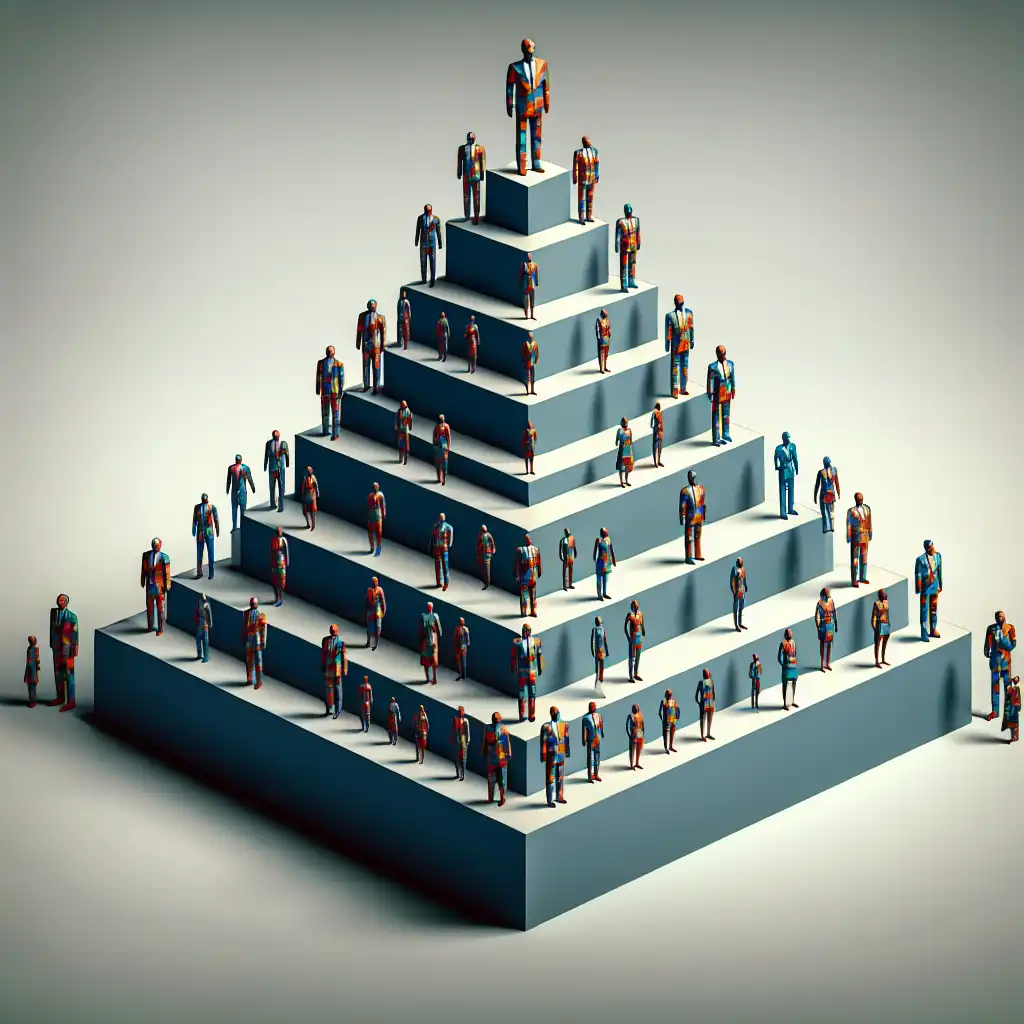
The system or organization that has levels of importance or power
In the corporate hierarchy, the CEO is at the top.
hierarchy
ˈhaɪərɑːrki
불러오는 중…
ˈhaɪərɑːrki
The system or organization that has levels of importance or power
In the corporate hierarchy, the CEO is at the top.
ˈhaɪərɑːrki
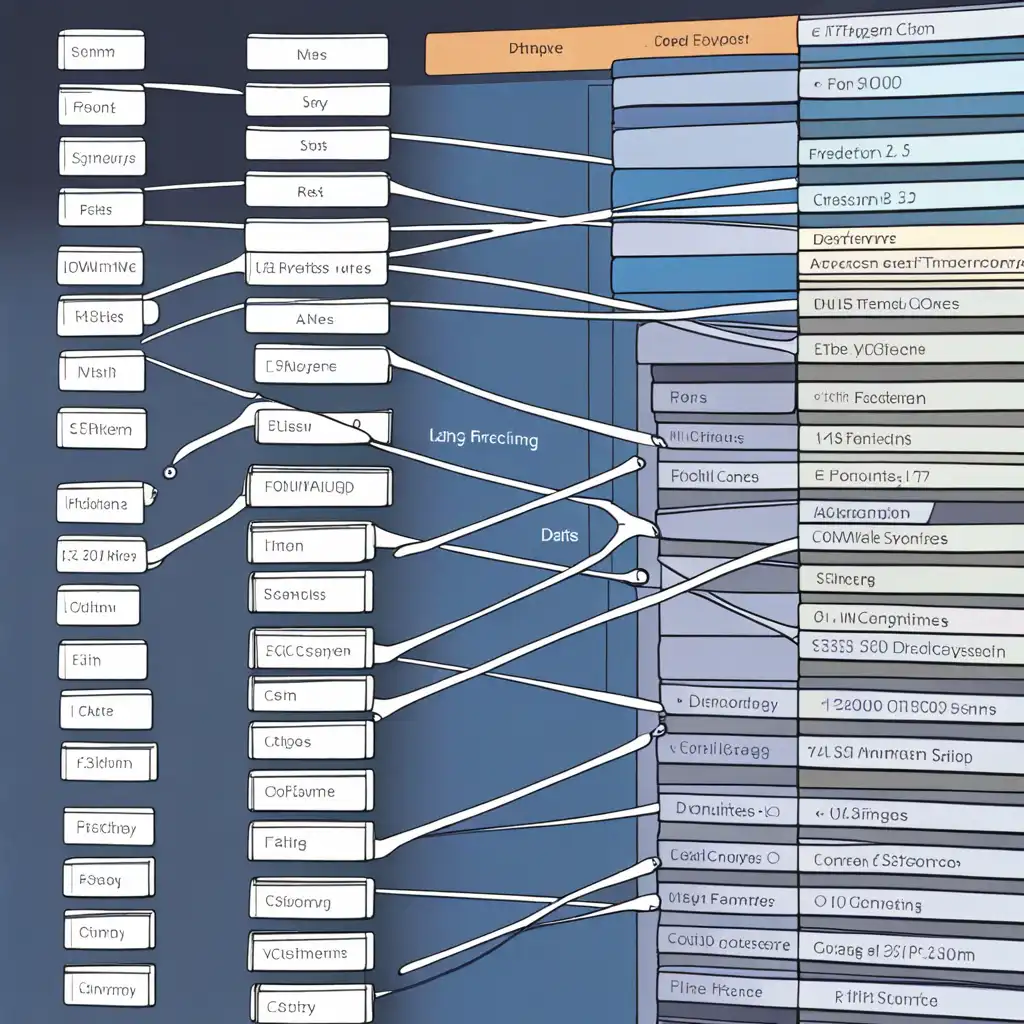
In computing, it is a way to arrange data in levels or ranks
The directory hierarchy of the computer's file system is very organized.
ˈhaɪərɑːrki
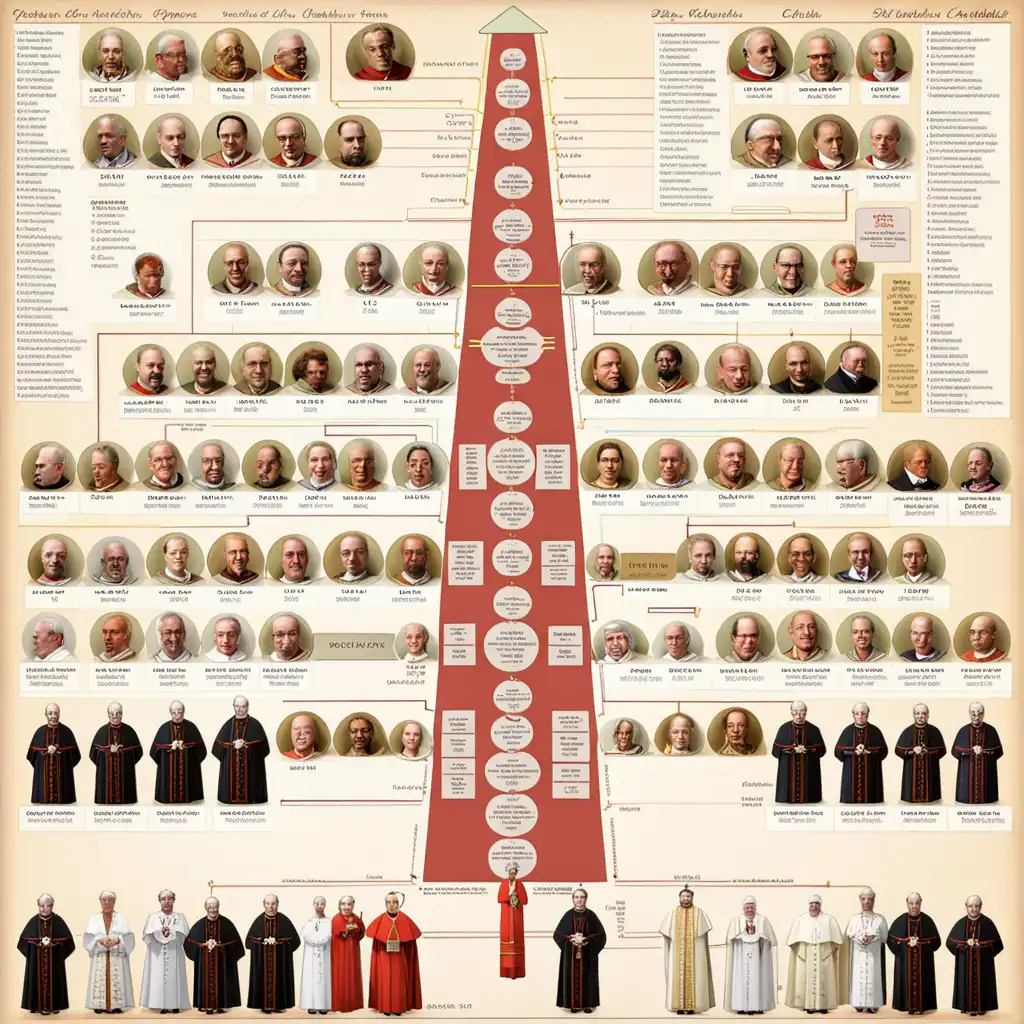
In the Catholic Church, it is the system of ranking the officials by power or importance
In the Church hierarchy, the Pope is at the top.
오디오를 불러오지 못했어요. 잠시 후 다시 시도해 주세요.
Hierarchy is a word used to describe the different levels of power or authority in an organization or group. For example, in a company, the CEO (Chief Executive Officer) is at the top of the hierarchy, with managers and employees below them. It can also refer to the order of importance or value in a system or group, such as a hierarchy of needs in psychology, where basic needs like food and safety are prioritized over higher needs like self-actualization. Essentially, hierarchy is a way of organizing things based on levels of authority or importance.
Gradation refers to a series of stages or steps that gradually increase or decrease in intensity, value, or importance.
An example would be the gradation of colors from light to dark or the gradation of academic degrees from bachelor's to doctorate.
Gradation refers to a gradual progression while hierarchy refers to a ranking system. Gradation is applicable in areas where there are levels of intensity, value or importance while hierarchy is applicable in issues related to ranking or authority.
단어 열기: Gradation →Level refers to a position on a scale, often indicating amount or degree.
It describes a relative position, usually in comparison to other things, without indicating any power or authority. For example, a person's proficiency in a skill might be described as a certain level, such as beginner, intermediate, or advanced.
Hierarchy is a system of ranking based on power or authority, while level is a position on a scale indicating amount or degree without any power or authority connotations.
단어 열기: Level →Both hierarchy and order refer to structured arrangements, but the term hierarchy tends to indicate a system or organization’s levels of power or authority, whereas order suggests everything being arranged or organized in a particular sequence or pattern.
Order is the way things are arranged systematically or sequentially - like alphabetizing books on a shelf, arranging things by size or color, or lining up to board a plane in sequential order.
In summary, Hierarchy refers to a system of power or authority arranged in levels, while an order refers to how things are arranged systematically or sequentially.
단어 열기: Order →Hierarchy refers to a system of organizing or ranking people, things or organizations in a specific order of power or importance.
Ranking refers to the process of putting people, things or organizations in a specified order based on a particular criterion.
Hierarchy is used to depict levels of power or authority while ranking is used to evaluate and compare things based on certain criteria.
단어 열기: Ranking →Hierarchy and stratification both refer to the organization of people or things based on some type of ranking system.
Stratification refers to the division of a group of people into different levels based on certain characteristics, such as wealth, education, or social status.
Hierarchy is more focused on the organization of individuals or things based on authority or importance, while stratification is more focused on the division of a group of people based on certain characteristics.
단어 열기: Stratification →Structure refers to the way something is constructed, organized or arranged.
For example, a company may have a hierarchical structure where employees are ranked in order of seniority and authority.
However, the physical structure of the company may involve different departments, teams or branches, and this is separate from the hierarchical structure of the company.
Hierarchy refers to the arrangement of people or things in order of importance or authority, while structure refers to the way something is physically built or organized.
단어 열기: Structure →high on testosterone but really stress reactive? Probably not right? You want the person who's powerful and assertive and dominant, but not very stress reactive the person who's laid back. So we know that in primate hierarchies,
YouTube에서 보기 ↗The world is not flat, and PCs are not, in the hierarchy of human needs, in the first five rungs.
most cults share some basic characteristics. A typical cult requires a high level of commitment from its members and maintains a strict hierarchy, separating unsuspecting supporters and recruits from the inner workings.
YouTube에서 보기 ↗Online hierarchies are inherently dynamic. The moment someone stops adding value to the community, his influence starts to wane.
care team science has found that social hierarchy is developed in fox cups very early on and through play they develop vital skills for hunting and communication so it is important that they develop
YouTube에서 보기 ↗Humans want to know the hierarchy; it's important for there to be one leader.
the order within a Wolf Pack hierarchy is constantly reinforced by displays of dominance and Submission in a complex language of different forms of communication vocalizations such as growls barks yips and whines are equally as important as the non verbal body
YouTube에서 보기 ↗I don't pay attention to auction prices. Nothing interests me less. One of the benefits of not being an artist is I don't have to navigate the social hierarchies of the art world as a person of desire. I don't need anything. I live in a different way.
the efforts of the group as killer whale pods are generally matriarchal the exhibit is strict dominance hierarchy ranked in order top to bottom with the adult females generally at the top of the pecking order often times followed by adolescents and
YouTube에서 보기 ↗I've always been most interested in the politics of everyday life: your relation to whatever you're doing, or what your ambitions are, where you live, where you find yourself in the social hierarchy.
To understand the sadness of the trees losing their leaves in the fall is to more fully understand the cycle of life that brings flowers in the spring. But wisdom and emotional intelligence seem pretty high on the hierarchy of needs. Does sadness have value on a more basic tangible, maybe even evolutionary level?
YouTube에서 보기 ↗When you're a kid, right, and you're surrounded by all these other kids, and let's say they don't have the same interests or the same goals or the same world view as you... It's difficult because a child doesn't know that there's another way. A child doesn't know that there's another place outside of the systems and hierarchies in school.
Every one. Doesn't matter where you go. You'd think it would be otherwise but it isn't. At the top are mathematics and languages then the humanities. At the bottom are the arts. Everywhere on earth. And in pretty much every system too there's a hierarchy within the arts.
YouTube에서 보기 ↗There is no hierarchy of values any more. Real progress is due mainly to human genius, and that's rare, and usually stems from a real elite, from a hierarchy.
there's tremendous competition for mates the males are not fighting with each other they don't have dominance hierarchies that don't have territories set up like other animals would do in a similar situation I like to call them the ambassadors of the reptile world
YouTube에서 보기 ↗To make sense of bossiness, we need to tease apart two fundamental aspects of social hierarchy that are often lumped together: power and status. Power lies in holding a formal position of authority or controlling important resources. Status involves being respected or admired.
isn't settled until even later in life. You see clownfish all start out their lives as males, However as they mature they become female. They also spend their lives in small groups with a strict dominance hierarchy
YouTube에서 보기 ↗Man is a spiritual intelligence, who has taken flesh with the object of gaining experience in worlds below the spiritual, in order that he may be able to master and to rule them, and in later ages take his place in the creative and directing hierarchies of the universe.
The takers will give you four names, and they will all be more influential than them, because takers are great at kissing up and then kicking down. Givers are more likely to name people who are below them in a hierarchy, who don't have as much power, who can do them no good. And let's face it you all know you can learn a lot about character
YouTube에서 보기 ↗In the world of the celebrity, the hierarchy of publicity has replaced the hierarchy of descent and even of great wealth.