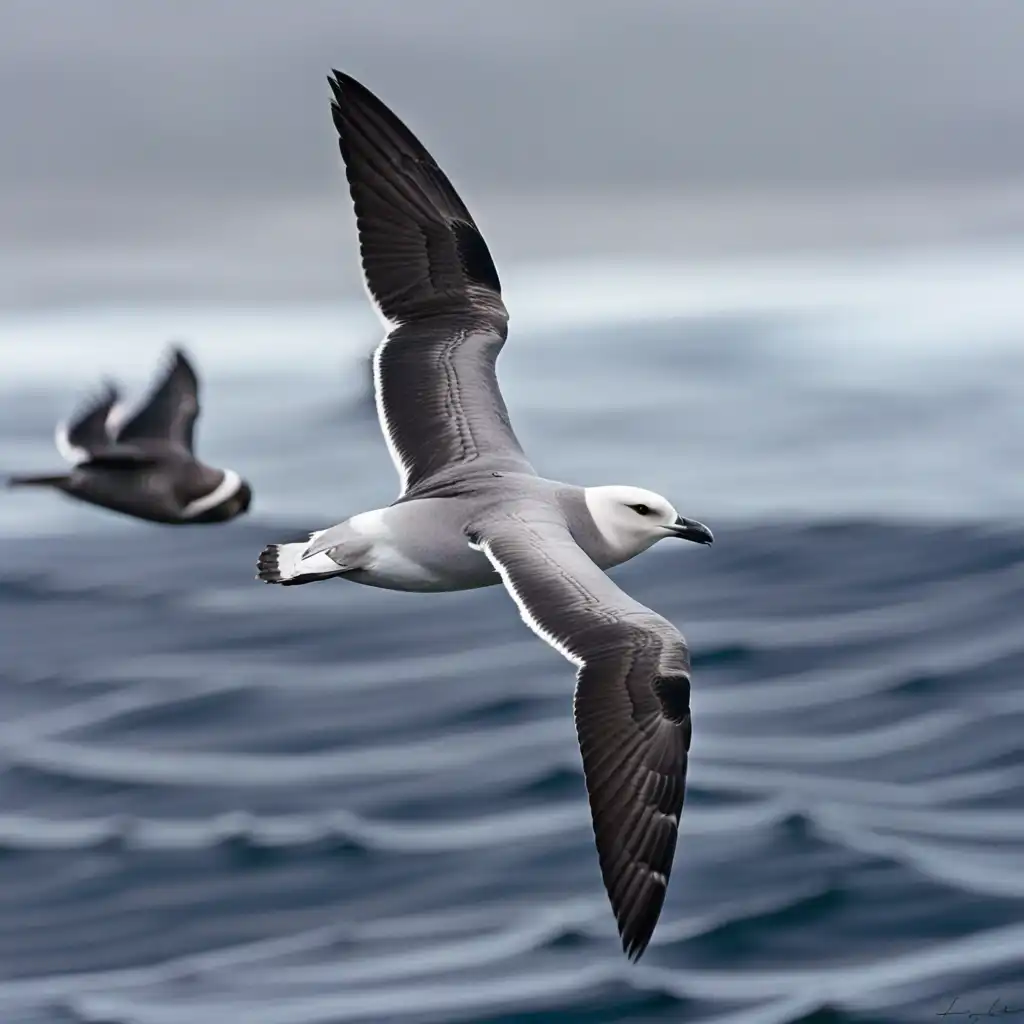
fulmar
noun fulmar
ˈfʊlmər
A type of seabird related to the petrel, often found in the northern hemisphere.
The fulmar is known for its distinctive tube-like nostrils.
fulmar
ˈfʊlmər
Đang tải…
ˈfʊlmər
A type of seabird related to the petrel, often found in the northern hemisphere.
The fulmar is known for its distinctive tube-like nostrils.
Không tải được âm thanh. Vui lòng thử lại sau.
The word 'fulmar' refers to a type of seabird that lives in the northern parts of the world, such as the Arctic and the North Atlantic. It is known for its large wingspan and its ability to fly great distances. The word is often used in conversation or writing when discussing wildlife, nature or environmental issues related to the ocean.
Albatross and fulmar are two different types of seabirds.
An albatross is a large bird with long wings that lives mainly in the Southern Ocean. They are known for their long flights and are a symbol of good luck to sailors.
Albatrosses are commonly seen in the open ocean, feeding on squid and fish.
In summary, albatrosses and fulmars are different types of seabirds that live in different oceans and have different behaviors and physical characteristics.
Mở từ: Albatross →Fulmar is a type of seabird that is found in colder regions and is known for its tube-like nose. Gulls are a larger group of seabirds found in coastal regions around the world.
Gulls are known for their long wings, webbed feet and loud calls.
Fulmars are more adapted to cold weather and live in colder regions such as the Arctic, while gulls can be found in both warm and cold regions.
Gulls are more commonly seen near the beach or coastline, while fulmars are usually seen over the ocean.
A fulmar is a specific type of seabird with a tube-like nose, often found in colder regions, while gull is a larger group of seabirds found in coastal regions around the world.
Mở từ: Gull →Fulmar and petrel are both seabirds, but they belong to different families. Fulmars are part of the family Procellariidae, which includes larger, more heavily built birds that are known for their tube noses - this is a narrow, tube-like projection on the top of their beaks.
Petrels are members of the family Hydrobatidae, and they tend to be smaller and more agile than fulmars.
They feed on krill and small fish, and they can often be seen following boats for scraps. Petrels are found in warmer waters and have a more streamlined body shape.
In summary, fulmars and petrels are both seabirds, but fulmars are larger and have tube noses, while petrels are smaller and more agile.
Fulmars are found in colder areas and feed on krill and small fish, while petrels are found in warmer waters and feed on plankton.
Mở từ: Petrel →Fulmar and shearwater are both types of seabirds, but they differ in their physical characteristics and behaviors.
Shearwaters are smaller birds with a wingspan of up to 39 inches. They have a thinner, more pointed beak and are better adapted for diving and swimming.
Shearwaters are known for their long migrations, traveling thousands of miles each year between their breeding grounds in the southern hemisphere and their feeding grounds in the northern hemisphere.
In summary, fulmars are larger birds that glide over colder waters, while shearwaters are smaller birds that dive and swim in warmer waters and undertake long migrations.
Mở từ: Shearwater →A fulmar and a tern are two different types of sea birds.
Terns are smaller sea birds with slender bodies and pointed wings. They feed primarily on small fish, and are known for their acrobatic flights as they hover and dive to catch their prey.
Terns are found in many different parts of the world, from Arctic to tropical waters.
In summary, fulmars are larger birds that glide over the ocean and feed on a variety of sea creatures, while terns are smaller birds that hover and dive to catch fish and are found in many different regions of the world.
Mở từ: Tern →