fop
noun fop
fɑːp
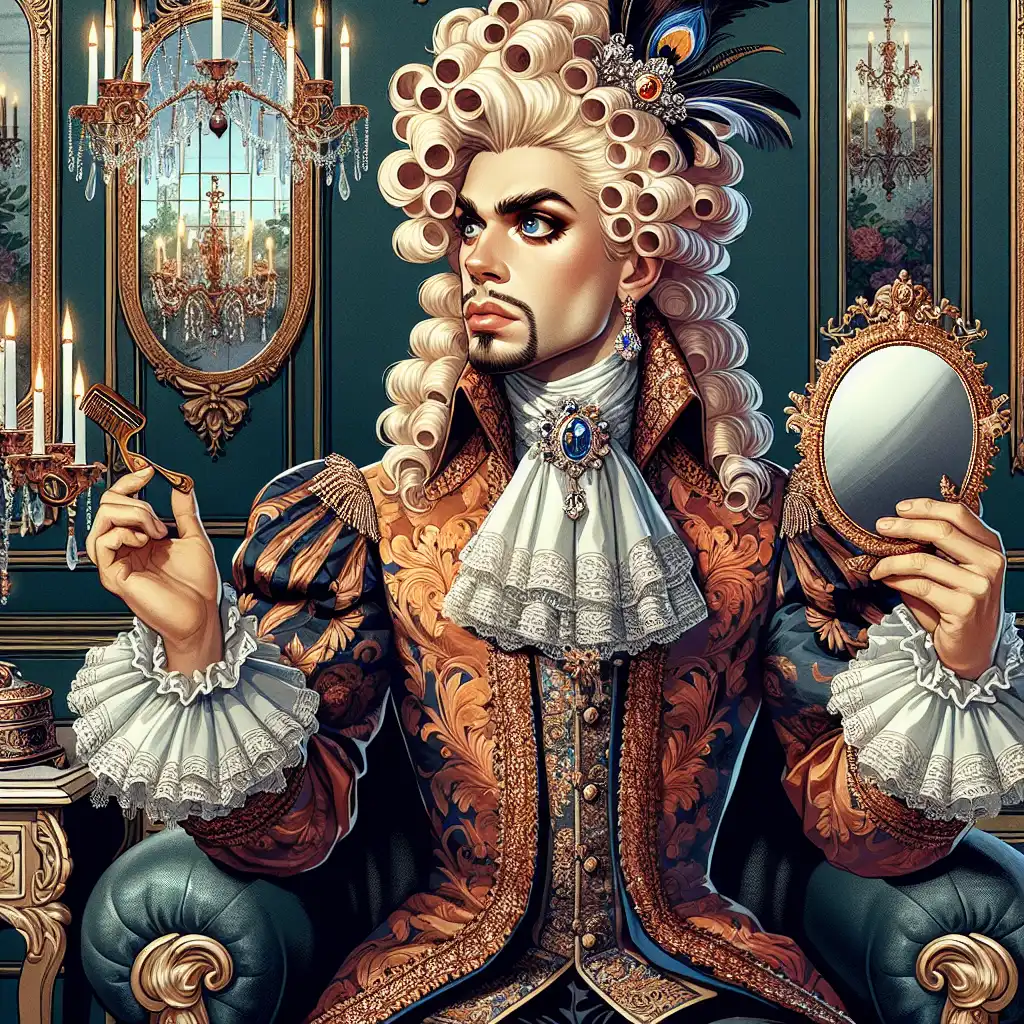
A man who pays too much attention to his clothes and appearance.
He was often mocked as a fop due to his flamboyant dressing and manners.
fop
fɑːp
Đang tải…
fɑːp
A man who pays too much attention to his clothes and appearance.
He was often mocked as a fop due to his flamboyant dressing and manners.
Không tải được âm thanh. Vui lòng thử lại sau.
"Fop" is a word that describes someone who is excessively concerned with their appearance and fashion sense. It is often used to criticize people who are too focused on their appearance and do not prioritize other important things in life. You might use this word to describe someone who spends too much time and money on their clothes or hair, rather than on things that are more important or practical. However, it is important to be cautious when using this word, as it can be seen as insulting or rude if used in the wrong context.
Beau is a term used to describe a fashionable and attractive young man, usually with good manners and social graces. It generally has positive connotations and is used to compliment a man's appearance and behavior.
Beau is a positive term used to describe a charming and well-mannered young man, while fop is a negative term used to describe a man who cares too much about his appearance and is lacking in substance.
Mở từ: Beau →Both dandy and fop refer to men who are concerned with their appearance, but there are some differences in their meanings.
A dandy is someone who is particular about their clothing and style, often dressing in a flamboyant or ostentatious manner.
In general, dandies are seen as fashionable and confident, with a strong sense of individuality.
Fops may be seen as less confident or less secure in themselves than dandies, and may go to great lengths to maintain their appearance and social status.
While both words can describe men who pay a lot of attention to their appearance, dandy suggests a sense of style and individuality, while fop suggests a more self-centered or pretentious attitude.
Mở từ: Dandy →Both fop and macaroni are historically used to describe men who are overly concerned with fashion and appearance.
However, fop was more commonly used in the 18th century, while macaroni was used in the 18th and 19th centuries.
A macaroni was someone who was more focused on a particular style of dressing and grooming influenced by Italian fashion.
They were known for wearing tight-fitting clothing, tall wigs, and elaborate hats. The term macaroni was also used to describe a fashionable trend in general and became associated with the idea of being sophisticated and worldly.
However, fop was used more broadly and often had negative connotations. While macaroni was used more specifically to describe a particular style and could have both positive and negative associations.
Mở từ: Macaroni →Both fop and peacock are used to describe someone who is excessively concerned with their appearance or concerned with impressing others.
Peacock can have a more neutral connotation and simply refers to someone who is proud of their appearance and likes to show it off, often through flamboyant or flashy clothing.
In practice, peacock is generally more commonly used today and often has a positive connotation.
Mở từ: Peacock →I'd love to play some kind of fop.
The difference between a man of sense and a fop is that the fop values himself upon his dress; and the man of sense laughs at it, at the same time he knows he must not neglect it.