
viscid
adjective viscid
ˈvɪsɪd
Sticky or thick, hard to get off.
The syrup on the pancakes was so viscid that it took forever to clean the plate.
viscid
ˈvɪsɪd
Loading…
ˈvɪsɪd
Sticky or thick, hard to get off.
The syrup on the pancakes was so viscid that it took forever to clean the plate.
ˈvɪsɪd
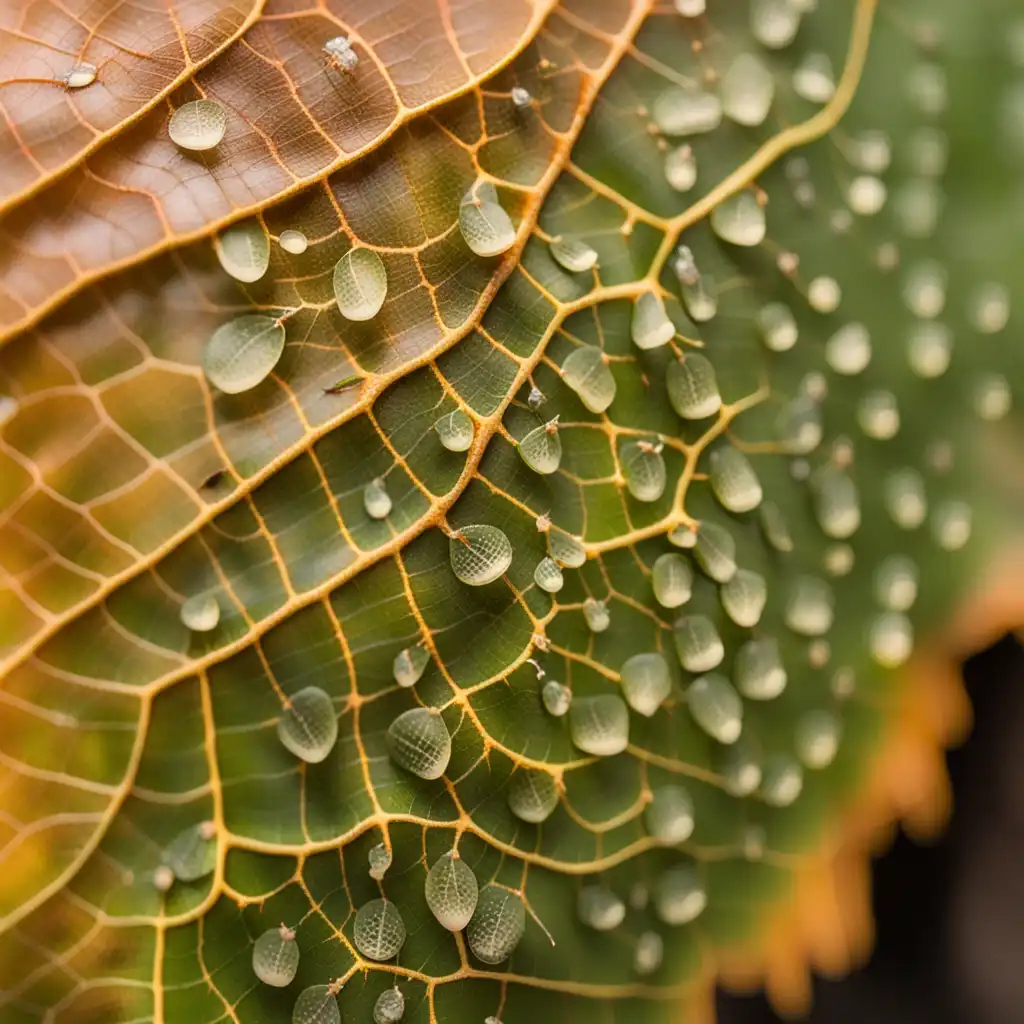
In botany, having a slimy or sticky texture.
The surface of the leaf was viscid, causing small insects to become trapped.
Audio could not be loaded. Please try again later.
The word 'viscid' is used to describe something that is sticky and thick, like honey or glue. It can also be used to describe something that is difficult to move through or flows slowly, like syrup or molasses. This word is most commonly used in scientific or technical contexts, but can also be used in everyday language to describe something that is particularly sticky or flowing. For example, "The viscid honey stuck to my fingers" or "The viscid traffic made my commute longer than usual."
Adhesive and viscous are two related terms, but they have different meanings that are important to understand.
Adhesive refers to a substance that can 'stick' or adhere to another surface. It is commonly used to describe glue or other materials that bind things together.
Adhesive is useful for construction, crafts, and everyday household purposes.
Adhesive refers to a substance's ability to bind to another surface, while viscous refers to its thickness or resistance to flow.
Open word: Adhesive →Both gluey and viscid mean sticky or adhesive, but gluey describes something that is sticky like glue while viscid describes something that is thick and sticky, like honey or syrup.
For example, gluey could be used to describe the glue used to stick paper together, while viscous could be used to describe the syrup on top of pancakes.
Gluey is more commonly used in everyday language while viscid is more commonly used in scientific or technical contexts.
Open word: Gluey →Gummy refers to something that is sticky and soft, like gum or gummy bears.
In summary, both gummy and viscid describe something that is sticky, but gummy is generally used to describe something that is soft and pliable, while viscid describes something that is thick and resistant to flow.
Open word: Gummy →Sticky means something that adheres to surfaces, making it difficult to separate, like honey or glue. Viscid means something that is thick and sticky, like molasses or tar.
However, viscid is a much less common word than sticky and is usually reserved for technical or scientific contexts, while sticky is used in everyday language to describe things that are sticking together or hard to separate.
So, both words refer to stickiness, but sticky is the more versatile of the two, while viscid is much more specific.
Open word: Sticky →Tacky and viscous are both words used to describe stickiness, but they have slightly different meanings.
Tacky refers to something that is sticky to the touch but also has a cheap or unattractive quality. For example, a tacky shirt might be covered in gaudy decorations or have a loud pattern that is unappealing.
Viscid refers specifically to something that is thick and sticky in texture, like honey or molasses. It doesn't have the negative connotation of tacky and is often used in scientific or technical contexts.
Tacky describes something that is both sticky and unattractive, while viscous describes something that is only sticky in texture.
Open word: Tacky →Tenacious means holding onto something firmly and persistently.
It is often used to describe someone who refuses to give up or let go of a goal or idea. For example, a tenacious athlete is someone who keeps practicing and working hard, despite setbacks or obstacles.
Tenacious describes a person or their actions, while viscid describes a substance or material.
Open word: Tenacious →The words viscid and viscous both describe the thickness or stickiness of a liquid, but there is a slight difference between them.
Viscous describes a liquid that is thick, sticky and also slow-moving.
For example, honey is both viscid and viscous because it is thick and sticky, and it doesn't flow very quickly.
However, corn syrup might be described as viscid because it is thick and sticky, but it isn't as slow-moving as honey, so it wouldn't be described as viscous.
Viscid is a more general description of the thickness or stickiness of a liquid, while viscous specifically means a liquid that is thick, sticky, and slow-moving.
Open word: Viscous →