rhizome
noun rhizome
ˈraɪzəʊm
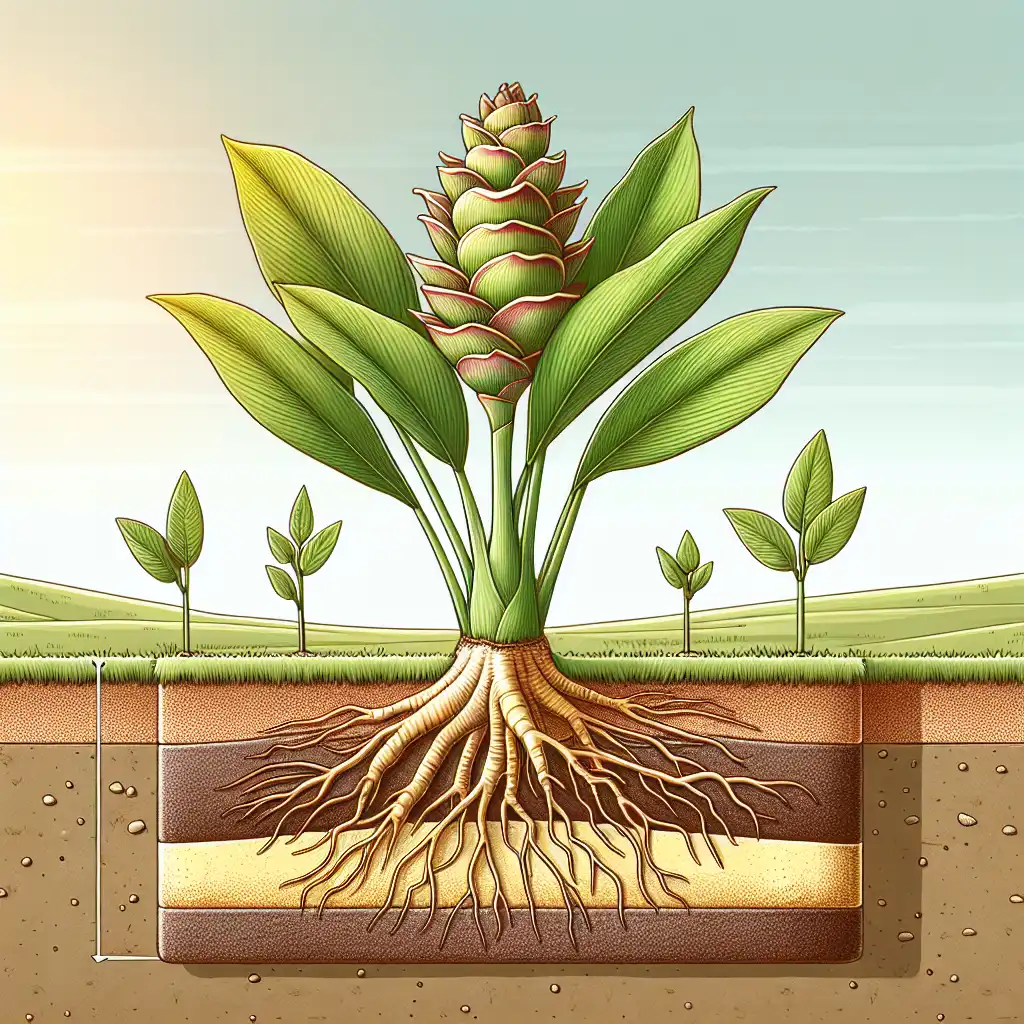
A part of a plant that grows underground. It helps the plant spread out and create new plants.
Ginger and turmeric plants grow from rhizomes.
rhizome
ˈraɪzəʊm
読み込み中…
ˈraɪzəʊm
A part of a plant that grows underground. It helps the plant spread out and create new plants.
Ginger and turmeric plants grow from rhizomes.

ˈraɪzəʊm
In philosophy, a model or structure that allows many points of connection and isn't organized in a simple line or hierarchy.
Deleuze and Guattari use the concept of rhizome to describe knowledge that is interconnected and multidimensional.
音声を読み込めませんでした。しばらくしてからもう一度お試しください。
'Rhizome' is a word used to describe a type of plant structure. A rhizome is an underground stem that grows horizontally and sends out roots and shoots from its nodes. Some examples of plants that have rhizomes are ginger, bamboo, and ferns. Rhizomes help these plants spread and grow quickly, making them useful for things like erosion control and landscaping. Outside of plant terminology, 'rhizome' can also refer to a way of thinking or organizing ideas that is non-hierarchical and interconnected.
A bulb is a rounded underground stem that contains stored food and a growing point for a plant. Bulbs are usually used to produce flowers, and examples include tulips, daffodils, and onions.
Bulbs are commonly planted in autumn and kept underground over winter to allow the bulbous stem to produce new growth in spring.
In brief, bulbs are used for producing flowers while rhizomes are used for vegetative propagation of plants.
単語を開く: Bulb →Both corms and rhizomes are types of plant structures that store nutrients and energy for the plant's growth and survival.
A corm is a thick, swollen underground stem that grows vertically and stores nutrients in its fleshy tissue. It has a bud at the top that sprouts into a new plant.
Corms are found in plants like crocuses, gladioli, and taro. They are applicable for plants that reproduce asexually and need to store energy for their growth.
Rhizomes store energy and nutrients like corms, but they also help the plant spread and clone itself. Examples of plants with rhizomes are ginger, bamboo, and lilies.
単語を開く: Corm →Knob refers to a small rounded bump or protrusion on an object.
Knob is applicable to describe small rounded objects or protrusions, while rhizome describes a type of plant stem that grows underground.
単語を開く: Knob →Offset describes a small plant that grows off the main plant, often at the base or near the soil level. These offsets can be removed and replanted as their own individual plants.
The main difference between the words offset and rhizome is that offset refers to a small plant growing off the main plant, while rhizome refers to a modified stem that grows underground, producing new plants from its nodes.
単語を開く: Offset →A runner is a horizontal stem that grows above the ground and produces roots and shoots. It is applicable for plants like strawberries and mint, which spread horizontally above ground by producing runners.
In simpler terms, a rhizome grows underground, while a runner grows above ground.
単語を開く: Runner →A tuber is a swollen underground stem that stores nutrients for the plant. Tuber buds sprout from the eyes on the exterior of the tuber, producing new shoots and roots.
Examples of plants with tubers include potatoes, yams, and sweet potatoes.
The main difference between rhizomes and tubers is that rhizomes are horizontal underground stems that produce shoots and roots, while tubers are swollen underground stems that store nutrients and produce buds for new shoots and roots.
単語を開く: Tuber →Safari Live - Day 214 %\PIPE%...
YouTube で見る ↗The Unexpected,...
YouTube で見る ↗