
pollard
noun pollard
ˈpɑːlərd
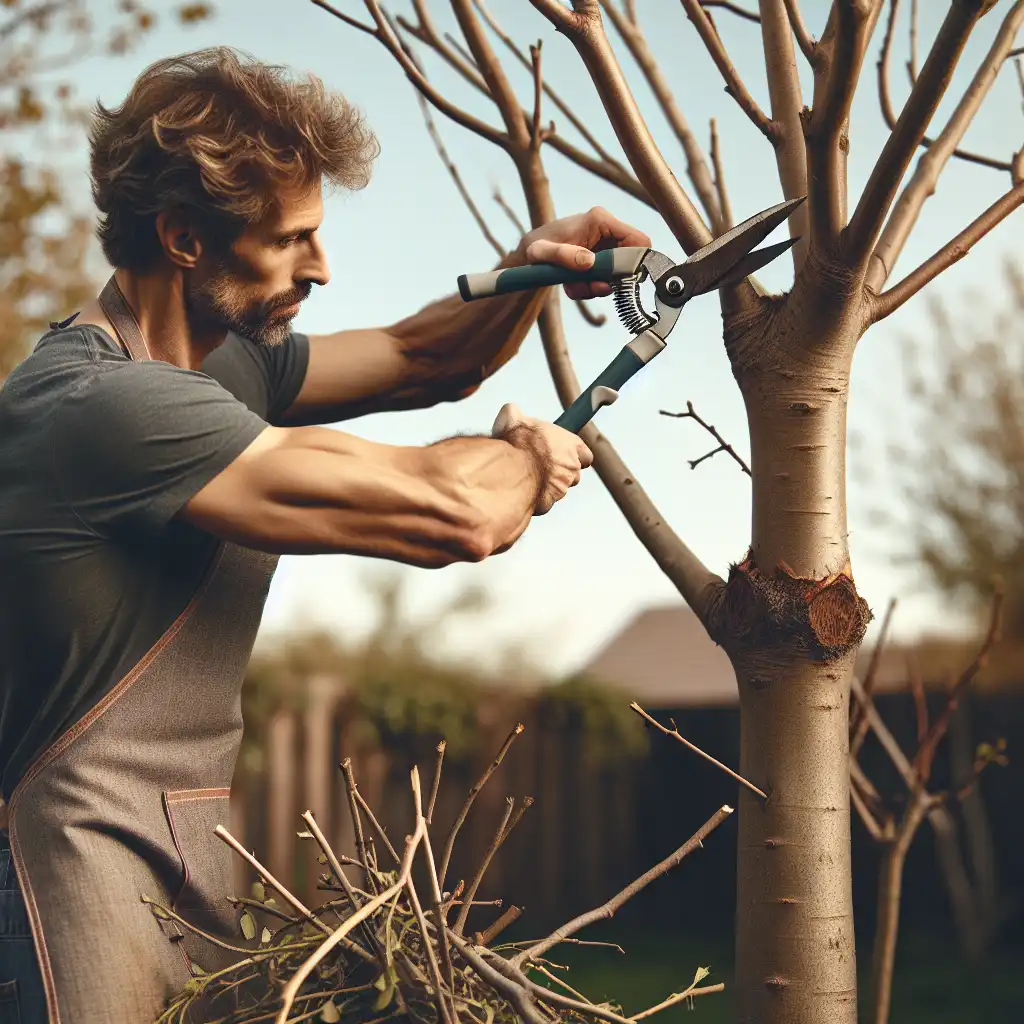
A tree or shrub that has had its top and branches cut back to stimulate growth.
The garden manager decided to pollard the trees to encourage their growth.
pollard
ˈpɑːlərd
불러오는 중…
ˈpɑːlərd
A tree or shrub that has had its top and branches cut back to stimulate growth.
The garden manager decided to pollard the trees to encourage their growth.
ˈpɑːlərd
Cut off the top and branches of (a tree or shrub) to encourage growth.
In order to maintain the tree's size, they decided to pollard it.
오디오를 불러오지 못했어요. 잠시 후 다시 시도해 주세요.
The word 'pollard' refers to a tree that has had its branches cut off near the top of the trunk, usually for the purpose of encouraging new growth. This is done to control the size and shape of the tree, and to promote the growth of new shoots and branches. The practice is particularly common in urban areas, where trees need to be kept under control to prevent them from becoming a hazard or an obstruction. The word can also be used as a verb, to describe the act of cutting back a tree in this way. In everyday conversation, the word 'pollard' is not commonly used, but it may be encountered in the context of gardening or forestry.
Chop refers to cutting a tree or a branch at any height, leaving a stump behind.
Chop is used for cutting down trees, while pollard is used for shaping and maintaining the growth of a tree.
단어 열기: Chop →Clip generally means to remove a small piece or portion of something.
So, in short, clip is a more general term for cutting something, while pollard refers specifically to a technique used in tree pruning.
단어 열기: Clip →Cut back means to trim or reduce the size of a plant or tree by trimming its branches or shoots. This is usually done to encourage new growth or to maintain its desired shape.
'Pollarding' is a more severe tree pruning technique where all branches are cut back to the trunk or main stems at a specific height.
Cut back is a general term for trimming or reducing the size of a plant or tree, while 'pollarding' is a specific technique for pruning trees to control their size and shape.
단어 열기: Cut back →Both lop and pollard are terms related to pruning trees.
Lop means to cut off branches or twigs from a tree, usually in a rough or haphazard manner, often to reduce the tree's size or to clear the way for more sunlight to reach the lower branches.
Lop is applicable when you want to trim a tree roughly, while pollard is a more deliberate technique used to shape and control the growth of certain types of trees.
단어 열기: Lop →Pollarding and pruning are both methods of cutting or trimming trees but they differ in their purposes and locations of application.
Pollarding is a method of pruning where the upper branches of a tree are removed to promote the growth of new branches at a lower level.
Pruning is the general term for cutting away branches or stems from a tree or shrub.
Pruning is applicable in all kinds of areas like farms, backyards, and general open spaces.
In summary, pollarding is a specific type of pruning that is done to control the size and shape of a tree, while pruning is a broader term that encompasses different methods of tree maintenance to improve their health, aesthetics and growth.
단어 열기: Prune →Pollard and shear are both related to pruning or cutting trees or plants, but they differ in terms of the extent of the cut.
On the other hand, shearing involves trimming or clipping the foliage of a plant or a hedge to maintain its shape or size.
Shearing can be used to create topiary or give decorative shapes to plants. Shearing is applicable for ornamental plants and hedges, to maintain their aesthetic value.
In summary, pollarding is used to control tree height and produce wood, while shearing is used to shape and maintain the appearance of plants and hedges.
단어 열기: Shear →On the other hand, topping refers to cutting off the upper part of a tree indiscriminately, often without considering the tree's natural growth patterns.
Topping is sometimes done to reduce the height of a tree, but it can be dangerous for the tree and make it more prone to disease and pests.
So, topping is mostly done for aesthetic reasons by homeowners and landscapers who want to control the height of the tree.
In summary, pollarding is a controlled pruning technique done for forest and agriculture purposes, while topping is a harmful cutting method mostly used for aesthetic reasons in landscaping.
단어 열기: Top →Trim refers to the process of cutting back a tree's branches or foliage to improve the overall appearance of the tree.
Trimming is often done to maintain the tree's health, remove dead or diseased branches, or to shape the tree in a more aesthetically pleasing way.
The main difference between pollarding and trimming is that pollarding is focused on controlling growth and maximizing wood production, while trimming is focused on maintaining a tree's health and appearance.
단어 열기: Trim →