tumult
noun tumult
ˈtuːmʌlt
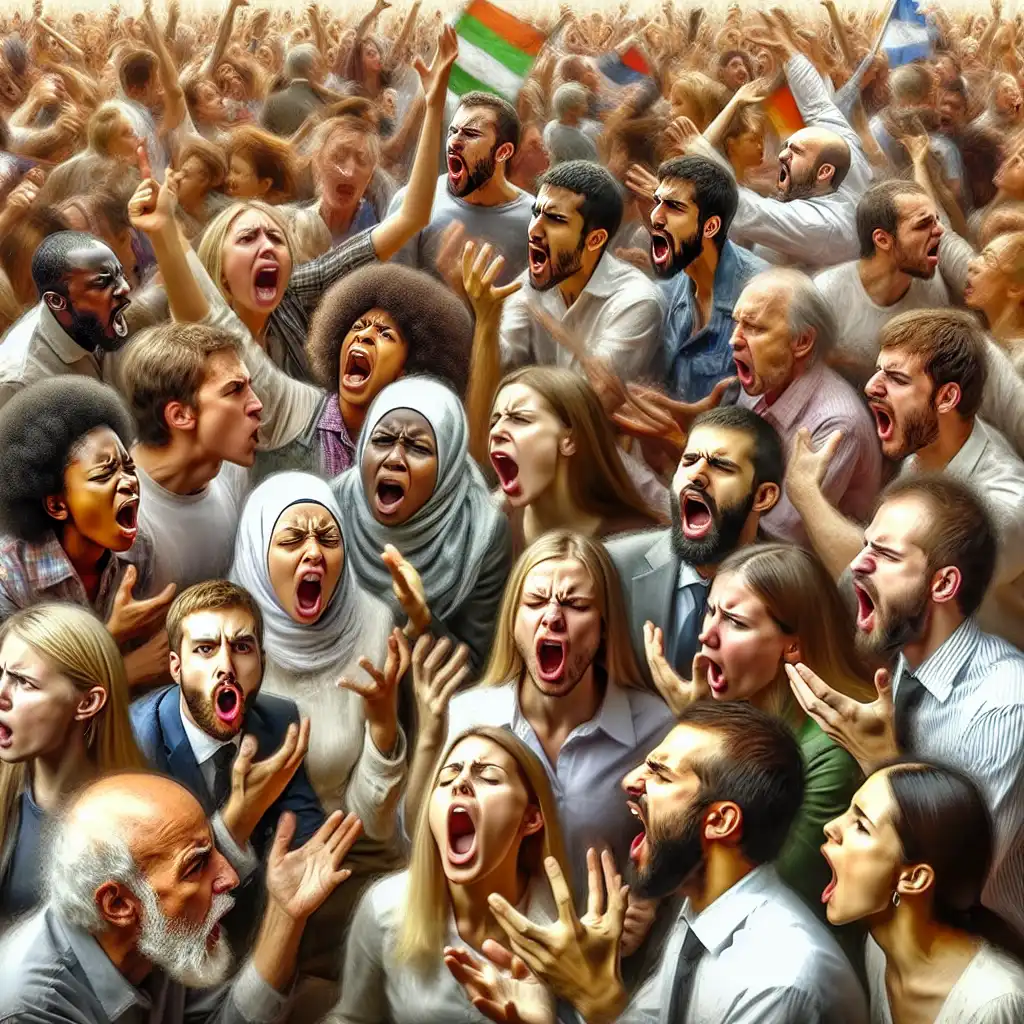
A loud, confused noise, especially one caused by a large group of people.
A tumult of shouting and screaming broke out.
tumult
ˈtuːmʌlt
불러오는 중…
ˈtuːmʌlt
A loud, confused noise, especially one caused by a large group of people.
A tumult of shouting and screaming broke out.
ˈtuːmʌlt
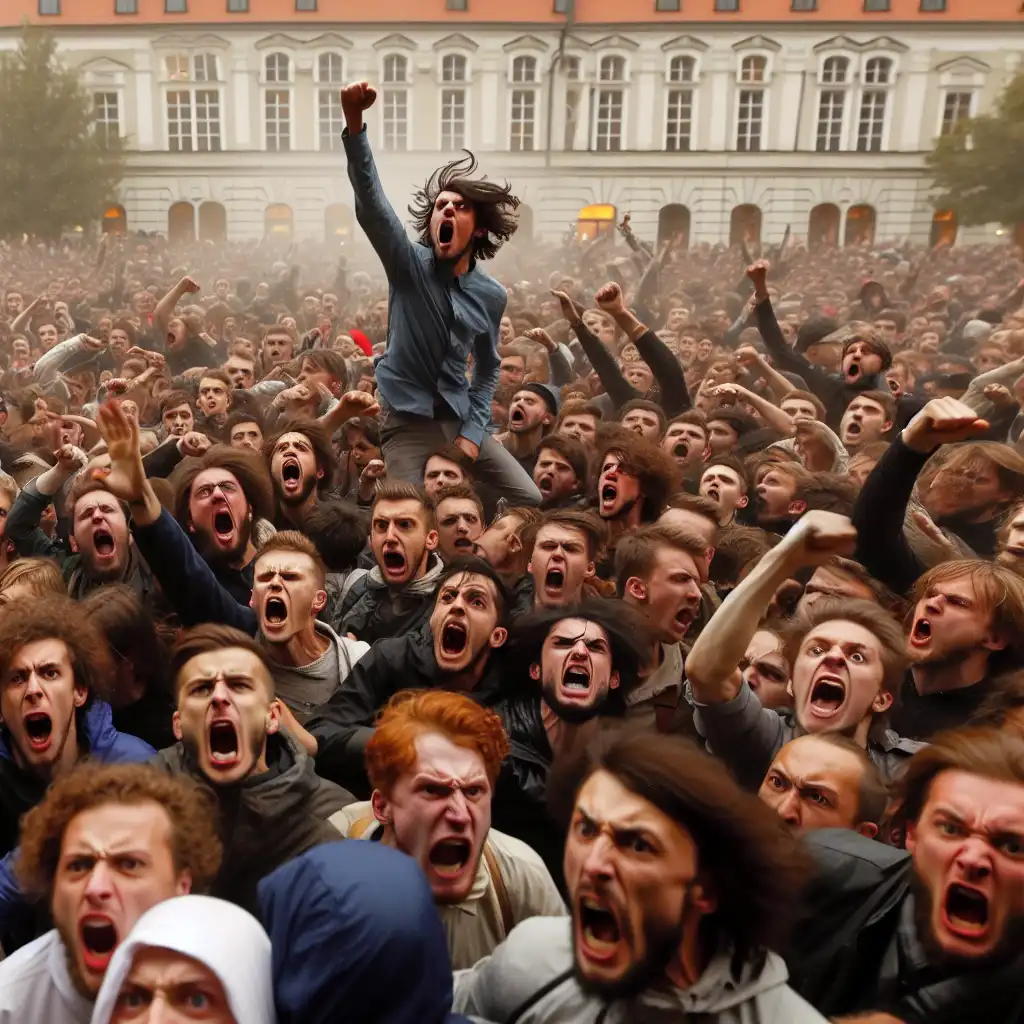
A violent and noisy commotion or disturbance of a crowd or mob
He was charged with inciting tumult.
오디오를 불러오지 못했어요. 잠시 후 다시 시도해 주세요.
Tumult means a loud and chaotic noise or commotion, often caused by a group of people who are angry or excited. You can use this word to describe situations like a protest, a sports event, or a crowded street during rush hour. When there is a lot of noise and confusion happening around you, you can say that there is a tumult.
Agitation refers to a state of restlessness or disturbance, often caused by feelings of anxiety or distress.
It can also mean the act of stirring something up, like in the case of an agitation in a washing machine. Agitation is commonly used to describe a person's emotional state.
Agitation describes an individual's emotional state, while tumult describes a noisy or chaotic situation.
단어 열기: Agitation →Chaos refers to a state of confusion, disorder, and lack of organization. It implies a situation where things are in disarray and do not follow any set pattern or logic.
Tumult refers to a state of loud noise and commotion, often caused by a large group of people. It implies a situation where there is a lot of shouting, screaming, and chaos, but it may not necessarily involve complete disorder or lack of control.
단어 열기: Chaos →Clamour refers to a loud and continuous noise made by a group of people, while tumult refers to a situation that is chaotic, noisy, and has a lot of confusion or disorder.
Clamour is applicable when a group of people make a lot of noise, like at a protest or a sporting event.
Overall, both words describe situations that are noisy and chaotic, but clamour specifically refers to a loud noise made by a group of people, while tumult refers to a more general state of disorder or confusion.
단어 열기: Clamour →Commotion and Tumult both refer to a situation where there is a lot of noise and confusion.
However, the main difference between the two is that Commotion refers to a situation that is noisy and confusing, but does not necessarily involve violent or aggressive behavior.
Commotion refers to a noisy and confusing situation while tumult refers to a noisy, chaotic and violent situation.
단어 열기: Commotion →Both din and tumult refer to loud and chaotic noise, but din typically refers to a continuous and overwhelming noise, while tumult suggests a noise that is more chaotic and disorganized, often accompanied by shouting or other forms of commotion.
For example, a busy restaurant may have a constant din of chatter and clattering dishes, while a protest or riot might create a tumult of shouts, sirens, and breaking glass.
Din tends to connote a more relentless and pervasive noise, while tumult suggests a more volatile and unpredictable disturbance.
단어 열기: Din →Both disturbance and tumult refer to a situation that is not calm or peaceful, but there are some differences between them.
- Disturbance typically refers to a situation that involves some sort of interruption or interference with normal activity or peace.
For example, a loud noise outside your house might be a disturbance that prevents you from sleeping or studying.
Disturbance is a more neutral term that could refer to a variety of situations, whereas tumult suggests a more intense and disruptive situation.
단어 열기: Disturbance →Mayhem refers to a situation of violent chaos or disorder.
Mayhem is more extreme and violent, while tumult is more chaotic and noisy. Mayhem would be applicable in situations of extreme violence, while tumult would be applicable in situations of confusion or disarray.
단어 열기: Mayhem →Both pandemonium and tumult are words that describe chaos and confusion.
Pandemonium typically describes a situation where people are frightened, panicked, or behaving in a wild and uncontrolled manner.
Pandemonium tends to describe situations where people are specifically reacting to a sudden and unexpected event, while tumult can describe a broader range of chaotic situations.
단어 열기: Pandemonium →The words tumult and turmoil both refer to a state of chaos or disturbance, but there is a slight difference in their usage.
Turmoil has a broader meaning and refers to a state of great disturbance, confusion, or uncertainty.
It can encompass emotional turmoil, political turmoil, or even turmoil in one's personal life.
Tumult specifically refers to a loud and chaotic disturbance, while turmoil is a more general term for any state of upheaval or confusion.
단어 열기: Turmoil →Uproar refers to a state of chaos or commotion, often accompanied by loud noise and outburst of emotions from a group of people.
Both words can describe situations of disturbance or unrest caused by a group of people, but tumult implies a more disorganized and chaotic situation, while uproar suggests a more intense and emotional outburst.
For instance, a political rally might lead to a tumult if the crowd becomes unruly and starts causing chaos. A public speech might lead to an uproar if the audience becomes vocal and emotional in response to the speaker's words.
단어 열기: Uproar →How to deal with...
YouTube에서 보기 ↗The ant world is a tumult, a noisy world of pheromones being passed back and forth.
Maps that show us who we...
YouTube에서 보기 ↗Life has always taken place in a tumult without apparent cohesion, but it only finds its grandeur and its reality in ecstasy and in ecstatic love.
Mating Machines %\PIPE% Nat...
YouTube에서 보기 ↗But the beginning of things, of a world especially, is necessarily vague, tangled, chaotic, and exceedingly disturbing. How few of us ever emerge from such beginning! How many souls perish in its tumult!
Panama Frogs Serenade...
YouTube에서 보기 ↗When all the world appears to be in a tumult, and nature itself is feeling the assault of climate change, the seasons retain their essential rhythm. Yes, fall gives us a premonition of winter, but then, winter, will be forced to relent, once again, to the new beginnings of soft greens, longer light, and the sweet air of spring.
I think I would have had less tumult in my life if I hadn't grown up in my particular house.
Happy are those who dwell apart from the harrowing tumults of public life!
There is need occasionally to leave the noise and the tumult of the world and step within the walls of a sacred house of God, there to feel His Spirit in an environment of holiness and peace.
My father died in my arms. That's tumult. That's everything exploding.
A week of sweeping fogs has passed over and given me a strange sense of exile and desolation. I walk round the island nearly every day, yet I can see nothing anywhere but a mass of wet rock, a strip of surf, and then a tumult of waves.
All through the night, like the tumult of a river when it races between the cliffs of a canyon, in my sleep I could hear the steady roar of the passing army.