
fatalistic
adjective fatalistic
ˌfeɪtəˈlɪstɪk
Believing that all events are predetermined and inevitable
He had a fatalistic view of life, so he was never surprised by any outcome.
fatalistic
ˌfeɪtəˈlɪstɪk
Chargement…
ˌfeɪtəˈlɪstɪk
Believing that all events are predetermined and inevitable
He had a fatalistic view of life, so he was never surprised by any outcome.

ˌfeɪtəˈlɪstɪk
Accepting all things and events as inevitable
Though the odds were against them, the soldiers marched with a fatalistic determination.
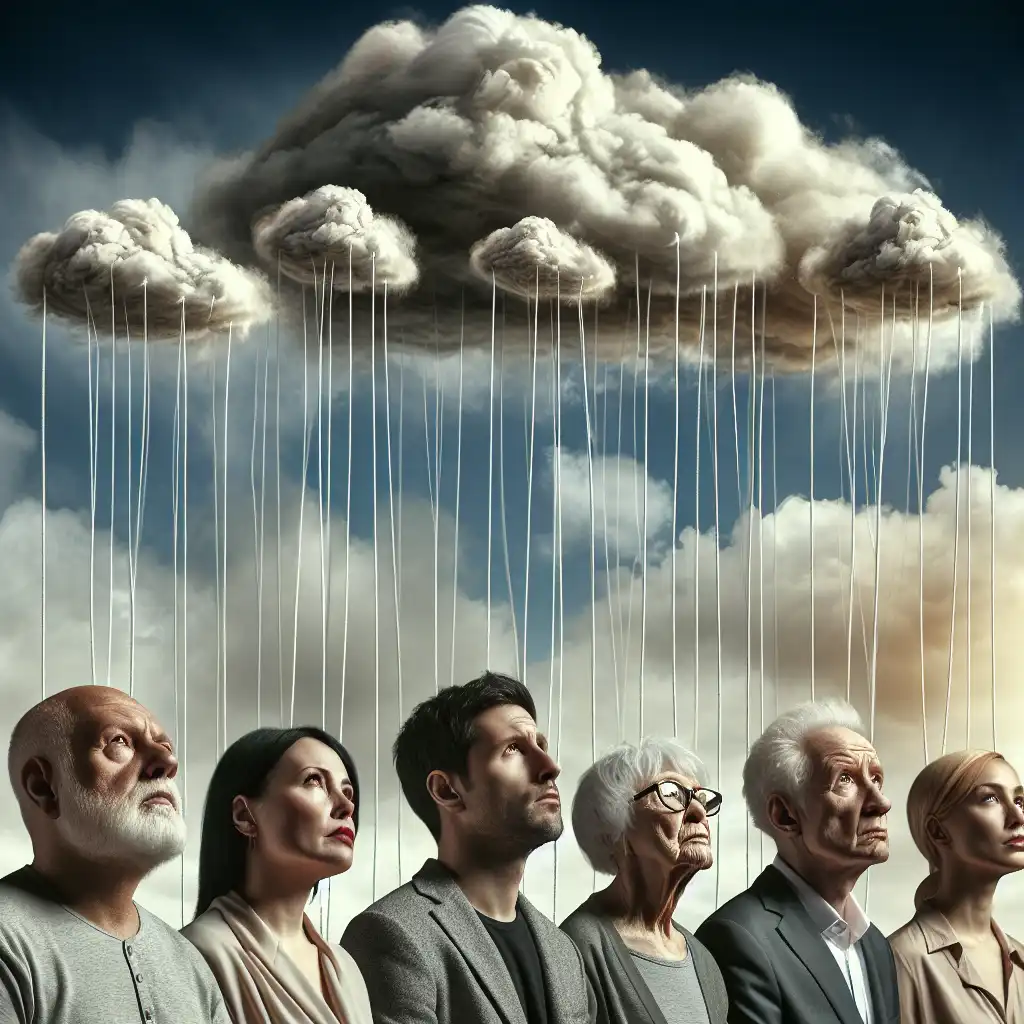
ˌfeɪtəˈlɪstɪk
In the belief that you cannot change anything because your life is controlled by a power outside yourself
Many people in the area have a deeply fatalistic approach to life.
Impossible de charger l’audio. Réessayez plus tard.
The word 'fatalistic' means having the belief that everything is predetermined and that we have no control over the future outcomes of events. It implies a sense of resignation towards fate and a lack of agency in shaping one's own life. For example, if someone says, "I'm not going to bother studying for this exam because I'm going to fail anyway," they are being fatalistic. They believe that the result has already been set in stone and that their actions won't make a difference. The word can be used in various contexts such as in discussions about destiny, determinism, or pessimism. It's important to note that fatalism can also be seen as a negative mindset as it can promote a lack of effort, accountability, and agency.
Defeatist refers to a person who thinks there is no point in trying because they believe they will fail anyway. This attitude is applicable in situations where a person has lost confidence and hope and feels defeated.
A defeatist believes they will fail no matter what they do, while a fatalistic person believes that their fate is already decided and they cannot change it.
Ouvrir le mot: Defeatist →Despondent and fatalistic are both words that describe a negative outlook on life, but they differ in their approach to the situation.
Despondent refers to a feeling of extreme sadness, hopelessness, and despair. When someone is despondent, they may feel like nothing will ever improve and that everything is pointless.
Despondent is a feeling of hopelessness and despair, while fatalistic is a belief that events are predetermined and inevitable.
Ouvrir le mot: Despondent →Fatal refers to something that causes or leads to death, while the word fatalistic describes an attitude of believing that events are predetermined and inevitable, and that humans are powerless to change them.
Fatal describes an event, circumstance, disease, or accident that leads to a person's death. For example, a car accident can be fatal if it causes fatal injuries, or a disease can be fatal if it causes death.
Fatalistic describes a philosophical or psychological attitude towards life. It suggests that events are predetermined and that humans cannot change their outcomes.
A person who has a fatalistic attitude might say, "What happens will happen" and feel resigned to fate.
Fatal describes an actual event that leads to death, while fatalistic describes a way of thinking about life, where one believes that events are predetermined and inevitable.
Ouvrir le mot: Fatal →Gloomy refers to a feeling of sadness and pessimism. It describes a state of mind that is full of darkness and despair.
Fatalistic refers to a belief or philosophy, while gloomy refers to an emotional state or condition.
Ouvrir le mot: Gloomy →The term hopeless refers to feeling despair or having no hope for a positive outcome.
Hopeless can describe a person who is overwhelmed by feelings of despair or who feels that their situation is completely without hope.
Fatalistic refers to a belief system, while hopeless refers to an emotional state. Both words suggest a belief that events are out of one's control, but hopeless specifically refers to a feeling of despair, while fatalistic refers to a broader belief system.
Ouvrir le mot: Hopeless →Melancholic refers to a deep and prolonged sadness or depression. It implies a sense of sorrow or grief, often without any particular reason.
In summary, while both words convey a sense of negativity or sadness, fatalistic pertains to a belief in predetermined destiny, while melancholic pertains to a feeling of prolonged sadness.
Fatalistic is applicable when describing a person's outlook on life, while melancholic is applicable when describing a person's emotional state.
Ouvrir le mot: Melancholic →Morbid refers to a preoccupation with death or disease, often to an excessive or unhealthy degree.
It can suggest a fascination with unpleasant or macabre topics. An example of its use might be, "He had a morbid interest in horror movies, often staying up late to watch them even though they made him feel scared and unsettled.".
Ouvrir le mot: Morbid →Pessimistic refers to a negative outlook or expectation, where one believes that things will turn out badly. It is applicable when talking about situations where there is a possibility of a positive outcome, but one is not confident in it.
Fatalistic refers to something that is predetermined and inevitable, while pessimistic refers to a negative outlook on a situation that may or may not have a positive outcome.
Ouvrir le mot: Pessimistic →How megacities are...
Voir sur YouTube ↗There's a common criticism of evolutionary psychology that it's fatalistic and it dooms us to eternal strife, 'Why even try to work toward peace if we're just bloody killer apes and violence is in our genes?
What is your entrepreneur...
Voir sur YouTube ↗I love that Viking era, but also they're a fatalistic people and that dictated their fearlessness in battle and approach to life.
As a kid I'd lie awake at night and convince myself that a meteor was about to hit the Earth. It's my fatalistic streak, which I've inherited from my mum. I firmly believe something cataclysmic is going to happen in my lifetime and I have to be prepared to run for my life when the time comes.
I learned from Jehovah's Witnesses that a fatalistic view is counterproductive.
Destiny has always been something that interested me as a subject, but not in a fatalistic way because I believe that one can transform destiny through self-knowledge.
Instead of joyfully looking forward to my birth, my mother began systematically preparing for her own death. She was fatalistic.
You can have immediate regrets, but if you look at stuff and say, 'Things happen for a reason', there's a fatalistic thing about it. Something will happen that will justify it in some way.
I was incredibly fatalistic. I just thought, 'If it works, it works.' But I've always been like that. I've never been easily impressed, and I've never thought I didn't deserve something. If I got it, then I deserved it.
It isn't just that Obama's policies have failed; it's that he has essentially given up and is asking us to accept a lesser America going forward, as if resigned to the fatalistic belief that America has begun an inevitable and unavoidable decline.
I'm sure there's some sort of cynicism or fatalism in Ireland and England. We are fatalistic here, and sometimes we need to be shaken out of that.