upstage
adverb upstage
ˌʌpˈsteɪdʒ
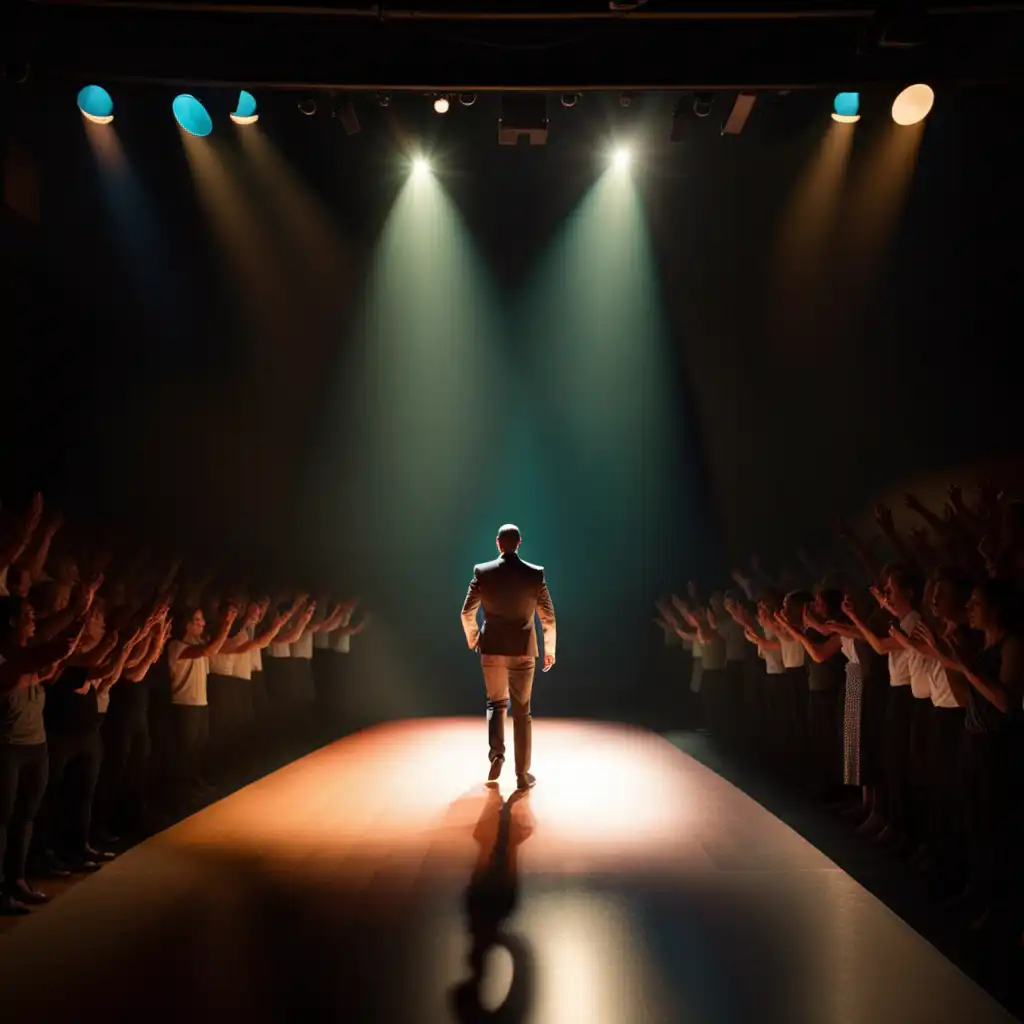
Moving to the part of the stage away from the audience.
The actor walked upstage as the crowd applauded.
upstage
ˌʌpˈsteɪdʒ
불러오는 중…
ˌʌpˈsteɪdʒ
Moving to the part of the stage away from the audience.
The actor walked upstage as the crowd applauded.
ˌʌpˈsteɪdʒ
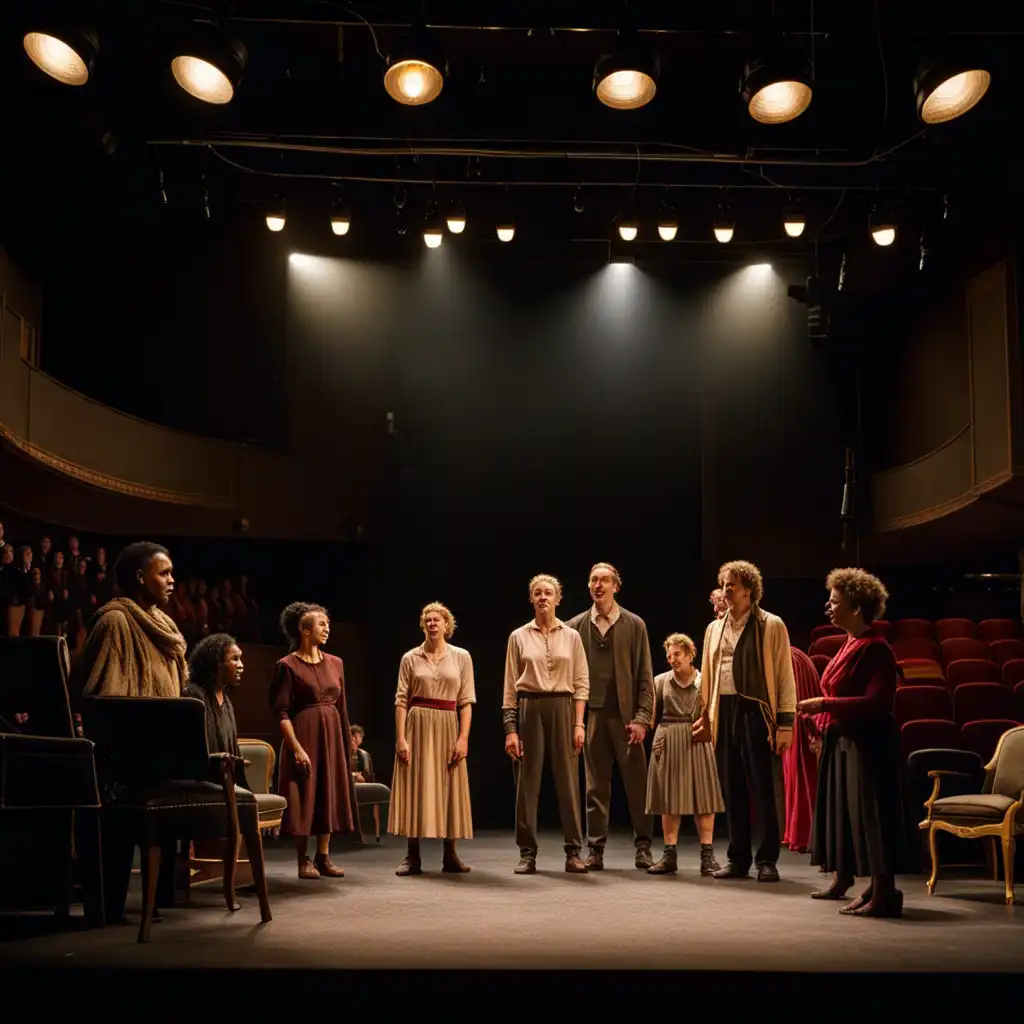
In or into the part of the stage away from the audience.
They performed in the upstage corner of the theatre, away from the audience.

ˌʌpˈsteɪdʒ
To draw attention away from someone else by being more noticeable or dramatically effective.
The opening act upstaged the main performer by offering a spectacular performance.
오디오를 불러오지 못했어요. 잠시 후 다시 시도해 주세요.
Upstage is a word that is often used in the context of theater or performance. It refers to the part of the stage that is farther away from the audience. In theater, actors are often told to stay upstage if they want to appear farther away from the audience. This is because the stage is slanted slightly downwards towards the audience, which means that if an actor stands at the back of the stage (upstage), they will be higher up and further away from the audience's view. You can also use the term "upstage" to describe someone who is trying to move the attention of a group away from someone else. For example, if someone is trying to upstage their co-worker during a presentation, they are trying to grab attention and be the star of the show. Overall, the context of upstage is all about distance and attention. Whether it's physical distance on a theater stage or emotional distance in a group dynamic, upstage refers to being further away or trying to gain the spotlight.
Eclipse means to dominate or overshadow something or someone. It could refer to a situation where one person or thing is so good or important that it makes everything else seem less important or impressive.
For example, a famous athlete might eclipse the accomplishments of other athletes in their sport.
Eclipse means to overshadow or make something seem less important, while upstage means to draw attention to oneself.
단어 열기: Eclipse →The words outdo and upstage both mean to do better than someone else, but they are used in different situations.
Outdo means to do something better than someone else in a general sense. For example, if you get an A on a test and your friend gets a B, you outdid your friend.
The difference is that outdo is a neutral term while upstage has a negative connotation of trying to outshine someone else in a show-offy way.
단어 열기: Outdo →Outshine means to be better or more impressive than someone or something else. For example, if a person's performance was really good and it was better than others they outshine the others.
단어 열기: Outshine →Overpower means to defeat or overcome something or someone by using superior strength, power or force. This is applicable in situations where there is a struggle for dominance or control, such as in a fight or competition.
단어 열기: Overpower →Supersede describes when one thing or person replaces or takes the place of another in a higher position or authority.
For example, if a new CEO is hired to replace the old one, then the new CEO would supersede the old one.
Supersede is about taking over a higher position, while upstage is about drawing attention away from someone or something else.
단어 열기: Supersede →To surpass means to go beyond or exceed in quality, quantity, or degree.
For example, if a runner surpasses their previous time in a race, it means they ran faster and had a better performance.
To surpass means to exceed in quality or performance, while to upstage means to intentionally draw attention away from someone else.
단어 열기: Surpass →Transcend means to go beyond or surpass something, to reach a higher level or state of being. This applies to situations where someone or something rises above limitations or achieves something greater than expected.
For example, a person who overcomes adversity and becomes successful despite their circumstances can be said to have transcended their difficulties.
Transcend means to surpass limitations and achieve something greater, while upstage refers to theatrical positioning or attention seeking behavior.
단어 열기: Transcend →Frank Gehry: From 1990,...
YouTube에서 보기 ↗Bridesmaids are never going to upstage the bride.
Film directing has perfected my theater directing. I think when I first started directing, a lot of my stuff was very lateral; I was afraid to have the actors' backs turned away, afraid to put them too far upstage, and I think once I did more things with film, I got more interested in composition.
You mustn't upstage the bride.
Jewelry should not upstage you. I pick one hot point on my body that I'm going to highlight. Let one area do the singing - you don't want to hear three songs at once.
I tell you, being on a soap is the hardest work, and it gets so old. Get on your mark, get in the light, don't turn too far upstage - that's all it is.
Obviously you do not want to upstage. Some people work like that. But I have never been that upstaging kind. I wouldn't want to upset anyone.
I'm facing upstage, with my back to the audience, and the spotlight comes up on my back as I start singing.
You know rule one for the vice president is make sure you never upstage the president, right? It's rule one.
I am the youngest of three brothers so was constantly trying to upstage them all the time growing up, so that's why being a WWE Diva is so fitting for me.
Everyone said how brilliant of Tom Conti to be in bed in 'Whose Life Is it Anyway?' and only have his head to act with. He should be so bloody lucky. I'm not for a moment disputing that Tom Conti is an absolutely brilliant actor. But he should be so lucky to be stuck upstage in the spotlight, with everyone focused on him.