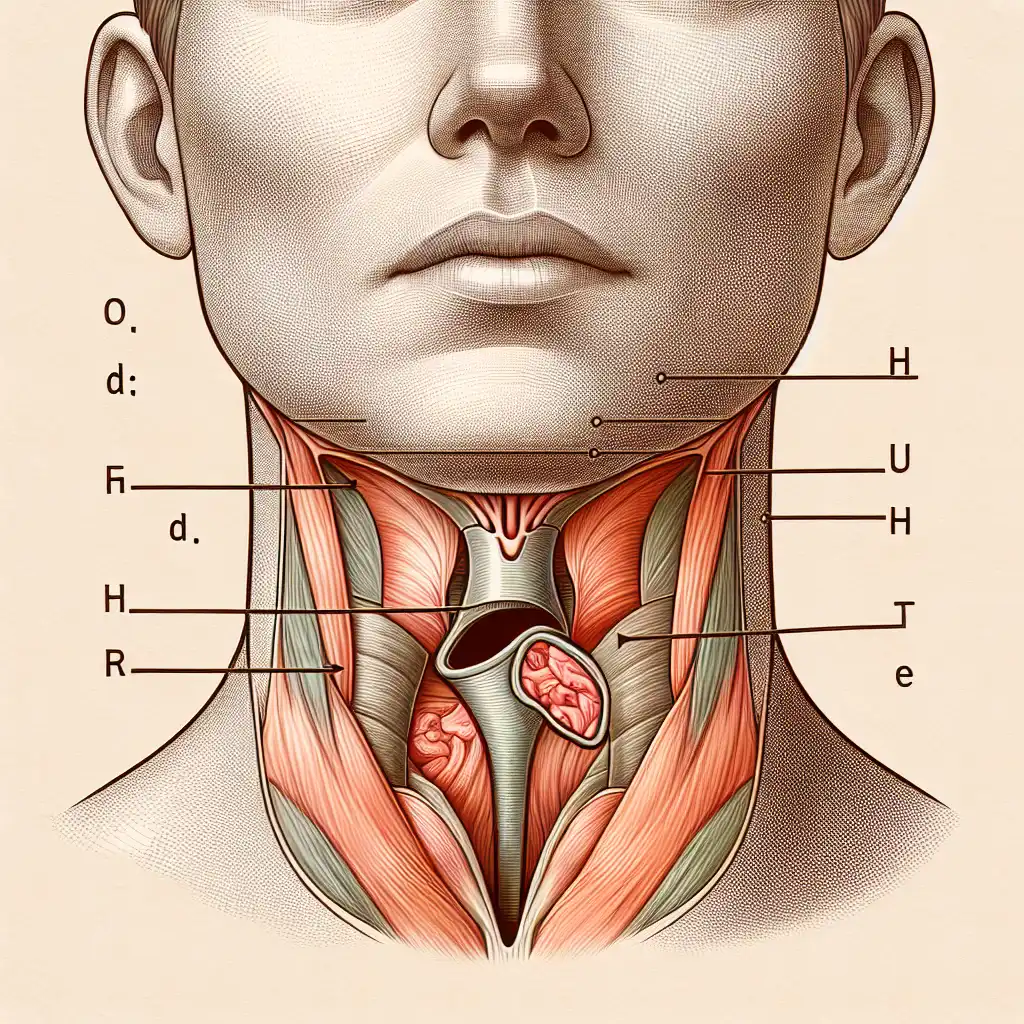
glottis
noun glottis
ˈɡlɑːtɪs
The part in your throat that opens and closes to control the flow of air as you speak or breathe.
When we swallow, the glottis closes to stop food from entering the airway.
glottis
ˈɡlɑːtɪs
Cargando…
ˈɡlɑːtɪs
The part in your throat that opens and closes to control the flow of air as you speak or breathe.
When we swallow, the glottis closes to stop food from entering the airway.
No se pudo cargar el audio. Inténtalo de nuevo más tarde.
The glottis is a part of your throat near your vocal cords that controls airflow and helps produce sound when you speak, sing or make other vocal sounds. It's important for speaking and swallowing. If you're learning English, you might hear the term "glottis" used in a medical or scientific context, or in discussions of voice and speech. It's not a word you'll use in everyday conversation unless you work in a field related to language or voice production.
The epiglottis is a flap of tissue that sits above the glottis and helps prevent food and liquid from entering the trachea (windpipe) when you swallow.
The glottis is applicable when you breathe or talk, while the epiglottis comes into play when you swallow to prevent choking.
Abrir palabra: Epiglottis →The larynx and glottis are both parts of the respiratory system, but they have different functions.
The larynx is commonly known as the voice box, and it is responsible for producing vocal sounds. It is located at the top of the trachea (windpipe) and contains the vocal cords.
The larynx helps us to speak, sing, and make other vocalizations.
The glottis is the opening between the vocal cords in the larynx. It acts as a valve, controlling the flow of air in and out of the lungs.
The larynx is where the vocal cords are located and is responsible for producing sound, while the glottis is the opening between the vocal cords that controls the flow of air in and out of the lungs.
Abrir palabra: Larynx →Why do we hiccup? - John...
Ver en YouTube ↗