protagonist
noun protagonist
prəˈtæɡənɪst
The main character in a story, movie, or drama
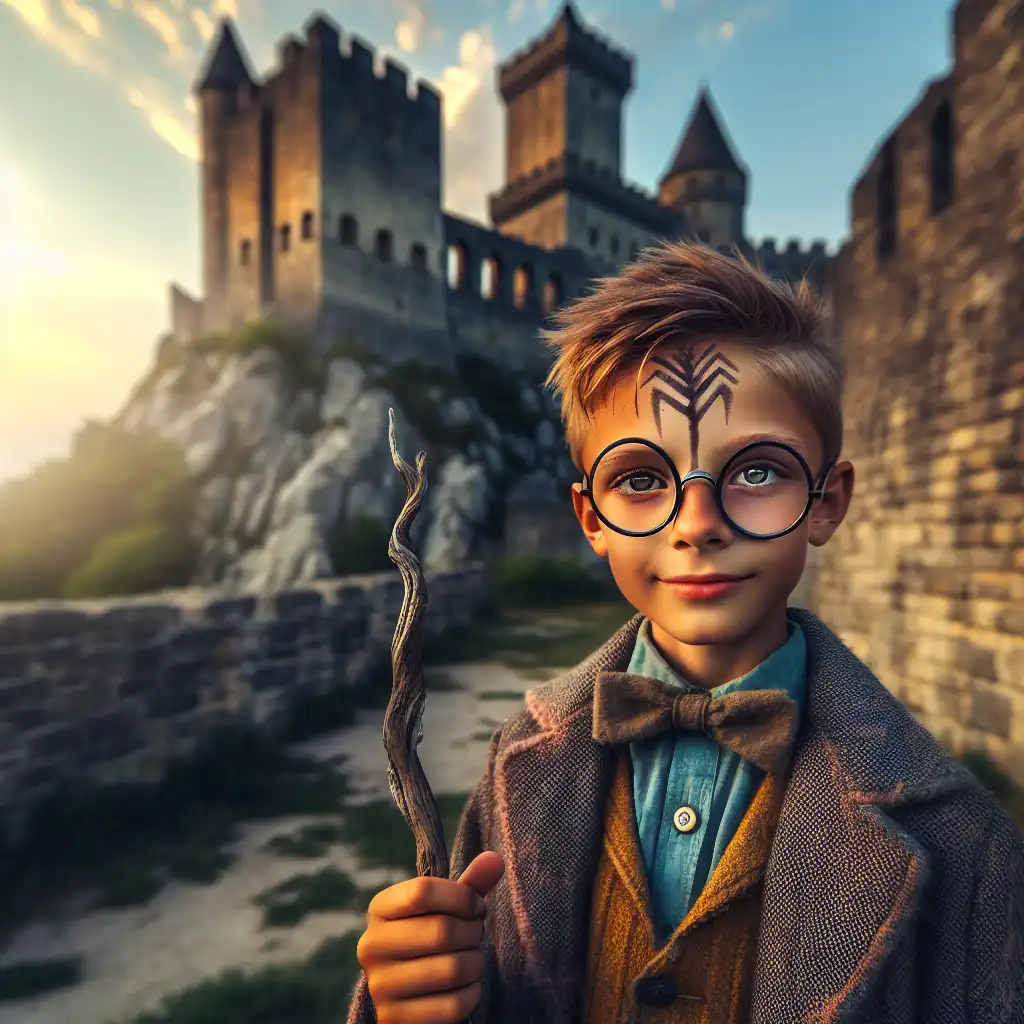
Harry Potter is the protagonist in the 'Harry Potter' series.
protagonist
prəˈtæɡənɪst
読み込み中…
prəˈtæɡənɪst
The main character in a story, movie, or drama
Harry Potter is the protagonist in the 'Harry Potter' series.
prəˈtæɡənɪst
The leading person in a movement or cause
Martin Luther King Jr. was a protagonist in the Civil Rights Movement.
音声を読み込めませんでした。しばらくしてからもう一度お試しください。
The word 'protagonist' is used to describe the main character in a story, play, or movie. This is the person who is often at the center of the action and who the audience follows throughout the story. For example, in the movie "Harry Potter," Harry Potter is the protagonist. It's important to note that not all stories have a clear protagonist, but when they do, the protagonist is usually someone to pay attention to.
Champion refers to someone who is skilled or successful in a competitive field, such as a sport or a contest.
Champion can also refer to someone who stands up for a cause or fights for something they believe in.
Champion is mostly used in the context of winning competitions or supporting a cause, while protagonist describes the main character in a story or play.
単語を開く: Champion →A hero is a noble and virtuous character who does good deeds and sacrifices themselves for the greater good.
While a hero is always a protagonist, a protagonist may not always be a hero. For instance, the protagonist of a story might be a villain or an antihero.
However, a hero is often considered the protagonist of a story as they are central to the plot and drive the narrative forward.
So, in simpler terms, a hero is a character with admirable qualities, while a protagonist is the primary character in a story.
単語を開く: Hero →Both lead and protagonist refer to the main character of a story, but protagonist specifically refers to a character who is the center of the conflict in a story.
For example, in the Harry Potter series, Harry is both the lead character and the protagonist because he is the main character and the one who must face and overcome the conflicts in the story.
However, in a movie like The Wolf of Wall Street, the lead character is Jordan Belfort, but he may not be considered the protagonist because he is actually the one causing the conflicts in the story, while the authorities who try to bring him down may be seen as the protagonists.
Lead character refers to the character who is in the focus of the story, but protagonist refers to the character who drives the conflict and whose actions are central to the story's resolution.
単語を開く: Lead →Principal usually refers to the most important or primary person or thing in a given context. For example, in a school, the principal is the most important person or leader of the school.
In a movie or play, the principal character might be the most important character, but not necessarily the protagonist.
The difference between principal and protagonist is that the former refers to the most important or primary thing, while the latter refers specifically to the main character or protagonist of a story or play.
単語を開く: Principal →K the protagonist is arrested out of nowhere and made to go through a bewildering process where neither the cause of his arrest, nor the nature of the judicial proceedings are made clear to him. This sort of scenario is considered so characteristic of Kafka's work
YouTube で見る ↗The writer must be a participant in the scene... like a film director who writes his own scripts, does his own camera work, and somehow manages to film himself in action, as the protagonist or at least the main character.
of stories that actually place me as a protagonist inside of various imagined romances with him. So in one I tell him that I'm pregnant with his child. In another we meet in hospital where we're both fighting cancer, and in another we fall so deeply in love that we become fugitives who kill people.
YouTube で見る ↗I'm interested in flawed protagonists. I was raised on them.
the protagonists of the narrative it's their story and I think just you know a quick aside of what that blot the story did you just said it's so powerful about the blind kid who knew like even though he can't see he he wants to be in the frame well and he wants to be represented also well there is a bigger
YouTube で見る ↗Protagonists traditionally are active characters.
where books are banned from all areas of life - and possessing let alone reading them is forbidden. The protagonist Montag is a fireman responsible for destroying what remains. But as his pleasure gives way to doubt,
YouTube で見る ↗I became interested in educating people in the variety of ways in which women can express their emotion. Which is much easier to do in a large role than in a supporting role to a male protagonist. In general, the women in a supporting role to a male protagonist - cry a lot.
and must negotiate with a shadowy cast of characters. Like many of Dickens’s protagonists, poor Pip's position is constantly destabilized, just one of the reasons why reading Dickens is the best of times for the reader, while being the worst of times for his characters.
YouTube で見る ↗Things have character. So I'm interested in how the character of the thing might function as a protagonist in what isn't a narrative.
Of course these characters are far from perfect. They often think they have all the answers. And by telling the story from their perspective, Austen tricks the viewer into believing their heroine knows best– only to pull the rug out from under the protagonist and the reader.
YouTube で見る ↗The protagonists that I've played tend to be people who make trouble. Or even if they don't make it, they certainly disrupt things. It's fun to do that in life as well. But I don't think I ever played myself.
love the protagonists of my books are strong and passionate women like rose map endo I don't make them up there's no need for that I look around and I see them everywhere I have worked with women
YouTube で見る ↗Thelma and Louise' was a pretty important film for me and still is. It's a social film about many things - gender, freedom - and it puts someone like me into the place of these protagonists. Watching that movie, you are living through the eyes of these women.
and he felt the protagonist was the painter himself. Franz Kafka saw incompletion when others would find only works to praise, so much so that he wanted all of his diaries, manuscripts letters and even sketches burned upon his death.
YouTube で見る ↗As as a coach you shouldn't take yourself too seriously and never forget that the main protagonists are the players. Your own influence is sometimes less than one believes or hopes for.
But you didn't. You haven't done anything. Listening is an important but insufficient step towards social action. Secondly I think often we are drawn towards characters and protagonists who are likable and human.
YouTube で見る ↗Each of my novels features a protagonist undertaking a difficult personal journey. On the way, each of these characters - mostly female - discovers something about herself and at the same time makes an impact on other people's lives.
One single thing that everybody was going to because it didn't have the traditional slower path of infections that you might expect. And so he went right in there and started interviewing people. He eventually enlisted the help of this amazing other figure, who's kind of the other protagonist of the book --
YouTube で見る ↗The reader is going to imprint on the characters he sees first. He is going to expect to see these people often, to have them figure largely into the story, possibly to care about them. Usually, this will be the protagonist.