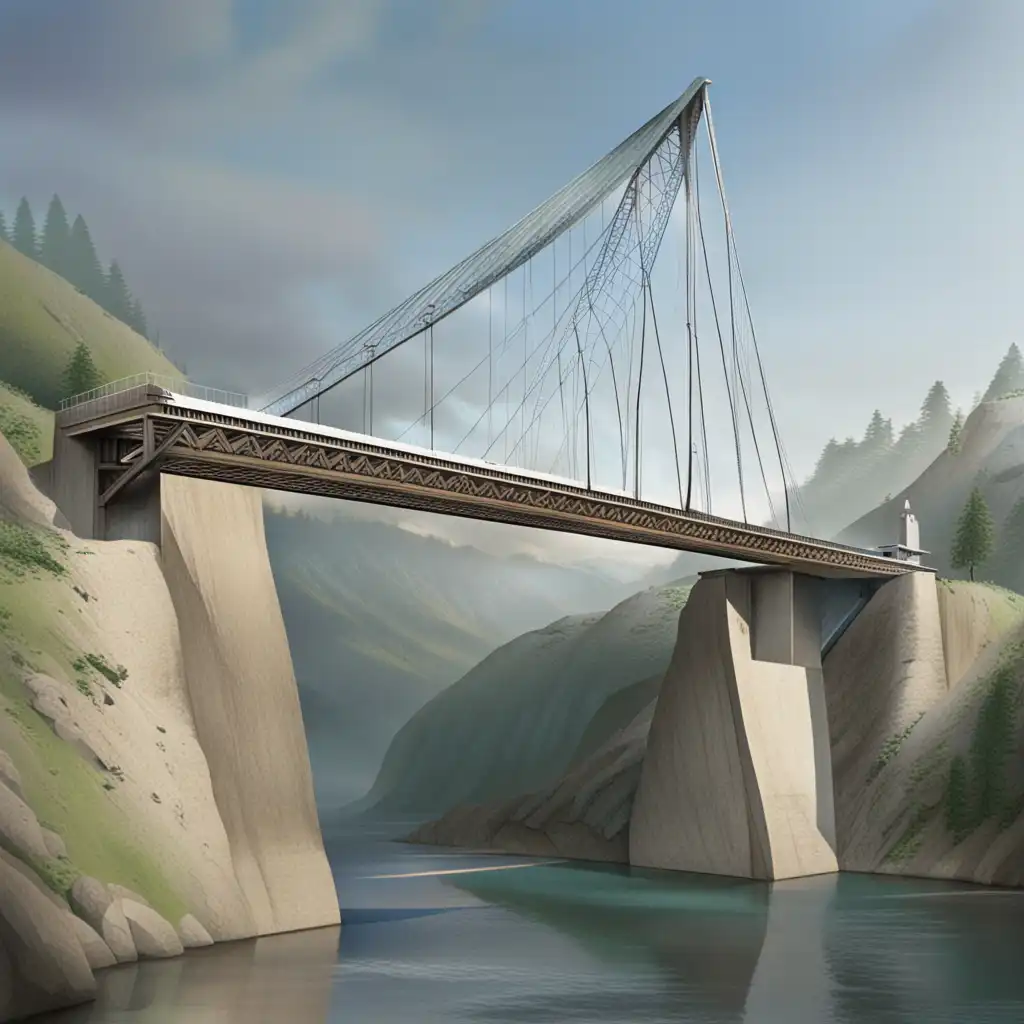
cantilever
noun cantilever
ˈkæntɪliːvər
A long piece of wood, metal, etc. that sticks out from a wall to support something above it
The cantilever bridge is designed to support heavy loads
cantilever
ˈkæntɪliːvər
Cargando…
ˈkæntɪliːvər
A long piece of wood, metal, etc. that sticks out from a wall to support something above it
The cantilever bridge is designed to support heavy loads
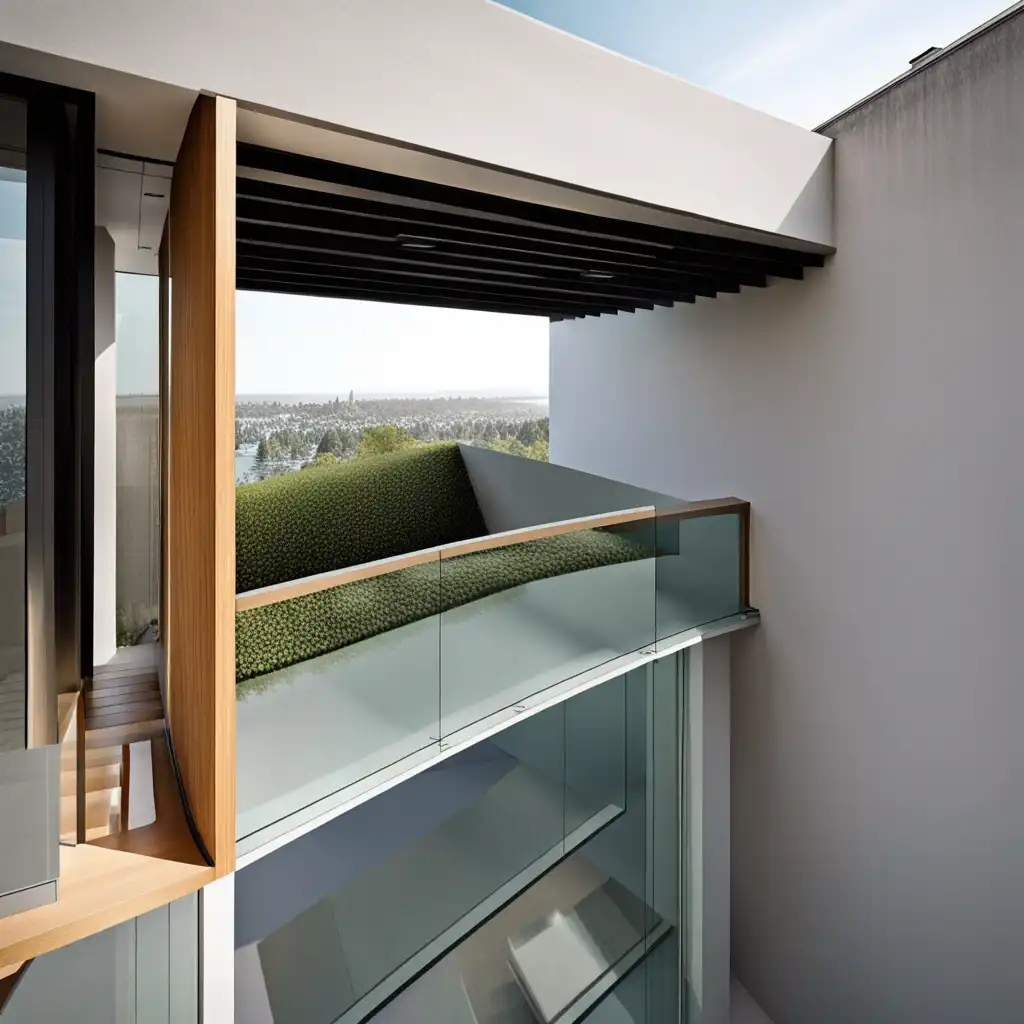
ˈkæntɪliːvər
To build out from a wall, using a cantilever
They cantilevered the balcony to give a better view
No se pudo cargar el audio. Inténtalo de nuevo más tarde.
A cantilever is a structure that is fixed at one end and extends outwards without any support at the other end. In simpler terms, it's like a diving board or a shelf that sticks out from a wall without any visible brackets to support it. This type of structure is common in architecture and engineering, and can be found in buildings, bridges, and other structures where there is a need for an overhanging section. The word can also be used as a verb to describe the act of supporting something using a cantilever structure. For example, "The building's roof is cantilevered over the entrance to provide shelter from the rain."
A balcony is a platform that is attached to the side of a building and extends outwards.
It is usually made of a solid material like concrete or wood and has a rail or wall around it for safety. Balconies are typically used as an outdoor space for people to relax and enjoy the view.
A balcony is a platform attached to a building that extends outwards and is used as an outdoor space for people, while a cantilever is a structure that extends out from a building without any support underneath and is used in construction to create overhangs and other structures.
Abrir palabra: Balcony →A beam is a long and straight structure that is supported at both ends and carries a load along its length.
It is usually horizontal and can be made of wood, steel or concrete. Beams are often used in the construction of buildings, bridges and other structures where a load needs to be supported.
A cantilever is a type of beam that is only supported at one end, known as the fixed end. The other end, known as the free end, extends outwards and is unsupported.
A beam is supported at both ends, while a cantilever is supported at only one end. Beams are commonly used to support loads over a span, while cantilevers are typically used to create an overhang or to support loads that are located at the end of the structure.
Abrir palabra: Beam →A bracket is a supportive device that attaches to a structure and provides support for an object, such as a shelf, that extends horizontally from the structure.
Brackets are typically fixed to both the structure and the object they are supporting.
A bracket is a visible support structure that holds up an object, while a cantilever is an invisible support structure that allows an object to extend out from a support without any visible support underneath.
Abrir palabra: Bracket →An extension refers to the process of extending or making something longer or larger, usually in reference to a building or a room.
An extension is often added to a house to make more living space or to accommodate a growing family's needs.
A cantilever is a type of structure, while an extension is an addition to an existing building.
Abrir palabra: Extension →Cantilever and jut are both words that describe an object sticking out or hanging over something else, but there is a difference in their applications.
A jut simply means to stick out or protrudes.
It can refer to any object that extends beyond its surroundings, such as a rock jutting out from a cliff or a tree branch jutting out from a trunk.
So, while both words describe something extending beyond its surroundings, cantilever is specifically used to describe a supported structure, while jut can refer to anything that sticks out, supported or not.
Abrir palabra: Jut →An overhang is a situation where part of a structure extends beyond its main support. This can occur in buildings where a roof extends beyond the walls or in a balcony that extends beyond a building.
Overhangs do not necessarily need to be cantilevers as they can be supported by other means such as pillars or columns.
A cantilever is a type of structure that is supported on one end and hangs out in space while an overhang is any part of a structure that extends beyond its support.
Abrir palabra: Overhang →A projection simply refers to something that extends out from its background or surface.
A cantilever is a specific type of projection, but with the important difference that it's supported only on one end. Cantilevers are often used in situations where space needs to be maximized or where a full support structure isn't feasible.
Projections can be used for both functional and aesthetic purposes and are found everywhere from architecture to industrial design.
Abrir palabra: Projection →A cantilever is a beam or structure that is supported on only one end, while the other end is unsupported and extends outwards.
A support is something that provides additional stability or balance to an object or structure.
Supports are used to hold up structures, such as columns or braces, and to provide reinforcement to objects, such as scaffolding or framing.
Without supports, structures would collapse or become unstable.
A cantilever is a specific type of structural element that protrudes outward without support on one end, while a support is any type of stabilizing structure that helps keep an object from collapsing or becoming unstable.
Abrir palabra: Support →Building the impossible:...
Ver en YouTube ↗A fascinating time...
Ver en YouTube ↗How to Dismantle a...
Ver en YouTube ↗