
atomic
adjective atomic
əˈtɑːmɪk
Related to an atom or atoms
The atomic structure of water consists of two hydrogen atoms and one oxygen atom.
atomic
əˈtɑːmɪk
Loading…
əˈtɑːmɪk
Related to an atom or atoms
The atomic structure of water consists of two hydrogen atoms and one oxygen atom.
əˈtɑːmɪk
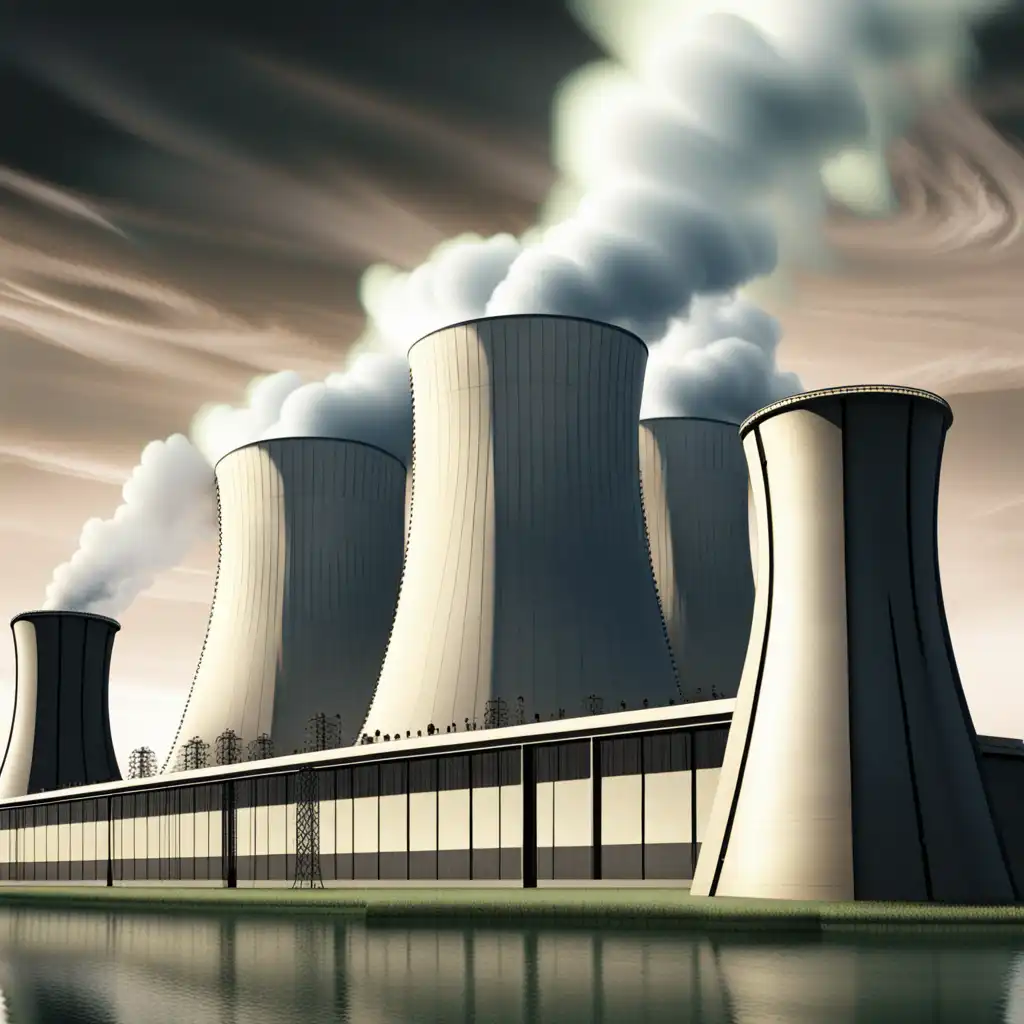
Related to energy created by splitting atoms
The use of atomic energy can be seen in nuclear power plants.

əˈtɑːmɪk
In computer science, refers to operations that are completed in one step
In a transaction database, the operations need to be atomic to maintain consistency.
Audio could not be loaded. Please try again later.
The word 'atomic' refers to something that relates to, or is made up of, atoms. Atoms are tiny particles that make up everything around us, such as gases, liquids, and solids. When something is described as atomic, it usually means it is related to nuclear energy or radiation. For example, an atomic bomb or atomic energy refers to the energy that is released from splitting atoms or combining them. The word 'atomic' may also be used to describe something that is very small or basic, like the smallest unit of a substance or the smallest building block of an idea. So, in summary, the word 'atomic' can be used to describe something that is related to atoms or nuclear energy, or something that is very small or fundamental.
Elemental refers to something related to a chemical element. Elements are substances made up of only one type of atom, such as oxygen or iron.
Both words can be used in various contexts, but atomic is generally used in the context of discussing the properties or structure of atoms, while elemental is used in the context of discussing the properties or behavior of chemical elements, such as their reactivity or physical properties.
Atomic is applicable in the field of nuclear physics or chemistry, while elemental is more applicable in general chemistry or materials science.
Open word: Elemental →Molecular refers to a group of atoms bonded together, which can form a larger molecule with its own unique set of chemical properties.
The term molecular is applicable when discussing the properties of compounds or substances made up of multiple atoms.
In simpler terms, atomic refers to one thing (an atom) while molecular refers to a group of things (atoms bonded together).
Open word: Molecular →Nuclear refers to something related to the nucleus of an atom, which is the central part of an atom that contains most of its mass.
For example, nuclear weapons use the energy released from changing the structure of atomic nuclei.
Atomic refers to things related to atoms themselves, while nuclear refers to things related to the nucleus of the atom.
Open word: Nuclear →Quantum refers to the study of tiny particles, like electrons, in atoms. It deals with how these particles behave and interact with each other.
Quantum physics describes the behavior of very small particles, such as electrons, in matter.
In simpler terms, atomic refers to the study of the building blocks of matter, while quantum refers to the study of the behavior of tiny particles in matter.
Atomic physics is applicable to larger structures, like molecules, while quantum physics is applicable to subatomic particles within those structures.
Open word: Quantum →Subatomic refers to things that are smaller than an atom. It deals with the particles that make up the atom, such as protons, neutrons, and electrons.
Subatomic is applicable when we are discussing the behavior of particles like electrons, the structure of the atomic nucleus, or particle physics.
Atomic is concerned with the properties of atoms, while subatomic is concerned with the particles that make up atoms.
Open word: Subatomic →like atomic energy artificial intelligence and space travel meant for humanity's future. Contrasting with popular visions of shining progress, dystopian science fiction expanded to films comics and games. Robots turned against their creators
Watch on YouTube ↗As human beings, our greatness lies not so much in being able to remake the world - that is the myth of the atomic age - as in being able to remake ourselves.
capable of resolving structure on the scale of a black hole's event horizon. This network of telescopes is scheduled to take its very first picture of a black hole next year. Each telescope in the worldwide network works together. Linked through the precise timing of atomic clocks,
Watch on YouTube ↗Man cannot influence in this respect the atomic forces of Nature.
by the presence and predominance of matter in the universe. It features three epochs that span billions of years. The vast majority of the universe's life span, and includes the present day. The first was the atomic epoch.
Watch on YouTube ↗If we made atomic bombs, we would bring about a terrible change in the world. Who knows what would happen from this?
not as insurmountable as most people think plus dozens of promising new advanced atomic designs are currently under development that cannot meltdown can actually run on today's nuclear waste
Watch on YouTube ↗The future of the world, dependent as it is upon atomic energy, requires more understanding and knowledge about the atom.
an hour the impact causes an explosion bigger than a billion hiroshima atomic bombs
Watch on YouTube ↗There was no military reason to drop atomic bombs on Japan. They were used as terrorist weapons - killing innocent people to influence other people.
And quantum teleportation reveals new ways to influence this fragility. And remember never say never. In a little over a century, mankind has advanced from an uncertain new understanding of the behavior of electrons at the atomic scale
Watch on YouTube ↗Second point is no one here could predict or know that Israel was involved or started producing the hydrogen bomb - the most advanced and powerful atomic bomb that can kill millions of people.
in an orbiting satellite that keeps time to the beat of an atomic clock powered by quantum mechanics. Phew. Let's break that down. First of all why is it so important to know what time it is on a satellite
Watch on YouTube ↗I do not believe that civilization will be wiped out in a war fought with the atomic bomb. Perhaps two-thirds of the people of the earth will be killed.
We've currently touched the atomic level though our control remains limited. But we potentially could go much smaller in the future. To get a sense of the extent to which that's true, the observable universe is 26 orders of magnitude larger than a human body.
Watch on YouTube ↗Working out another system to replace Newton's laws took a long time because phenomena at the atomic level were quite strange. One had to lose one's common sense in order to perceive what was happening at the atomic level.
Many of the inanimate objects around you probably seem perfectly still. But look deep into the atomic structure of any of them, and you'll see a world in constant flux.
Watch on YouTube ↗Yesterday, we fought wars which destroyed cities. Today, we are concerned with avoiding a war which will destroy the earth. We can adapt atomic energy to produce electricity and move ships, but can we control its use in anger?
is a continuous count of seconds based on atomic clocks all around the world known as the international atomic time. Why does it matter that we keep track of time? Well time regulates our daily lives and makes it possible to accurately communicate with people
Watch on YouTube ↗Alice Munro is an atomic writer blasting doors into narrative time.