thatch
noun thatch
θætʃ
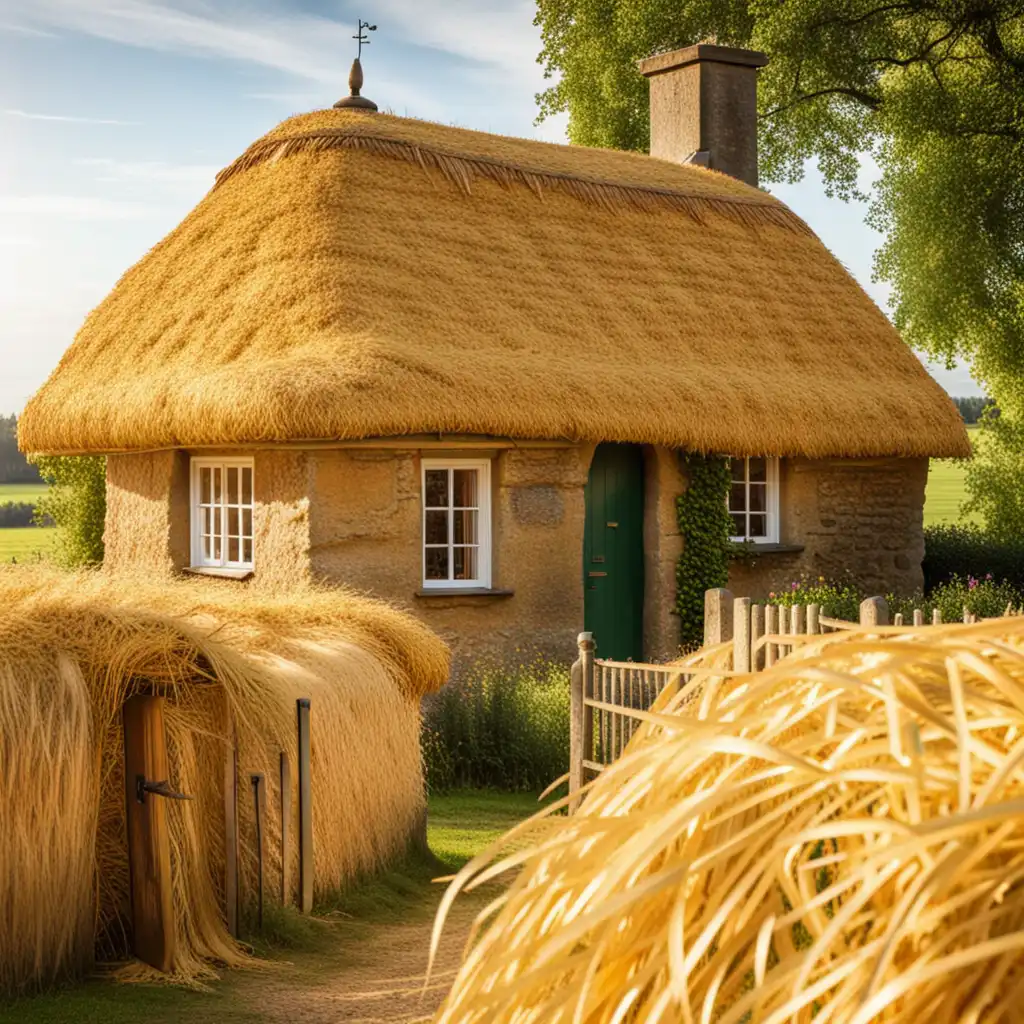
Straw or similar material used as a roof cover.
The small rural cottage had a thatch roof.
thatch
θætʃ
Đang tải…
θætʃ
Straw or similar material used as a roof cover.
The small rural cottage had a thatch roof.

θætʃ
A thick mass of hair on a person's head.
He ran his fingers through his thick thatch of hair.
θætʃ
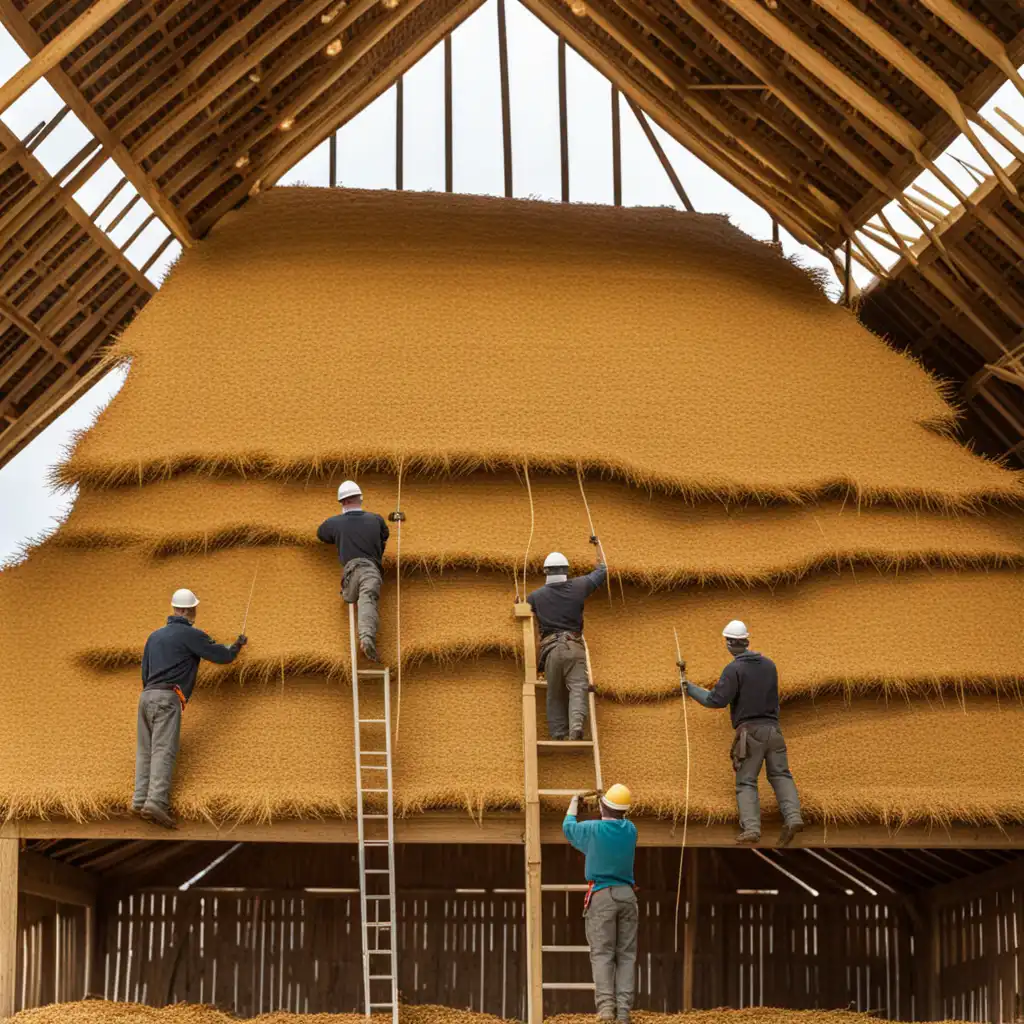
To cover (a roof or a building) with straw, reeds, leaves, or some other material.
The workers were hired to thatch the roof of the barn.
θætʃ
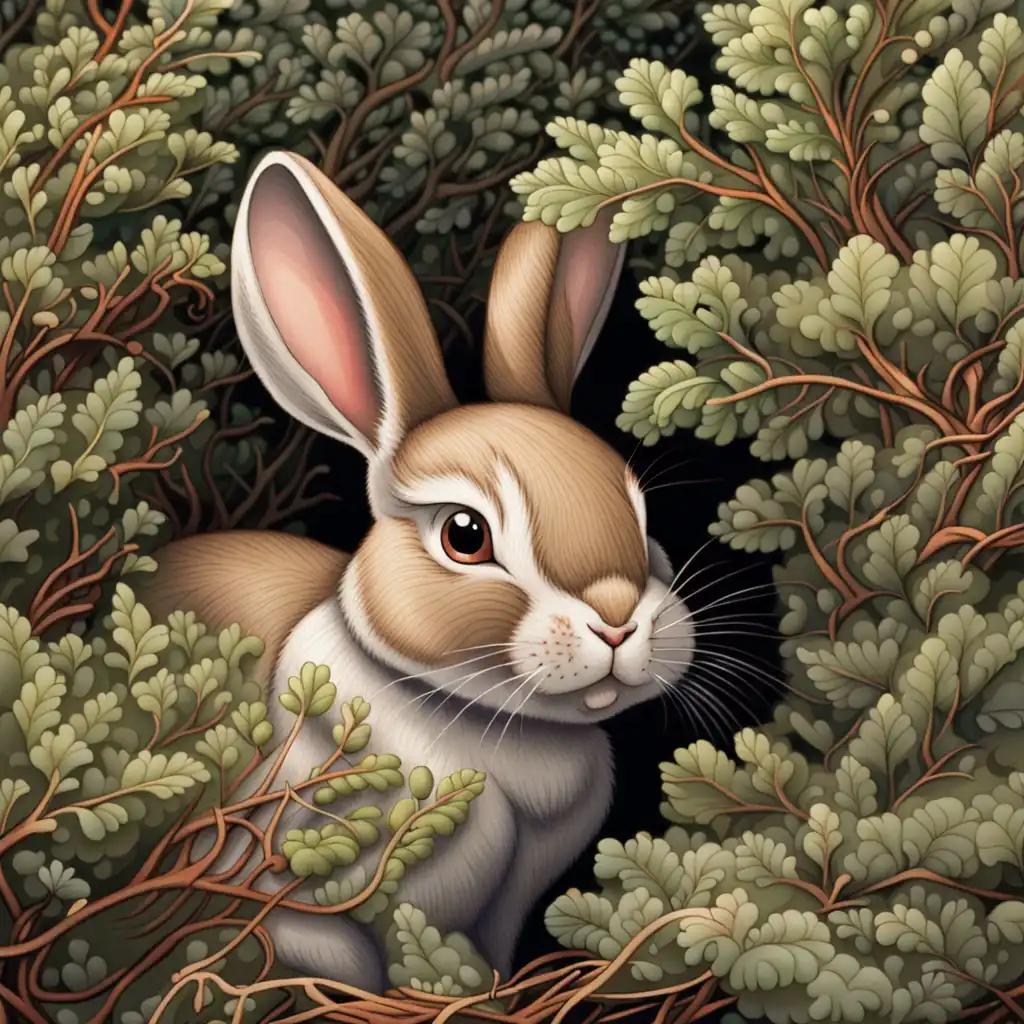
Dense, tangled growth of small shrubs or branches.
The rabbit disappeared into a thatch of briars.
θætʃ
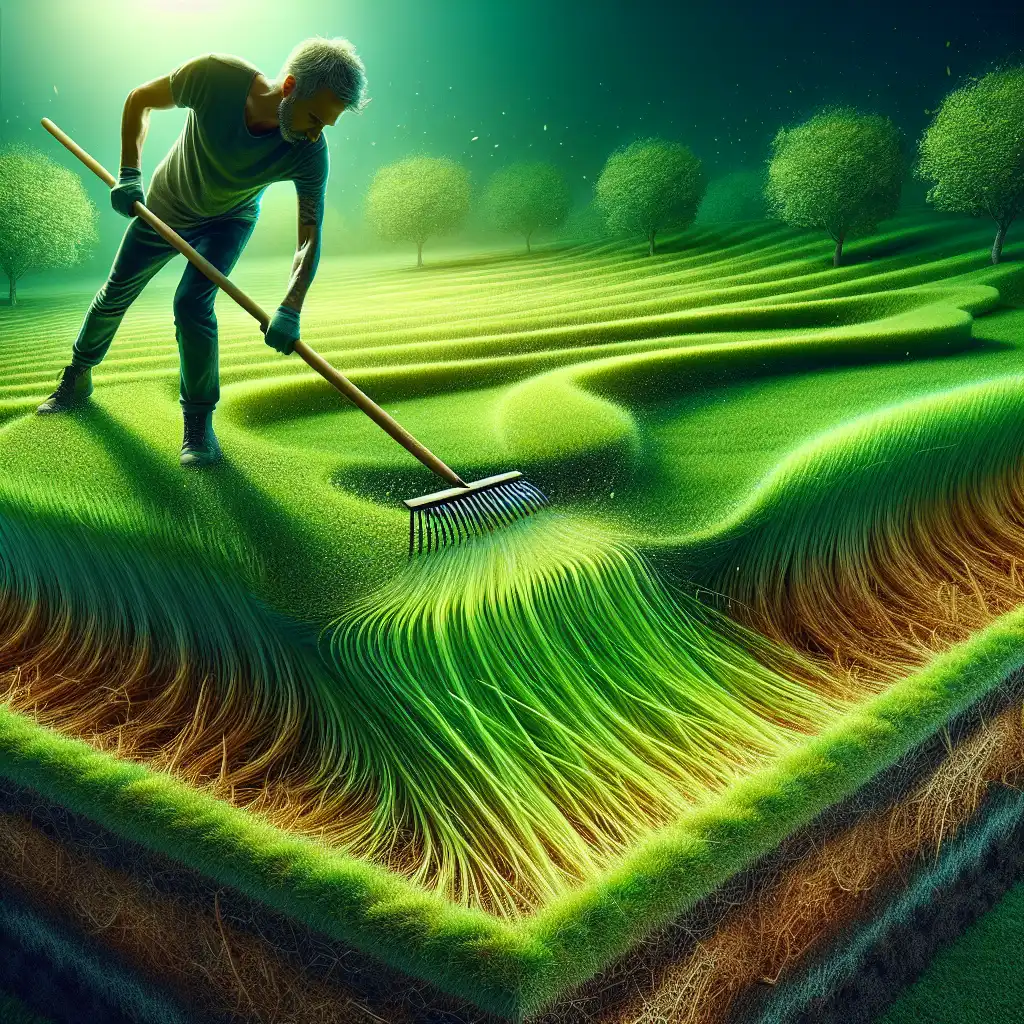
A layer of dead grass and roots that build up on a lawn
Removing thatch from your lawn can help it to grow better.
Không tải được âm thanh. Vui lòng thử lại sau.
Thatch is a type of roofing material that is made from dried grass, straw, or other plant materials. It is commonly used in rural areas, particularly in traditional homes or buildings like cottages, barns, or sheds. Thatched roofs are known for their unique appearance and are usually waterproof, durable, and long-lasting. The word 'thatch' can also be used as a verb, meaning to cover with thatch.
Grass refers to the green plants that grow in a lawn or field. Grass is found in many different varieties and is often used for landscaping or agricultural purposes.
Thatch refers to a layer of dead grass or other plant material that accumulates on the surface of the soil. This layer can be several inches thick and can prevent water from penetrating into the soil.
Thatch can often be found in areas with heavy grass growth or where grass has not been properly maintained.
Grass is the living plant, while thatch is the dead plant material that accumulates on the soil's surface. Grass is ubiquitous, while thatch is only formed under certain circumstances, like when grass is grown too long or without regular maintenance.
Mở từ: Grass →The main difference between hay and thatch is their purpose. Hay is used as food for animals, while thatch is used as roofing material.
Hay is made from dried grasses, legumes or other plants, and is typically used as food for livestock such as cows or horses.
Hay is used as animal food and thatch is used as roofing material.
Mở từ: Hay →Reed and thatch are both materials used in building and construction, but they are different in their composition and application.
A reed is a tall, slender plant that grows near water. It has a long, thin stem that is often used for making baskets, mats, and other woven items.
In construction, reeds are used as a thatching material for roofs or walls. The reeds are woven together and placed over a frame to create a barrier that protects the interior of a building from the elements.
Thatch is a material made from dried plant materials like straw, reeds, leaves, or grasses. Unlike reeds, thatch can come from a variety of plants and is often more readily available.
In summary, reeds are a specific plant material used for thatching, while thatch is a broader category of plant-based materials used for construction purposes.
Mở từ: Reed →Shingles are typically made of wood, asphalt, or a synthetic material and are rectangular, flat pieces that are laid on top of each other in a tiled pattern.
The main difference between the two is the material used and the style of the building they are best suited for. Shingles are more commonly used for modern or suburban buildings while thatch is often used for more traditional or rural buildings.
Mở từ: Shingle →Straw refers to the dry, yellowish-brown stalks of cereal plants like wheat, oats or barley.
Straw is used for various purposes such as animal bedding and building materials, while thatch is primarily used for roofing homes in certain regions.
Mở từ: Straw →Thatch is a natural, renewable material made from straw or reeds used for roofing, while tile is typically made of baked clay or other materials like slate, used for flooring or roofing.
Thatch is generally used for roofs on traditional buildings like cottages, while tile is often used for flooring in kitchens and bathrooms, as well as roofing on modern buildings.
Thatch is more eco-friendly but requires more maintenance, while tile is durable and easy to maintain but less environmentally friendly.
Mở từ: Tile →life was very difficult a struggle day by day. My family was living in a hut. With the eye of a child I can still see water dripping from the thatched roof of our house when it rained.
Xem trên YouTube ↗Thatcher was prepared to destroy the world rather than give in on something she believed in.
down there in a thatched house with you know no electricity and we had to boil our water to drink it had to wait a couple of days for it to cool and you know it was just a different way of life and it was boring in some ways and I guess he'd go out and you know look at
Xem trên YouTube ↗Thatcher was the motivation for my entire political career. I hated everything she stood for.
But again and again they were turned away. Soon there was just one door that of a small thatched shack.
Xem trên YouTube ↗Thatcher was wrong. People don't exist - well, they don't flourish - as individuals. Life's about swapping ideas and communicating with other people.
entirely focused on the natural environment everything is oriented toward the beach and toward the water the houses are very simple they're hot uh with thatched roofs done in in in a way that's suggestive of various polynesian styles
Xem trên YouTube ↗In the period before the arrival of Mrs. Thatcher, politics had been in such low esteem. Everything was so hedged, so mealy-mouthed. Then along came this woman who seemed to have no manners at all and said exactly what she thought. Everyone's eyes were popping and their jaws were dropping, and I really enjoyed that.
I landed in a thatched hut with a midwife. As a mother I was very curious on how she delivered babies in her house. After a deep and engaging conversation with her on how she considered it a profound calling to do what she was doing, I asked her a parting
Xem trên YouTube ↗Mrs. Thatcher was a powerful figure at the time I was a student in London. And I admire her versatility and strength.
per family. So far we've looked for the poorest people in the poorest villages and in this part of the world, they're the ones living in homes made of mud and thatch, not cement and iron. So let's say that's your family.
Xem trên YouTube ↗For us she is not the iron lady. She is the kind, dear Mrs. Thatcher.
cattle and killing anybody who gets in the way in this area people paint their bodies to identify themselves from their enemies there are only two thousand Cairo people left and they live in these wonderful dome shaped thatched huts in
Xem trên YouTube ↗Thatcher was the best politician I have ever witnessed.
People live there and they don't just float over the jungle. They have a meaningful relationship with the landscape. They hunt. They grow crops. They domesticate crops. They use the natural resources to build their houses, to thatch their houses.
Xem trên YouTube ↗We lived in a 'kuccha' house made of mud. The thatched roof couldn't stop the water trickles during the rainy season. I, along with my brothers and sisters, used to stand in a corner and wait for the rain to stop.
so we're in a village in rural mexico about a day's drive from mexico city you can hear music emanating from a little house that has a thatched roof but inside that's where the action is there's a ceremony going on
Xem trên YouTube ↗She felt Britain should not be so dependent on coal. She was in favour of building up nuclear energy to break the dependence on coal, and the main opposition to nuclear came from the environment movement. Mrs. Thatcher thought she could trap them with the carbon emissions argument.
we begin to come upon signs that the aro people are indeed in happening these woods we came to an abandoned fishing camp where there were fetched crude thatched huts no larger than what you
Xem trên YouTube ↗I've sold my Mercedes and I'll be getting something electric. I work out of a thatch shed on the roof.