microbe
noun microbe
ˈmaɪkrəʊb
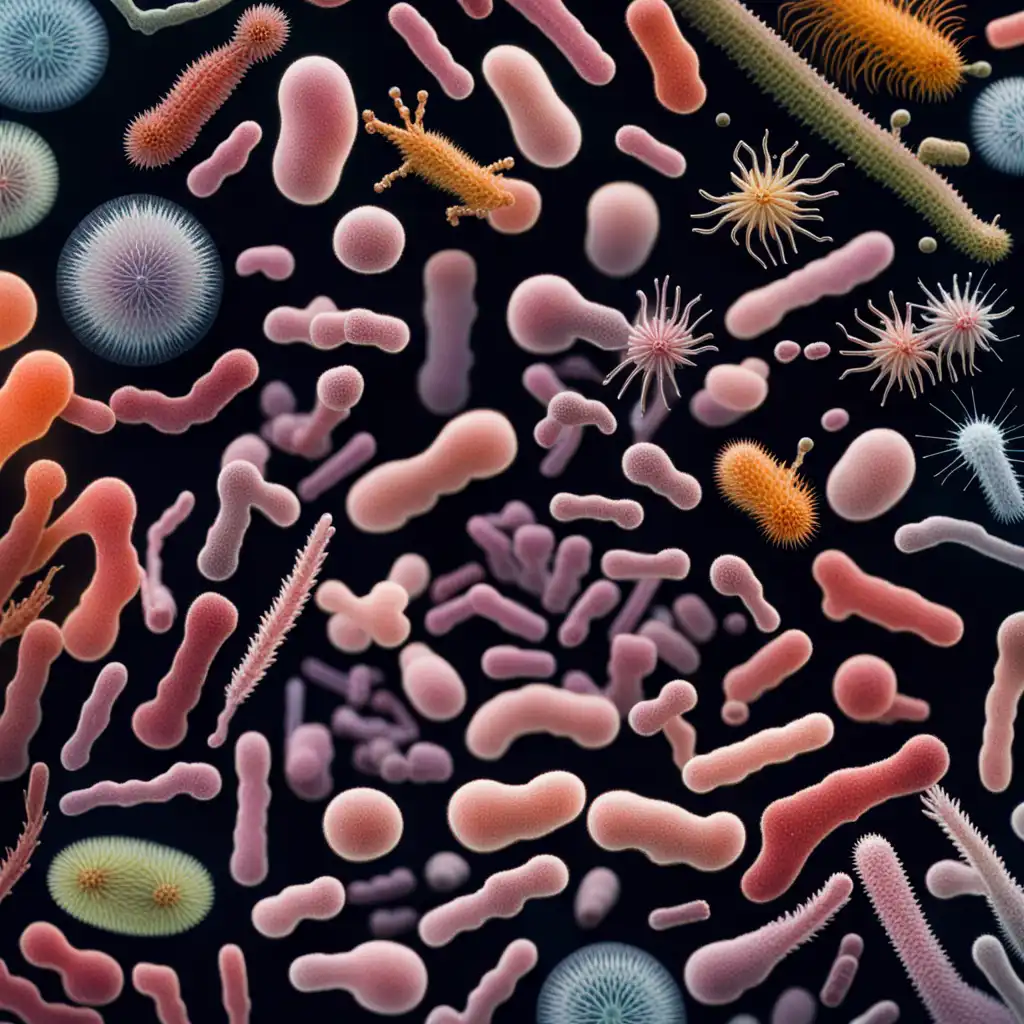
A very small living thing, often one that causes disease, and can only be seen through a microscope.
Scientists are trying to identify the microbes that exist in our gut.
microbe
ˈmaɪkrəʊb
Đang tải…
ˈmaɪkrəʊb
A very small living thing, often one that causes disease, and can only be seen through a microscope.
Scientists are trying to identify the microbes that exist in our gut.
ˈmaɪkrəʊb
In a broad sense, any organisms that are too small to be seen without a microscope.
Some microbes are beneficial for the environment as they help in decomposing waste.
Không tải được âm thanh. Vui lòng thử lại sau.
The word 'microbe' refers to a very tiny living organism that you cannot see with your naked eye. These organisms can be found almost everywhere, such as in soil, water, and even on our bodies. Some microbes can be harmful and make us sick, while others are helpful and are used to make things like medicine and food. The word 'microbe' can be used in a variety of contexts, such as in biology, medicine, and environmental science.
Bacteria and microbes are both tiny living organisms that cannot be seen with the naked eye, but there is a difference between the two.
Bacteria are single-celled microorganisms that can be found almost everywhere on Earth. Some bacteria can be harmful to humans and cause diseases, while others can be helpful and play important roles in various ecological processes, such as breaking down organic matter, producing oxygen, and maintaining the balance of ecosystems.
Microbe is a broader term that includes not only bacteria but also other microscopic organisms such as viruses, fungi, and protists that are found in various environments such as soil, water, and air.
Bacteria are a type of microbe, whereas microbe is an umbrella term that refers to various microscopic organisms, including bacteria.
Mở từ: Bacteria →Fungus and microbe both refer to different types of living organisms that are too small to see with the naked eye.
Fungus is a type of organism that belongs to the kingdom Fungi. They are usually multicellular and grow by sprouting tiny threads called hyphae.
Fungi can be beneficial, such as in the case of edible mushrooms, or harmful, such as in the case of mold that can damage crops or cause illness.
Microbe is a more general term that refers to microscopic living organisms, including bacteria, viruses, and fungi. While fungi are a type of microbe, the term microbe is broader and includes other types of small organisms that can be beneficial or harmful to humans and the environment.
Fungus is a specific type of microbe that belongs to the kingdom Fungi, while microbe is a broader term that encompasses all types of microscopic living organisms.
Mở từ: Fungus →The words germ and microbe are often used interchangeably, but they have slightly different meanings.
A germ refers specifically to a type of microbe that causes disease in humans or animals. For example, the germs that cause the flu or a cold are viruses or bacteria.
So, while all germs are microbes, not all microbes are germs. The term germ is typically used in the context of disease-causing microorganisms, while microbe is often used more generally to describe any microscopic living organism.
Mở từ: Germ →Both microbe and microorganism refer to small living organisms that are not visible to the naked eye.
However, microbe is used to refer specifically to bacteria, fungi, and viruses, while microorganism is a broader term that includes protozoa, algae, and other small organisms in addition to bacteria, fungi, and viruses.
Microbe is a more specific term, while microorganism is a more general term.
Mở từ: Microorganism →Microbe and pathogen are both related to tiny organisms, but they have different meanings. Microbe refers to any kind of living thing that is too small to be seen without a microscope - this includes bacteria, viruses, fungi, and more.
Pathogen, however, specifically refers to a microbe that can cause disease in humans, animals, or plants. So, while all pathogens are microbes, not all microbes are pathogens.
For example, many bacteria found in our gut are considered microbes but are not harmful, and therefore not pathogens. Pathogens are applicable in medical and biological contexts, where the focus is on identifying and treating harmful microorganisms that can cause disease, while microbes have a wider range of applications in science, including the study of ecology, genetics, and evolution.
Mở từ: Pathogen →Viruses are much smaller than microbes and are not considered to be living organisms. They are essentially packages of genetic material surrounded by a protein coat that can cause disease in humans, animals, and plants.
Unlike microbes, viruses cannot survive without a host cell to infect and reproduce.
Viruses are applicable in medicine and research, as they are often the cause of infectious diseases such as the flu or COVID-19.
Understanding how viruses work and how they spread can help scientists develop treatments and vaccines.
Viruses can also be used in genetic engineering and CRISPR technology to modify genes and cure genetic diseases.
Mở từ: Virus →Diet too is emerging as one of the leading influences on the health of our guts. And while we can't control all these factors, we can manipulate the balance of our microbes by paying attention to what we eat.
Xem trên YouTube ↗The important thing is that we now have the tools to sequence all kinds of animals and plants and microbes - as well as humans. It is not important that we didn't actually finish the human sequence yet.
to a microbe traveling through the albument of the yolk is like a human trying to walk across a desert there's nothing to sustain life but albumin contains lots of other things
Xem trên YouTube ↗I've always been fascinated with science and exploring our world, from microbes to the solar system.
We are the only advanced civilization in the solar system, but that doesn't mean that there is no microbial life nearby. In fact the planets and moons you see here could host life -- all of them -- and we know that, and it's a strong possibility.
Xem trên YouTube ↗The vast majority of terrestrial species are in fact microbes, and scientists have only begun scratching the surface of the microbial realm. It is entirely possible that examples of life as we don't know it have so far been overlooked.
the bouquets are very unique we're looking at a couple of different things but they Center on possible microbial life that lives in these caves
Xem trên YouTube ↗My team and I have discovered, over decades of study, that mushroom mycelium is a rich resource of new antimicrobial compounds, which work in concert, helping protecting the mushrooms - and us - from microbial pathogens.
can create fantastic habitats for life microbes such as these cyanobacteria live inside impact sorted rocks and they use them for energy and for protection these are actually two types of organisms we expect to find on Mars now finally the most mars-like
Xem trên YouTube ↗Although there exist in the world today some microbes of the soul, such as discrimination and aggression, science was and still is the core of progress for humanity and the continuity of civilization.
carbon dioxide, and methane. Almost all oxygen was locked up in molecules like water, not floating around in the air. The oceans were populated by anaerobic microbes. Those are simple unicellular life forms that thrive without oxygen
Xem trên YouTube ↗The nature of a protective immune response to HIV is still unclear. Because in a very, very unique manner, unlike virtually any other microbe with which we're familiar, the HIV virus has evolved in a way that the immune system finds it very difficult, if not impossible, to deal with the virus.
a rigid web of compounds that's tough to chew and highly impermeable to pathogens. Leaves are protected by a waxy cuticle that deters insects and microbes. Some plants go a step further with painful structures to warn would-be predators.
Xem trên YouTube ↗The day is not far off when we will be able to send a robotically controlled genome-sequencing unit in a probe to other planets to read the DNA sequence of any alien microbe life that may be there.
But what exactly are preservatives? How do they help keep food edible and are they safe? There are two major factors that cause food to go microbes and oxidation. Microbes like bacteria and fungi invade food and feed off its nutrients.
Xem trên YouTube ↗If few worlds have microbial life, it dramatically reduces the chances that more complex organisms exist.
UHT milk boasts a much longer shelf life, up to twelve months unrefrigerated, compared to pasteurized milk's two weeks in the fridge. That's because the higher temperatures of UHT processing inactivate far more microbes.
Xem trên YouTube ↗Antimicrobial resistance is on the rise in Europe and elsewhere in the world. We are losing our first-line antimicrobials. Replacement treatments are more costly, more toxic, need much longer durations of treatment, and may require treatment in intensive care units.
Those spots are evidence of an epic battle between plants and microbes. Like humans plants coexist with billions of fungi and bacteria. Some of these microbes are beneficial to the plant, suppressing disease and helping it extract nutrients. Others are pathogens attacking the produce,
Xem trên YouTube ↗Arguing that God doesn't exist would be like people in the 10th century arguing that germs and microbes didn't exist because they couldn't see them.