rescind
verb rescind
rɪˈsɪnd
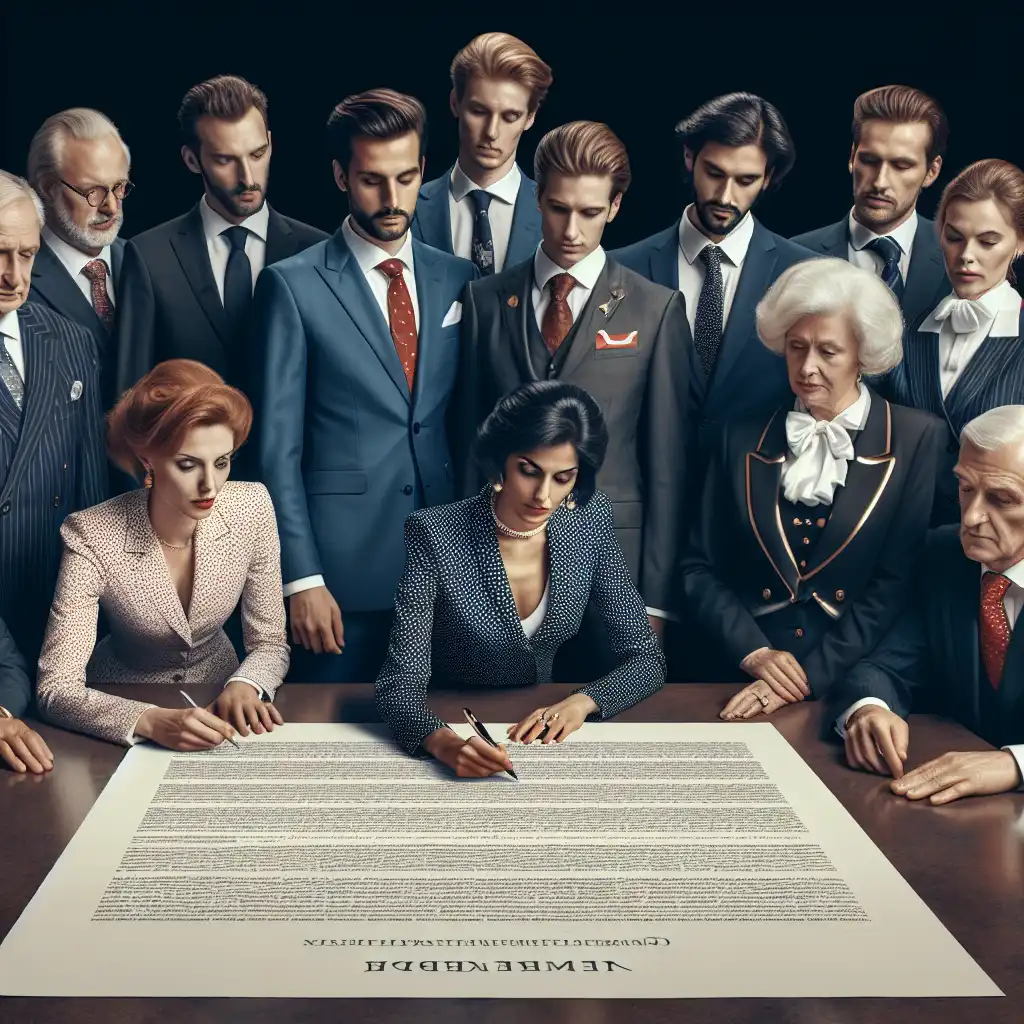
To decide officially that an agreed idea or action is no longer valid or acceptable
The government has decided to rescind its decision to increase taxes.
rescind
rɪˈsɪnd
Chargement…
rɪˈsɪnd
To decide officially that an agreed idea or action is no longer valid or acceptable
The government has decided to rescind its decision to increase taxes.

rɪˈsɪnd
To take back or withdraw, particularly a job offer
The company had to rescind the job offer after learning of the candidate's misrepresentations.

rɪˈsɪnd
To make invalid or void
The court rescinded the contract because it was not legally valid.
Impossible de charger l’audio. Réessayez plus tard.
'Rescind' means to cancel, take back or withdraw something that was previously agreed upon or put into effect. It is often used in formal contexts such as contracts, laws or policies. For example, a company might rescind a job offer if they find out the applicant lied on their resume, or a government might rescind a law if it proves to be unpopular or ineffective. When using the word 'rescind', it is important to ensure that the context makes it clear what is being cancelled or withdrawn.
Annul means to officially declare something as invalid or void from the beginning.
Annul is used to cancel something that was never really valid in the first place while rescind is used to cancel something that was already put into effect.
Ouvrir le mot: Annul →Cancel means to stop a planned event or order. For example, you can cancel an appointment, a subscription, or a flight ticket.
Rescind means to revoke or cancel a law, policy, or agreement. This term is typically used for formal documents or agreements.
Cancel is used to stop something that was going to happen, while rescind is used in a more formal context to cancel legal agreements or policies.
Ouvrir le mot: Cancel →Invalidate means to make something legally or officially invalid or ineffective. This can be applied to contracts, agreements, or decisions.
For example, a court might invalidate a contract if it was signed under false pretenses.
Invalidate means to make something ineffective, while rescind means to cancel or revoke something altogether.
Ouvrir le mot: Invalidate →Nullify means to make something legally invalid or void. For example, a court may nullify a contract if it is found to be fraudulent or illegal.
Both words deal with the cancellation or invalidation of something, but nullify has a stronger legal connotation and refers specifically to the invalidation of a legal agreement or document, while rescind is more general and can refer to the cancellation of anything, legal or otherwise.
Ouvrir le mot: Nullify →Repeal means to officially cancel or remove a law, policy or rule.
Repeal is used for laws, policies or rules that have been put in place by a higher authority, while rescind is used for decisions, agreements or contracts made by individuals or organizations.
Ouvrir le mot: Repeal →The words rescind and revoke both mean to take something back, but they are used in slightly different ways.
Revoke usually means to officially cancel or withdraw someone's permission or right to do something. For example, a driver's license can be revoked if the person repeatedly breaks traffic laws or drives drunk.
To sum up: Rescind is used to cancel something that was previously agreed upon, while revoke is used to take away someone's permission or right to do something.
Ouvrir le mot: Revoke →Void means that something is of no legal effect or force. For example, if you sign a contract with someone but later discover that the contract was based on false information, you might ask to have the contract declared void.
Rescind means to cancel something that was agreed upon, while void means that something is legally ineffective.
Ouvrir le mot: Void →Withdraw means to remove or take back something that was previously offered or given.
It is used in situations where someone is retracting an offer, statement, or action. For example, one might withdraw an offer of help or withdraw a statement that was made earlier.
Rescind is used when canceling something that has already been implemented or put into effect, while withdraw is used when taking back something that has been offered or promised.
Ouvrir le mot: Withdraw →Why it's worth listening...
Voir sur YouTube ↗I hope the EPA will listen to the many votes over the years in Congress opposing cap-and-trade and rescind that proposed rule.
In Coal Country a...
Voir sur YouTube ↗If I'm elected president, let me tell you about my first day in office. The first thing I intend to do is to rescind every illegal and unconstitutional executive action taken by Barack Obama.
President Barack Obama's decision to provide amnesty for hundreds of thousands of illegal aliens under the DACA program was unlawful, and the court interfered with President Trump's duty and absolute right to rescind it.
Donald Trump promises to impose, soon after his inauguration, a new requirement on federal agencies: If they want to issue a new regulation, they have to rescind two regulations that are now on the books. The idea of 'one in, two out' has rhetorical appeal, but it's going to be extremely hard to pull off.
The time has come for President Obama to formally rescind his order to close the detention facility at Guantanamo Bay and end his irresponsible allegations of injustices at the facility, which operates in a framework that respects the rule of law, keeps terrorists off American soil, and bolsters our national security.
There are those who say we must rescind the Golan Heights law that was passed in the Knesset. To rescind is a concept from the days of the Inquisition. Our forefathers were burned at the stake and would not rescind their faith.