canal
noun canal
kəˈnæl
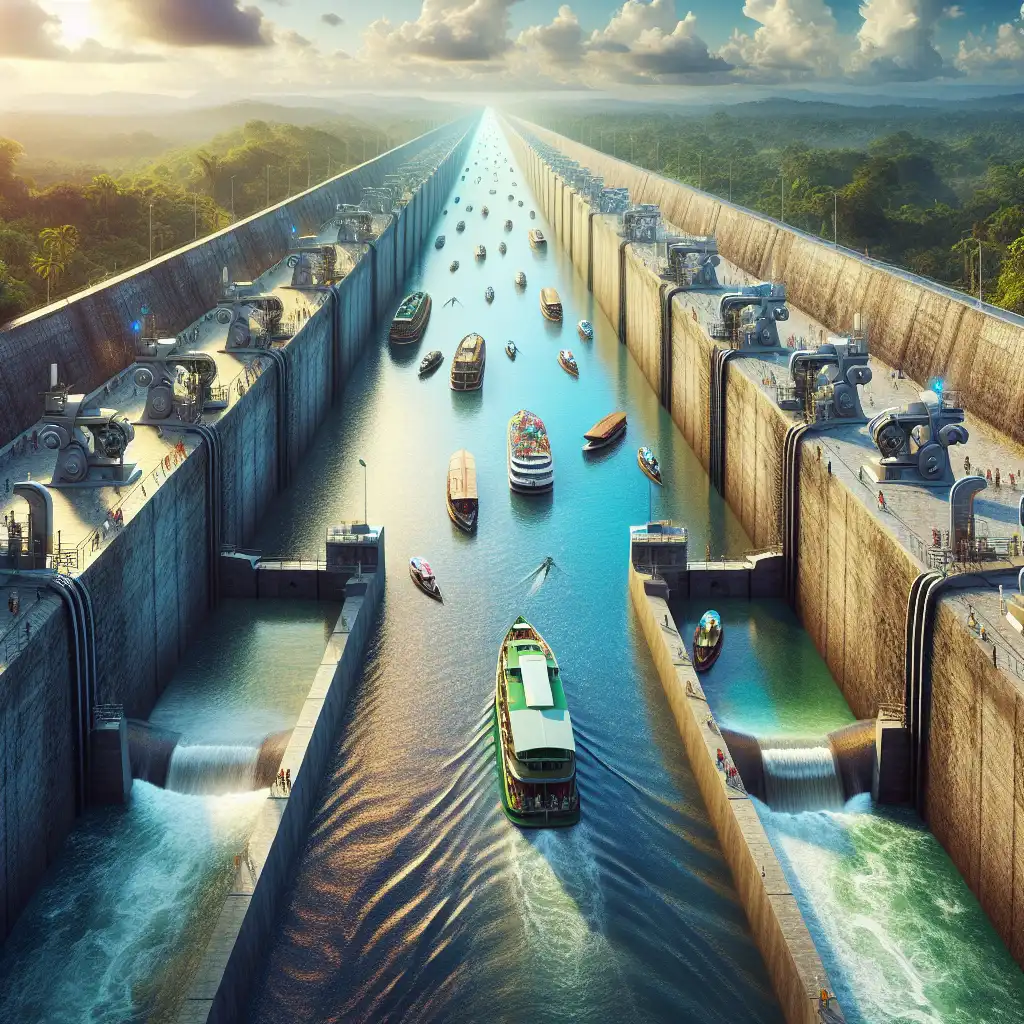
A man-made waterway made for travel or irrigation
The famous Panama Canal connects the Atlantic and Pacific oceans.
canal
kəˈnæl
Đang tải…
kəˈnæl
A man-made waterway made for travel or irrigation
The famous Panama Canal connects the Atlantic and Pacific oceans.
kəˈnæl
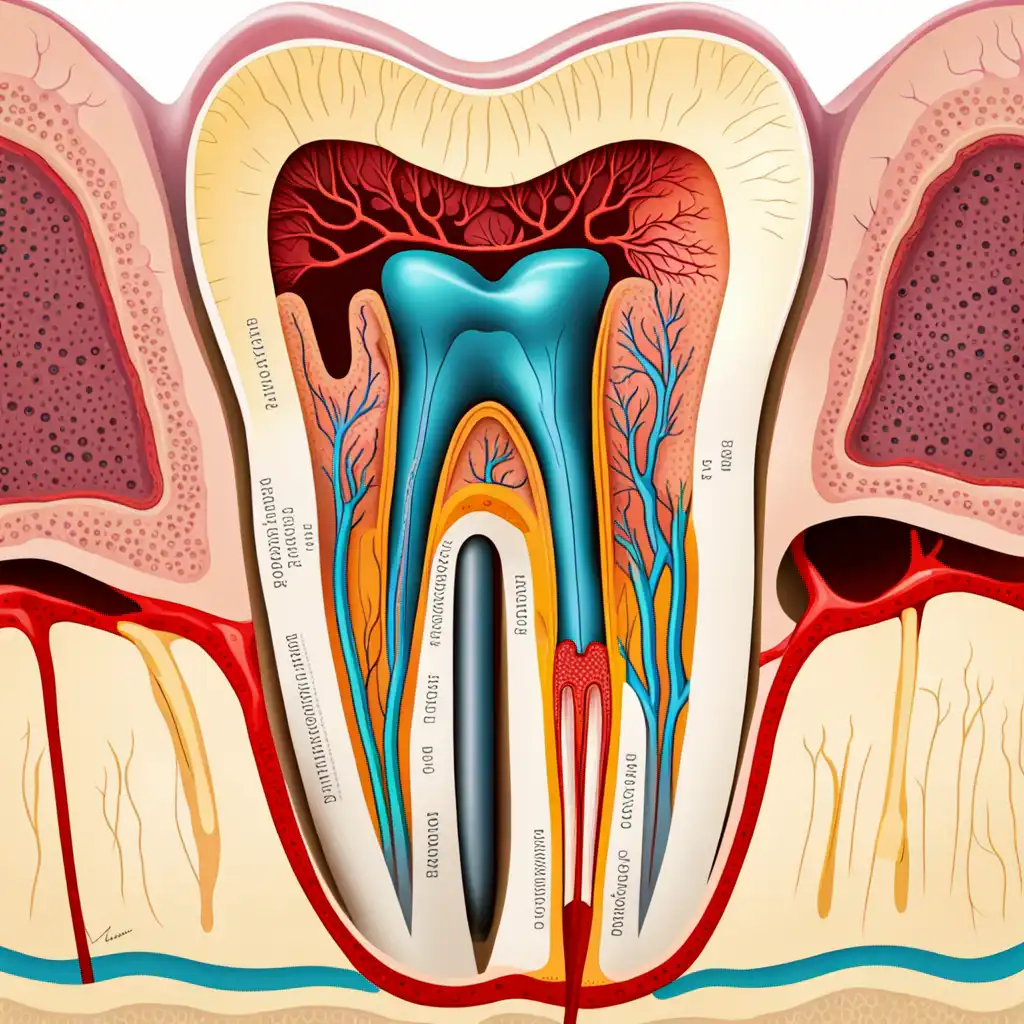
A tube in a plant or an animal, for carrying substances like water or food
The root canals in a tooth carry blood vessels and nerves.
kəˈnæl
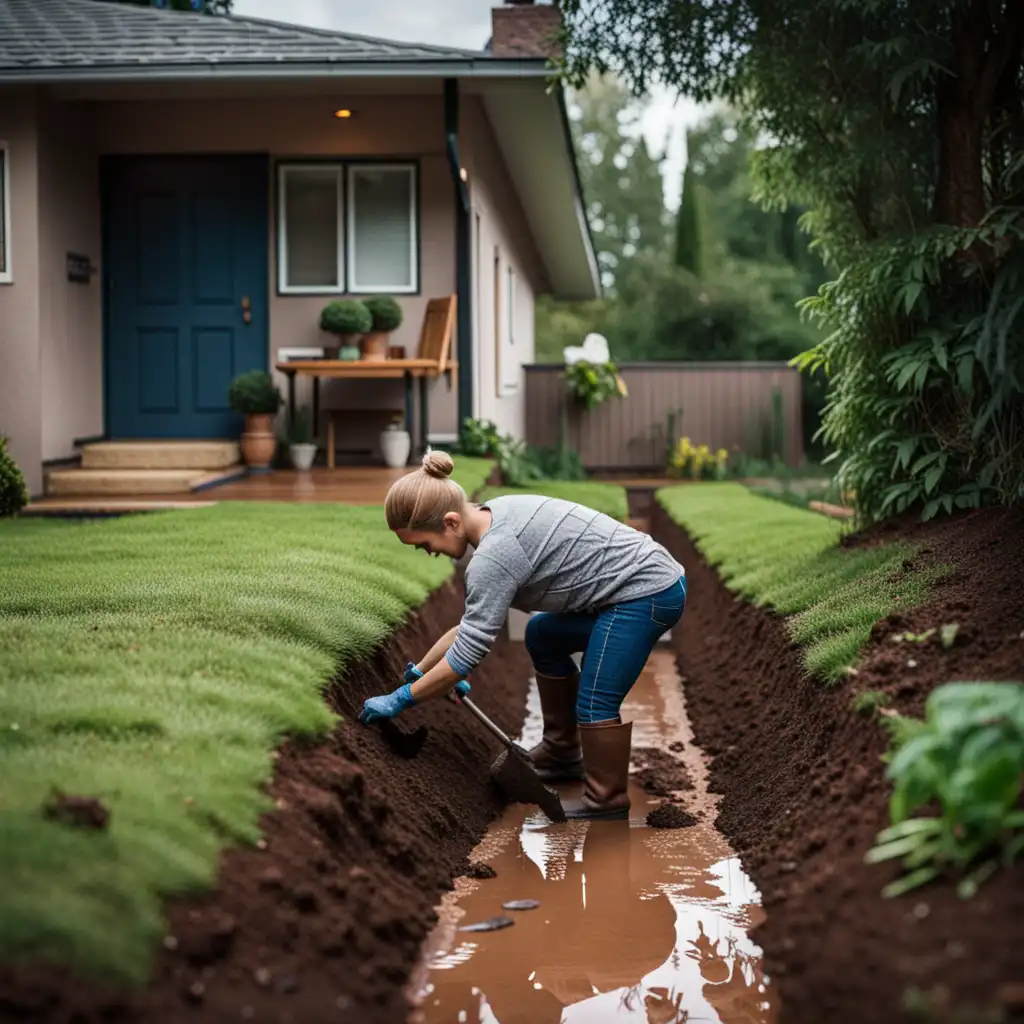
A narrow path dug into the ground to carry water
He dug a small canal to guide the rain water away from his house.
kəˈnæl
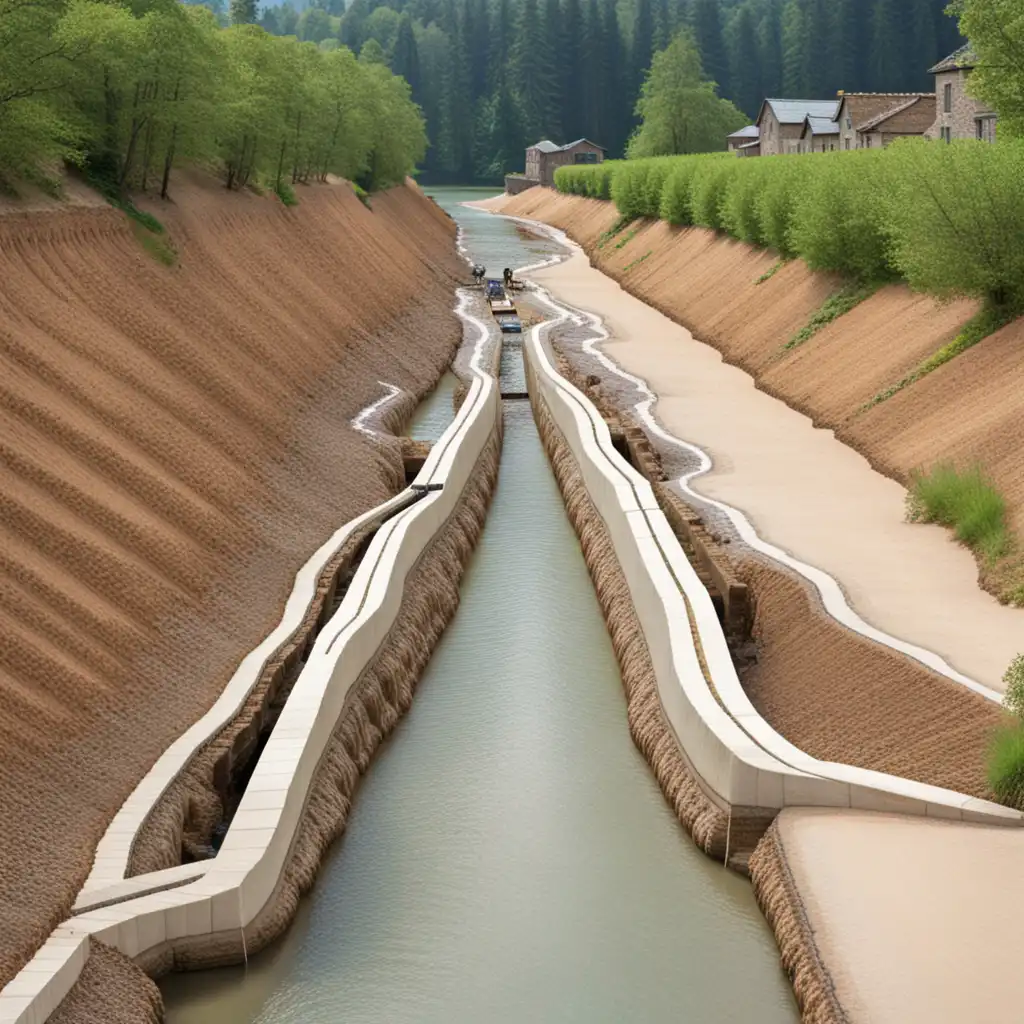
To provide a place with water channels, direct water through a canal
They want to canal the river to prevent flooding.
Không tải được âm thanh. Vui lòng thử lại sau.
A canal is a narrow waterway that has been dug or created by humans for transportation or irrigation purposes. Canals are usually man-made and are typically used for boats to travel through them to move people or goods to different locations. They are also used for irrigating fields and transporting water for farming purposes. Canals are found in many parts of the world, including cities, rural areas, and even in countries with long histories such as China and Egypt.
An aqueduct is a structure designed to carry water from one place to another using gravity. They are typically used for long-distance transport of water and often include elevated channels or bridges to cross valleys and other obstructions.
An aqueduct is used to transport water, while a canal is used to transport goods or people. Aqueducts are typically elevated structures, while canals are dug into the ground.
Mở từ: Aqueduct →Channel refers to a natural or artificial waterway that connects two larger bodies of water.
It can be a gap, a passage, or a groove that passes through a landmass or seabed. Channels are typically deeper and wider than canals.
In short, canals are man-made waterways used for transportation or irrigation, while channels can be both natural or man-made and are used to connect larger bodies of water.
Mở từ: Channel →Both canal and conduit are terms that refer to a path for moving water or other substances from one place to another.
A conduit is a channel or pipe that is used to convey water, oil, gas, or some other substance. Conduits are typically smaller than canals and may be used in residential, commercial, or industrial settings.
For example, a conduit might be used to carry water from a well to a building, or to convey oil from a storage tank to a refinery.
In summary, canals are large, man-made waterways used for transportation or irrigation, while conduits are smaller channels or pipes used to convey water, oil, gas, or other substances.
Mở từ: Conduit →A culvert is a tunnel or pipe that allows water to flow underneath a road or other obstacle. Culverts are typically smaller than canals and are used to allow water to flow under a road or other structure without disrupting its function.
In general, canals are used for larger-scale water transportation and irrigation projects, while culverts are used to manage water flow under smaller-scale obstacles like roads and bridges.
Mở từ: Culvert →Canals and ducts are both passages or channels that allow the movement of things from one place to another.
A duct is a smaller, more narrow passage that is usually used to move things like air or fluids. Ducts are often found in HVAC systems, where they move heated or cooled air from the furnace to different rooms in a house.
Ducts can also be found in the human body, where they are used to move things like bile or urine from one organ to another.
In summary, canals are large man-made waterways used for transportation and irrigation, while ducts are smaller passages used to move air, fluids, or other substances.
Mở từ: Duct →Canal and flume both refer to artificial channels used to transport water, but there are some differences.
A canal is typically larger and wider than a flume, and it is often used for irrigation, transportation, or power generation.
A flume is a narrow, wooden or metal channel used to move water quickly downhill from one place to another.
A flume is often used in mountainous areas for mining or hydroelectric power generation.
Flumes are typically installed on steep slopes or cliffs, and they can be several hundred feet long.
In summary, canals are larger channels that are used for transportation and irrigation, while flumes are smaller channels used for power generation and moving water quickly downhill.
Mở từ: Flume →Canal and passage both refer to a waterway, but they have different meanings.
A passage is a natural or artificially created waterway that provides a route for boats to travel. It may follow a meandering path and vary in depth and width.
Passages can occur naturally, such as a river or strait, or can be created by humans, like a shipping lane.
In summary, canals are human-made, generally straight waterways used for transportation, while passages can be natural or man-made and often have a varying path used for transportation.
Mở từ: Passage →A trench is a long, narrow ditch that is dug into the ground.
Trenches are often found on construction sites or military training grounds.
A canal is a waterway used for transportation, while a trench is a narrow ditch used for military or construction purposes.
Mở từ: Trench →A canal is a man-made waterway that is typically used for transportation or irrigation purposes.
A waterway is a general term that refers to any body of water that is used for transportation, including rivers, lakes, and oceans.
Waterways can be man-made or natural and are used for transporting goods, people, and recreational activities. Unlike canals, waterways are not necessarily artificially constructed and can vary greatly in size and shape.
The main difference between canals and waterways is that canals are always man-made and typically narrower while waterways can be either man-made or natural and vary in size and shape.
Canals are used for transportation or irrigation while waterways are used for transportation and other activities such as fishing and recreation.
Mở từ: Waterway →and one of the areas that's emerged is this importance of blue spaces so that's any environment that features water could be lakes rivers canals and of course the coast and what's really interesting is it looks like the margins might be most important where those two
Xem trên YouTube ↗Government is like a baby. An alimentary canal with a big appetite at one end and no sense of responsibility at the other.
Like a modern day taxi system gondolas were leased to boatmen who made the rounds of the city's ferry stations. Passengers paid a fare to be carried from one side of the Grand Canal to the other, as well as to other points around the city. But gondoliers soon developed a bad rap.
Xem trên YouTube ↗In Amsterdam, the river and canals have been central to city life for the last four centuries.
which controlled the entire Yellow River and had the ability to bring hundreds of thousands of people together to build dams and canals and regulate the river and prevent the worst floods and droughts and raise the level of prosperity for everybody.
Xem trên YouTube ↗I took the Canal Zone and let Congress debate; and while the debate goes on, the canal does also.
lastly egyptians developed methods to measure and survey land around the nile river these civil engineering feats made way for the construction of dams canals and irrigation systems that helped farming
Xem trên YouTube ↗I hate dentists. That's why my tooth fell out. I was in the middle of a root canal and wouldn't go back, so it just dropped out when I was in the middle of Fifth Avenue.
for the cities such as green roof urban farming's urban forests canal restorations every green space counts addressing
Xem trên YouTube ↗I do not object to the construction of rail roads and canals.
Nutrients are absorbed into the body while solid waste is expelled through the anal canal the end of the digestive tract No matter the roll size or shape of any of the body systems each began with a reproductive system This system is responsible for creating life
Xem trên YouTube ↗I believe that painting should come through the avenues of meditation rather than the canals of action.
Instead of cutting the mountain down to sea level, they would raise the sea up the mountain. The plan was to build massive steel gates separating the canal into multiple chambers with different water levels. As a ship passed through each successive gate would open, lowering the water level in the next chamber,
Xem trên YouTube ↗The first dolly track was somebody who had the idea to put the camera on a boat on a canal. So the boat would move very slowly but steadily. So they would see all that surrounds you and you'd see the landscape changing slowly. So that was the first time.
can help me catch bureau crew in the wild he can Scott goes after the Giants on a catch-and-release basis so he doesn't diminish their numbers he says the best place for us to look is in the canals and the goons around the island
Xem trên YouTube ↗Time is water, and the Venetians conquered both by building a city on water, and framed time with their canals. Or tamed time. Or fenced it in. Or caged it.
They raised beef cattle on what was essentially wetlands. They did it by draining the land. They built this intricate series of canals, and they pushed water off the land and out into the river. Well they couldn't make it work,
Xem trên YouTube ↗Amsterdam is such a fun, cool place, and it's very Instagrammable with the canals and the boats and the flowers and the architecture. It's amazing for outfit of the day shots.
and when you think about it until recently every surviving mammal had been delivered by the birth canal, and so the lack of those protective microbes that we've co-evolved with might be really important for a lot of these different conditions that we now know involve the microbiome.
Xem trên YouTube ↗When I was pregnant, I did Kundalini yoga. It was all closing your eyes, dancing around, and putting your hands together to form birth canals for people to pretend to be a baby coming out.