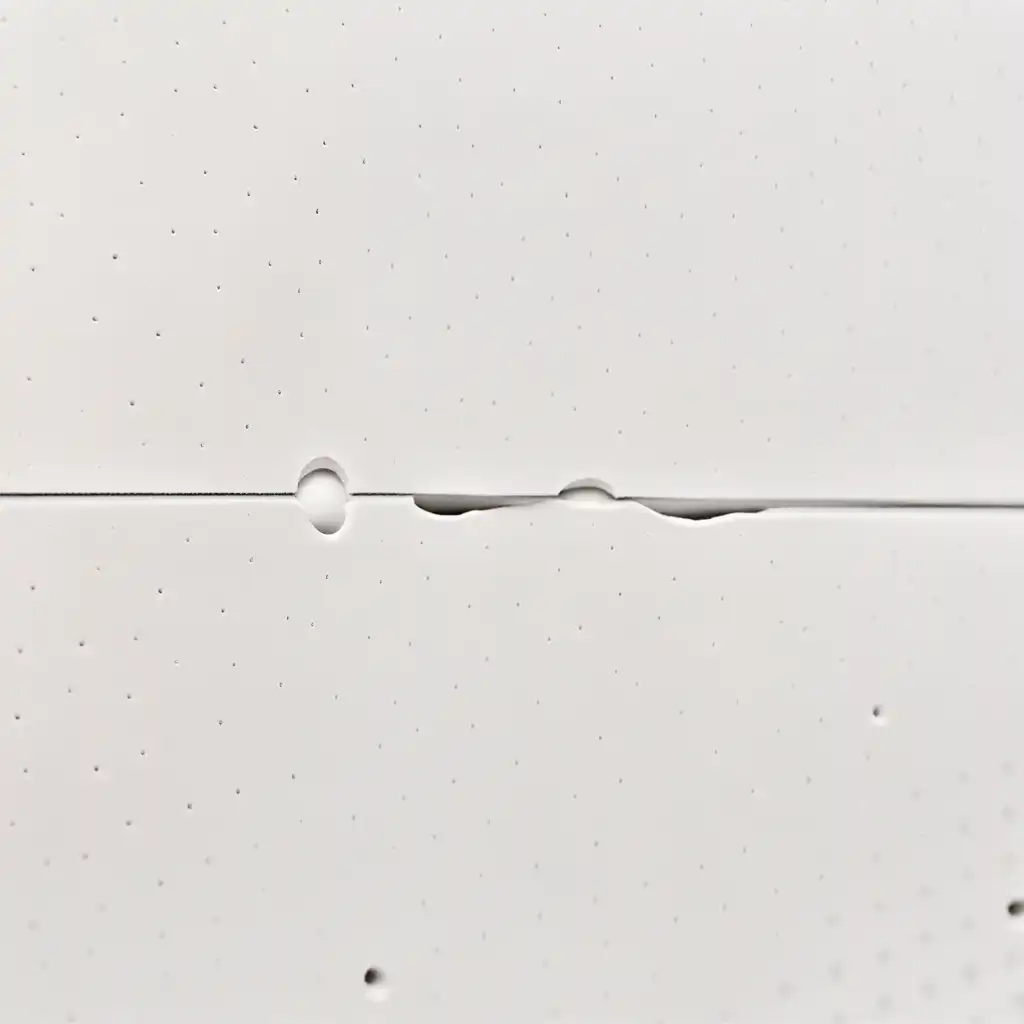
perforation
noun perforation
ˌpɜːrfəˈreɪʃn
A hole or a series of holes punched or bored through something
There's a perforation in this paper where you need to tear it off.
perforation
ˌpɜːrfəˈreɪʃn
Chargement…
ˌpɜːrfəˈreɪʃn
A hole or a series of holes punched or bored through something
There's a perforation in this paper where you need to tear it off.
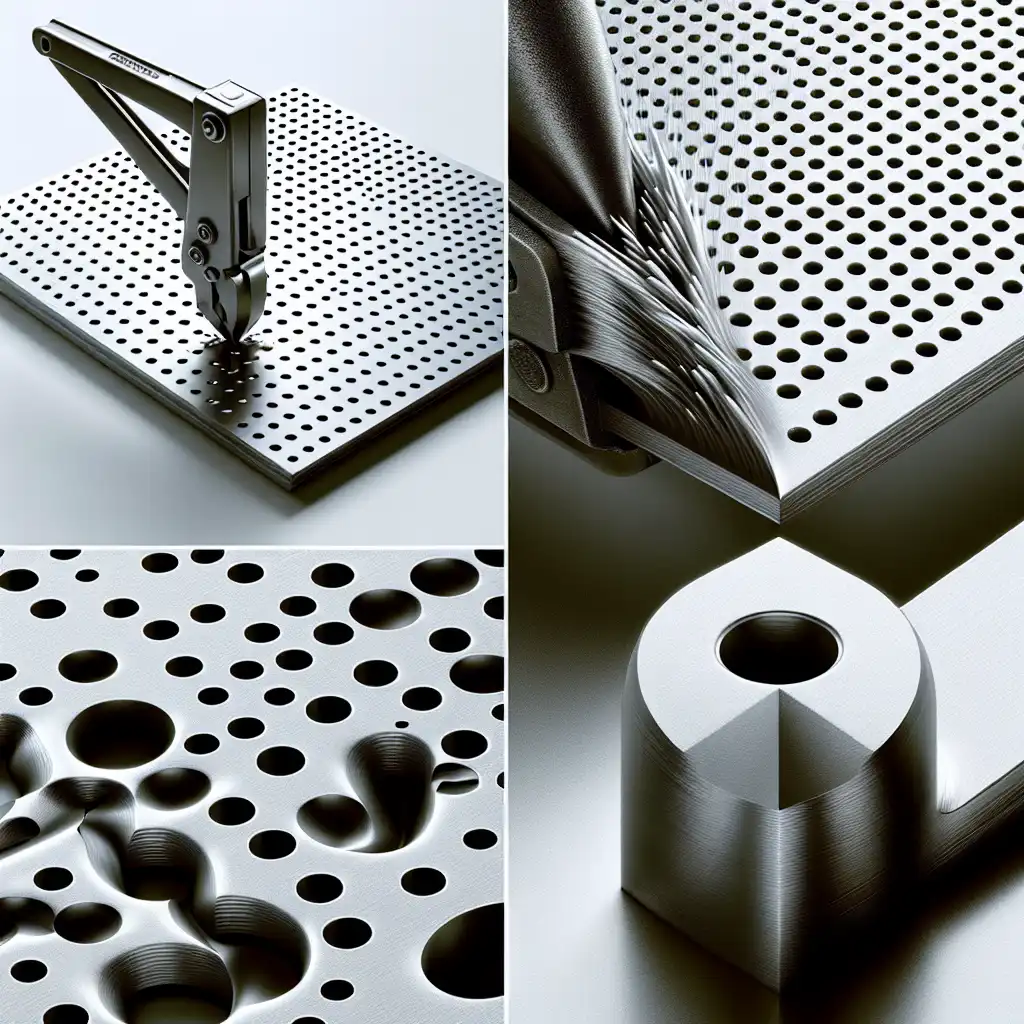
ˌpɜːrfəˈreɪʃn
The action of perforating or being perforated
The process includes the perforation of the metal sheet.
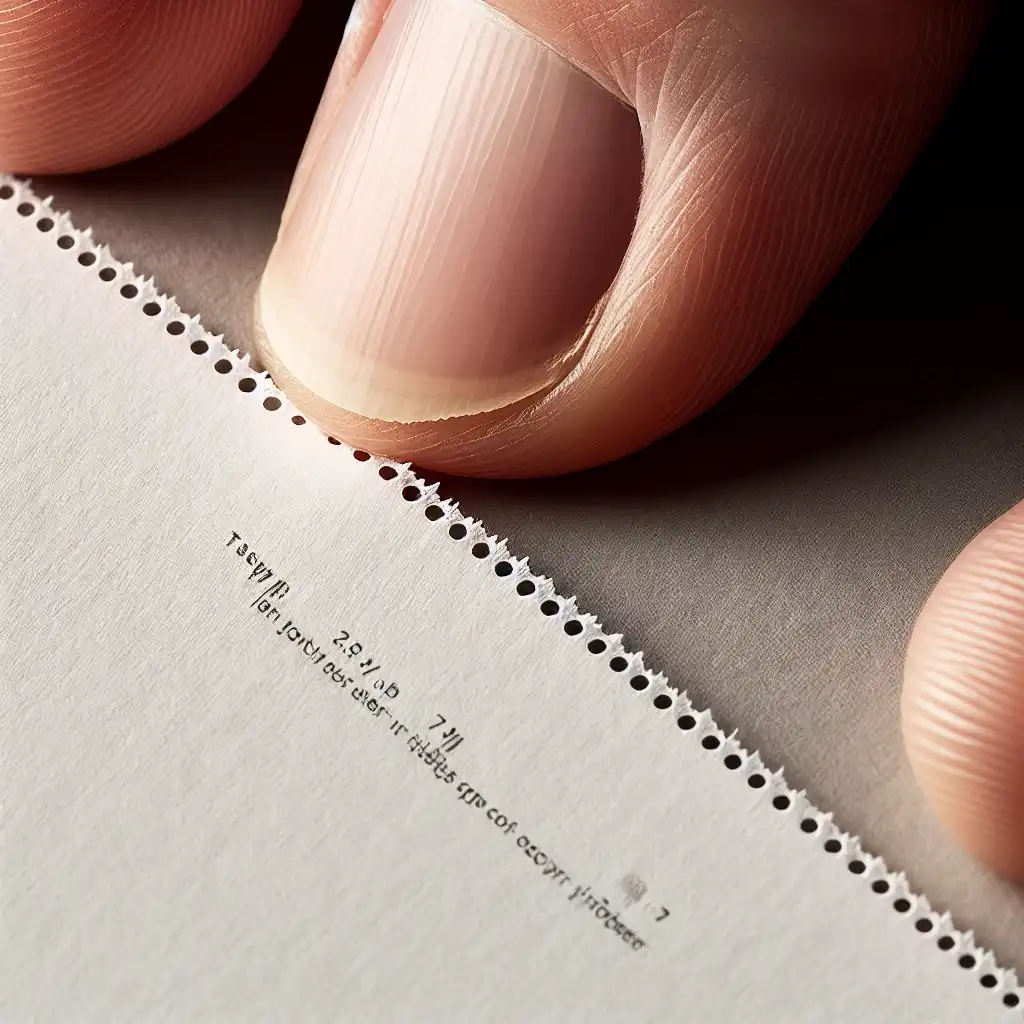
ˌpɜːrfəˈreɪʃn
A line or small holes in paper allowing a part to be detached
You can separate the receipt at the perforation.
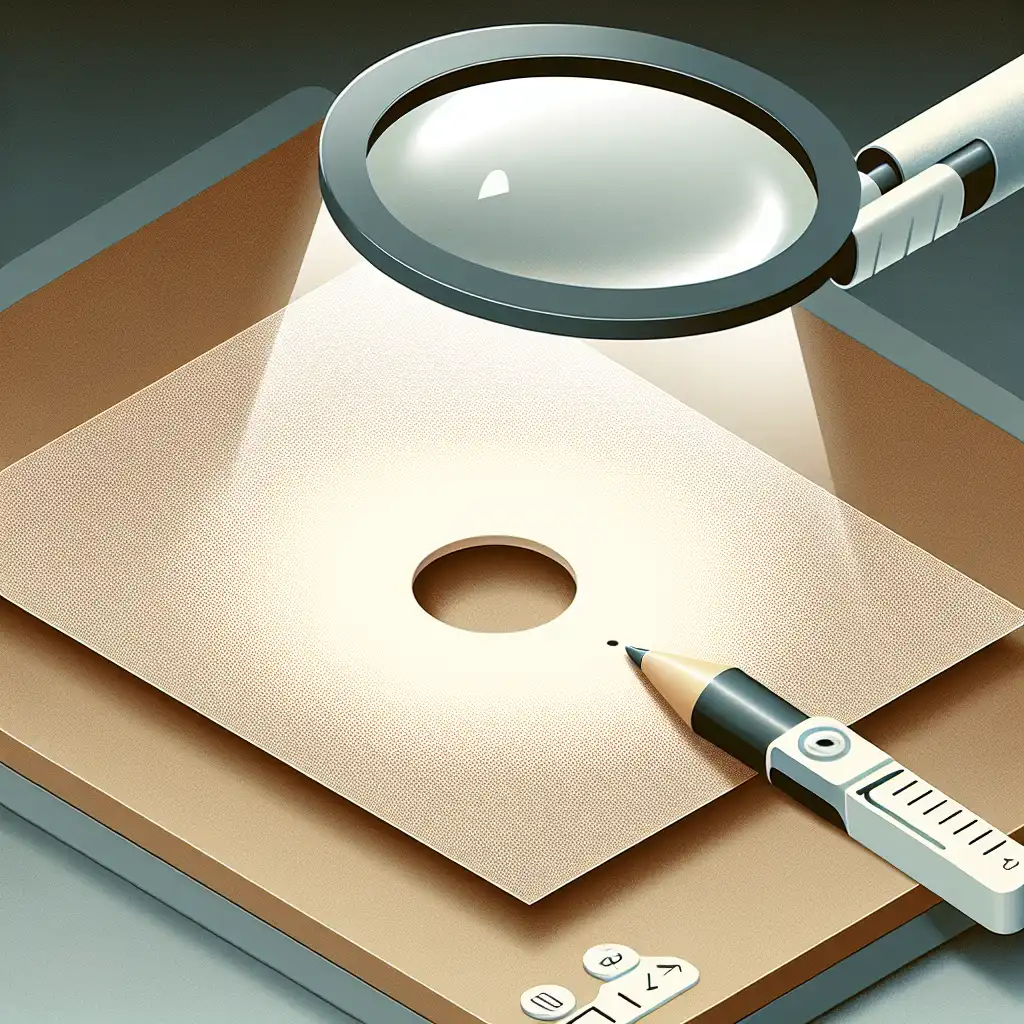
ˌpɜːrfəˈreɪʃn
A small hole in a thin material or surface
The doctor diagnosed her with a perforation in the stomach lining.
Impossible de charger l’audio. Réessayez plus tard.
Perforation refers to small holes or cuts made in a material, such as paper, cardboard or metal. These holes are usually made using a special tool or machine and serve a specific purpose, such as tearing off a section of a paper, allowing air to pass through a surface, or creating a decorative look. For example, postage stamps are often designed with perforations to make it easy to separate them from each other. In medical contexts, perforation can refer to a hole or tear in an organ or tissue, usually caused by injury or disease.
Aperture and perforation are both terms that refer to openings, but they are used in different contexts.
Aperture refers to the opening of a camera lens that allows light to pass through and form an image on the film or digital sensor.
Aperture is used in photography and optics.
So, while both words refer to openings, the key difference is that aperture is used in the context of photography and optics, while perforation is used in the context of printing and packaging.
Ouvrir le mot: Aperture →A hole is a gap or opening in something that is usually unintentional or natural, such as a hole in the ground or a hole in a sock.
A perforation is a series of small, intentional holes made in a material, such as paper or fabric, to make it easy to tear or create a pattern.
For example, a hole in a pipe or a tire can cause a leak or damage, while perforations in a paper help to separate it easily.
Holes are generally used to describe openings that are continuous or larger, while perforations refer to small, intentionally created holes in a material.
Ouvrir le mot: Hole →Incision refers to the act of making a cut or a slit into something, usually with a surgical instrument such as a scalpel.
This term is commonly used in medical contexts, where a doctor may need to make an incision in the skin to perform a surgery, for example.
Incision is a deliberate and controlled cut made with a special tool, while a perforation is usually an unintended hole made with a sharp object.
Ouvrir le mot: Incision →A notch is a small cut or indentation made in an object, whereas a perforation is a series of small holes or cuts made in a material.
Notches are typically used to mark a specific point or to fit two objects together. For example, a carpenter might make a notch in a piece of wood to join it with another piece of wood.
Notches can also be decorative or functional, such as the notches in a key for opening a specific lock.
In simple terms, notches are small cuts made in an object while perforations are a series of small holes or cuts made in a material to create a line of weakness.
Ouvrir le mot: Notch →Open means that there is no barrier or obstruction.
It can apply to anything that can be accessed without hindrance, such as an open door or an open field.
In the medical field, perforation can refer to a hole or opening in an organ or tissue.
Open means there is free access or no obstruction while perforation refers to an object or material that has small holes or punctures.
Ouvrir le mot: Open →Puncture refers to an unintentional hole or tear in a material. For example, if someone accidentally steps on a nail, it may puncture their shoe and go into their foot.
Puncture can also refer to an injury caused by a sharp object, such as a needle.
Perforation is intentional, while puncture is unintentional.
Perforation is often used in manufacturing and medical procedures, while puncture is typically associated with accidental injuries.
Ouvrir le mot: Puncture →Perforation refers to a series of small holes or punctures made in a material, whereas slit refers to a long narrow cut or opening made in a material.
Perforation is commonly used in the production of paper or tickets that need to be easily torn apart, while slit is often used in the manufacturing of envelopes or packaging where a seal needs to be broken.
In simpler terms, perforation creates small holes in a material, while a slit creates a long thin opening.
Ouvrir le mot: Slit →A slot is a narrow opening or groove in something, often made for the purpose of inserting something else. For example, a mail slot in a door allows you to insert mail without opening the door.
In short, perforations are small holes while slots are narrow openings. Perforations are usually used for tearing things apart while slots are used for inserting things into something else.
Ouvrir le mot: Slot →David Bismark: E-voting...
Voir sur YouTube ↗