
utter
verb utter
ˈʌtər
To say something out loud
He uttered a cry of surprise when he saw the gift.
utter
ˈʌtər
Cargando…
ˈʌtər
To say something out loud
He uttered a cry of surprise when he saw the gift.

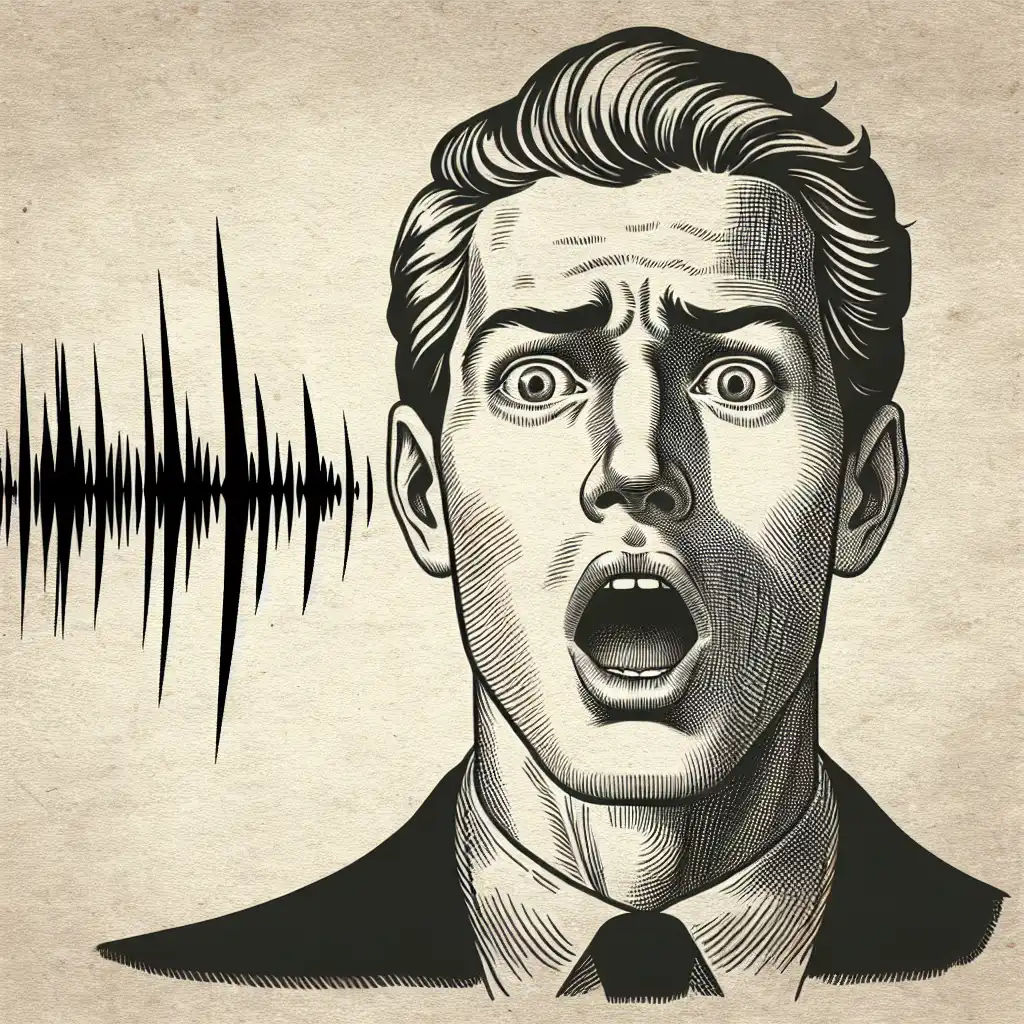
ˈʌtər
Make (a sound) with one's voice
He was too shocked to utter a sound.

ˈʌtər
To officially put (counterfeit money) into circulation
He was arrested for uttering counterfeit notes.
No se pudo cargar el audio. Inténtalo de nuevo más tarde.
The word "utter" is usually used to mean "to speak" or "to say" something out loud. For example, you might say "He uttered a few words of encouragement" or "She constantly utters complaints about her job." You might also use "utter" to mean "complete" or "absolute." For example, you might say "That was utter nonsense" or "The room was in utter darkness." Overall, "utter" is a more formal and less common word than "say" or "speak," so you might encounter it more often in writing or formal speech than in casual conversation.
Articulate means to express oneself clearly and effectively in speech or writing.
This word applies more to the ability to communicate and convey thoughts and ideas in a clear manner. For example, when someone presents a well-written essay or delivers a coherent speech, they are using their ability to articulate their thoughts well.
Articulate describes the ability to communicate effectively while utter describes the act of making sounds with the voice.
Abrir palabra: Articulate →Declare means to make known or announce something officially.
Declare is used when making an official announcement while utter is used when speaking or articulating something aloud.
Abrir palabra: Declare →Emit means to send out or release something like light, sound or gas. For example, a light bulb emits light, a stove emits gas, and a radio emits sound.
The main difference between the two words is that emit is used when something is being sent out or released, while utter is used when someone is speaking or saying something out loud.
Abrir palabra: Emit →Both express and utter mean to communicate or convey something verbally or in writing.
Express generally means to convey a thought or feeling in a clear and specific way.
It can also imply a certain level of intentionality or purposefulness behind the communication. For example, you might express your love for someone by telling them directly, in a heartfelt manner.
It doesn't necessarily imply the same level of clarity or intentionality as express. For example, you might utter a curse word when you stub your toe, without really thinking too much about what you're saying.
Express is generally used when the speaker wants to communicate something specific and meaningful, while utter is a more neutral term that applies to any kind of spoken communication.
Abrir palabra: Express →Pronounce refers to how someone says a word, while utter refers to simply saying something. Pronounce is used when someone wants to make sure they are saying a word correctly or if they are trying to teach someone how to say it.
Abrir palabra: Pronounce →Say means to express something in words either by speaking, writing, or texting. For example: "I said that I like pizza.".
Both words can be used interchangeably in some cases, but utter is more formal and specific in meaning, while say is more common and general.
Abrir palabra: Say →Speak means to articulate or communicate in words while the word utter means to express something aloud.
Speak is used more generally to refer to the act of talking or communicating, while utter is used to specifically describe the act of producing words or sounds.
For example, you would use speak when asking someone if they can talk to you or when telling someone that you need to speak to them.
Abrir palabra: Speak →Utter means to speak or say something aloud, while vocalize means to produce sounds with the voice. Utter is more commonly used in the context of speaking specific words or phrases, whereas vocalize is broader and can refer to any kind of vocal expression, such as singing, humming, or making animal sounds.
For example, you would use utter when asking someone to repeat what they said, and vocalize when describing the sound a bird makes.
Abrir palabra: Vocalize →might be able to film this so the clock was ticking winter is reaching down from the cold world above the guys came up utterly exhausted and we set it to run for an eight hour eight hour time lapse and we knew we
Ver en YouTube ↗A 'No' uttered from the deepest conviction is better than a 'Yes' merely uttered to please, or worse, to avoid trouble.
Have you ever talked with a friend about a problem only to realize that he just doesn't seem to grasp why the issue is so important to you? Have you ever presented an idea to a group and it's met with utter confusion? Or maybe you've been in an argument
Ver en YouTube ↗Poets utter great and wise things which they do not themselves understand.
As babies engage with caregivers they soon realize that well, there is something between the ears that is very important -- it's invisible you can't see it but it's really critical. And that thing is called attention. And they learn soon enough, even before they can utter one word,
Ver en YouTube ↗Whatever words we utter should be chosen with care for people will hear them and be influenced by them for good or ill.
But this is your chance to see a whole new perspective on where you live. At first our flatworlder can make no sense of what is happening. It's utterly outside the realm of flatworld experience. But eventually he realizes that he's viewing flatworld from a totally new vantage point--
Ver en YouTube ↗As we express our gratitude, we must never forget that the highest appreciation is not to utter words, but to live by them.
source of strength the boy's name was Mohandas Gandhi and he later uttered for me the most important sentences in human history in a gentle way you can shake the world so whether you're an introvert or an extrovert I invite you to join our revolution and I invite you to consider
Ver en YouTube ↗I didn't want to be the kind of man that my father was. So I've tried, my entire life, to be the complete and utter opposite of that. And it has served not only the art well, but I think the audience well.
You probably know the feeling. Your phone utters its final plaintive "bleep" and cuts out in the middle of your call. In that moment you may feel more like throwing your battery across the room than singing its praises,
Ver en YouTube ↗With every word we utter, with every action we take, we know our kids are watching us. We as parents are their most important role models.
you can get slightly more complex things. And in this way complexity builds stage by stage. Each stage is magical because it creates the impression of something utterly new appearing almost out of nowhere in the universe. We refer in big history to these moments as threshold moments.
Ver en YouTube ↗One must die to life in order to be utterly a creator.
and some guy her dad once did business with, and they'll vow that nothing -- not abject poverty, not life-threatening illness, not complete and utter misery --
Ver en YouTube ↗A story about my life would be utterly dull.
passing through you right now, and you're utterly blind to it. Now it's not that these things are inherently unseeable. Snakes include some infrared in their reality, and honeybees include ultraviolet in their view of the world, and of course we build machines in the dashboards of our cars
Ver en YouTube ↗The unsaved people will be cast into utter darkness forever.
who's the hero of the story to change? Well it might be because change, even really positive change, involves a surprising amount of loss. Loss of the familiar. Even if the familiar is unpleasant or utterly miserable, at least we know the characters and setting and plot,
Ver en YouTube ↗Truth uttered before its time is always dangerous.