residue
noun residue
ˈrezɪduː
Something left behind after the rest has been used, removed.
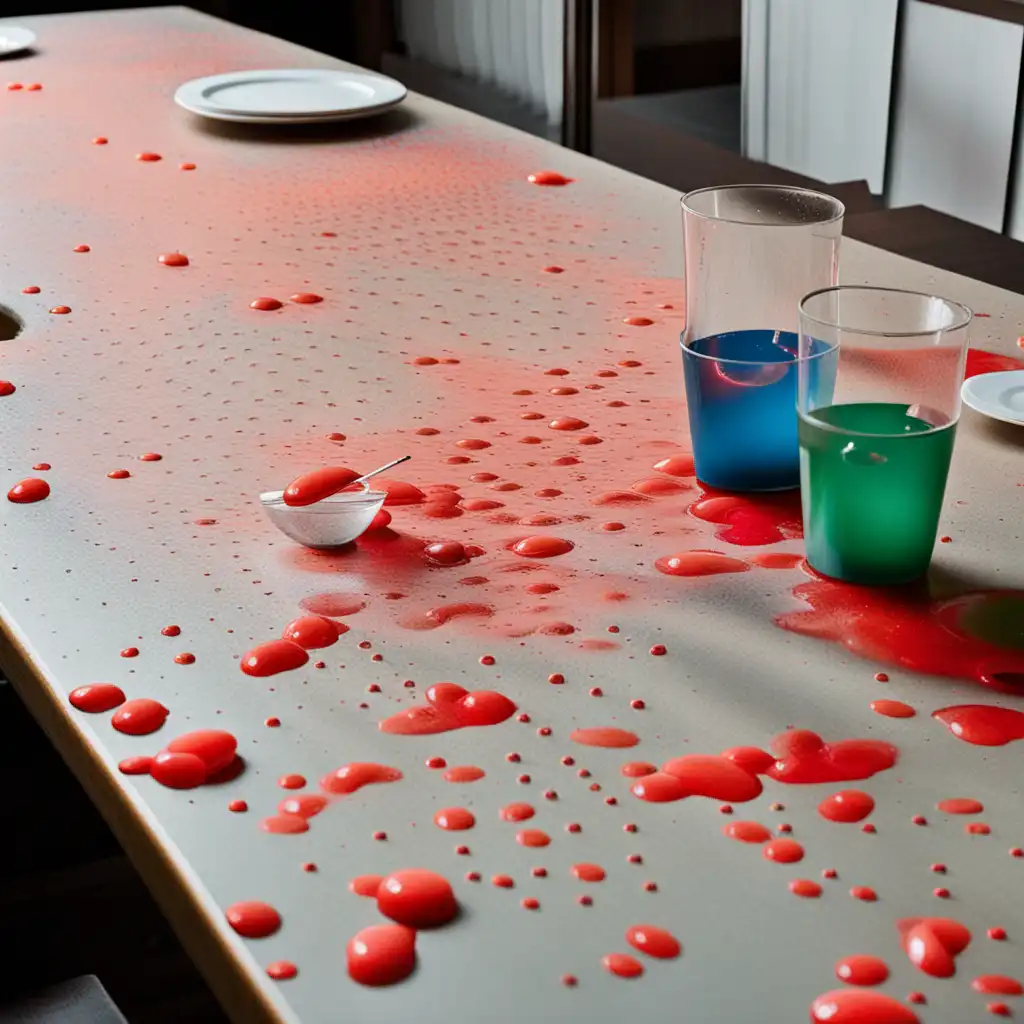
There was a sticky residue left on the table after the party.
residue
ˈrezɪduː
Loading…
ˈrezɪduː
Something left behind after the rest has been used, removed.
There was a sticky residue left on the table after the party.
ˈrezɪduː
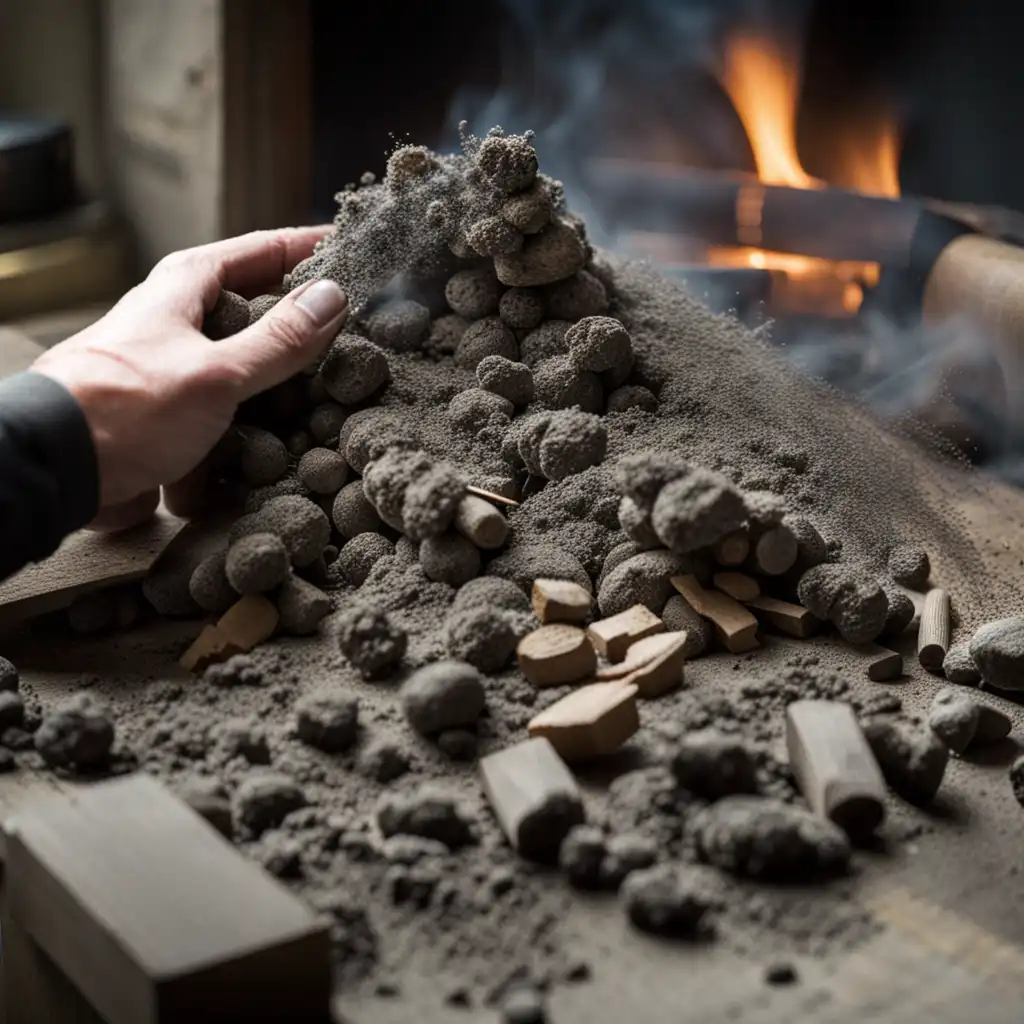
In chemistry, it's the substance that remains after a process such as combustion or evaporation.
After burning the wood, the residue was collected for analysis.

ˈrezɪduː
In law, it's the part of an estate that is left over after debts and legacies have been settled.
Her will stated that the residue of her estate should be donated to charity.
ˈrezɪduː
In maths, it's a number that's left over after a division operation.
By subtracting 15 from 37, a residue of 22 is obtained.
ˈrezɪduː
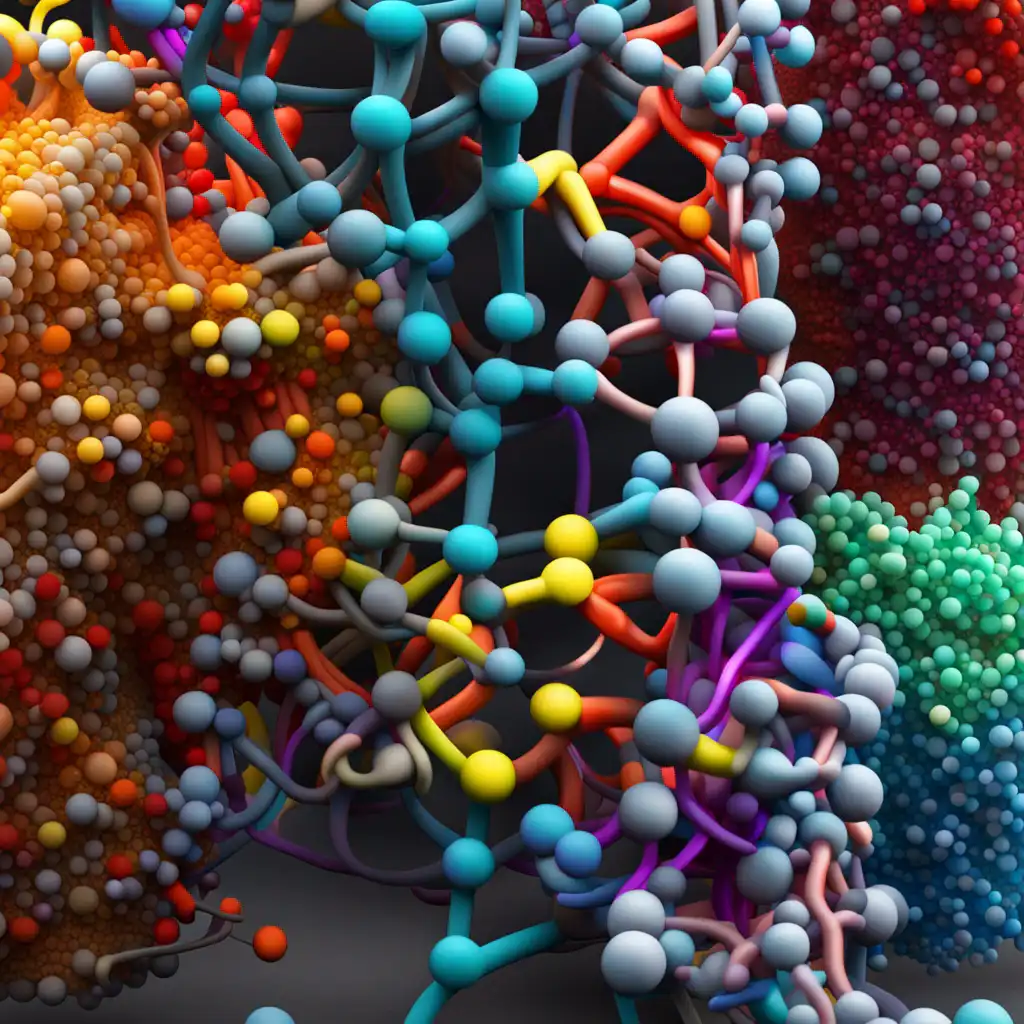
In biochemistry, it's a single unit within a larger structure such as a protein or DNA molecule.
Each amino acid residue contributes to the protein's structure.

ˈrezɪduː
In computing, it's the remaining data after a processing operation.
The residue data were stored in a buffer for later use.
Audio could not be loaded. Please try again later.
The word 'residue' refers to the small amount that is left behind after most of something has been used or removed. For example, if you pour juice into a glass, there may be a small amount of juice left in the container, which we refer to as residue. Similarly, when you clean your dishes, there might be some food residue left on them that needs to be washed off. The word can also be used in a more abstract sense, such as referring to the lingering effects or feelings of a past event. Overall, residue typically refers to small, leftover amounts that remain after most of something has been used, removed, or resolved.
Balance refers to the equality of two things. For example, if you have $10 in one hand and $10 in the other, you have a balance of $20.
It can also be used to refer to a stability in different aspects of life. For instance, you need to have a balance between work and leisure.
Balance refers to equality and stability, while residue refers to remaining or leftover parts.
Open word: Balance →Excess refers to something that is more than necessary or needed, while residue refers to something that remains after a process is completed.
For example, if you eat too much food, the extra that your body doesn't need is excess. The leftover scraps or pieces of food that remain after cooking or eating are the residue.
Excess is used when there is too much of something, while residue describes what is left behind after a process or reaction.
Open word: Excess →Leftover refers to food or other items that remain unused after a meal or specific activity. Residue refers to a small amount of a substance that remains after a process or event.
Leftovers are usually applicable in the context of food, while residue is applicable in various contexts, including chemistry, manufacturing, and environmental studies.
In simpler terms, leftovers are what's left of food, while residue is what's left of something after a process.
Open word: Leftover →Relic refers to an object, custom or belief that has survived from the past, often with religious or historical significance.
For example, a relic could be a piece of ancient pottery that has been passed down through generations, while residue could be the leftover ashes from a fire.
Relics are often associated with history, culture, and tradition, while residue is more closely related to scientific or practical processes.
Open word: Relic →Remainder refers to what is left over after a division or subtraction process. For example, in the equation 7 divided by 3, the remainder would be 1 (since 3 goes into 7 twice with 1 left over).
In the equation 10 minus 3, the remainder would be 7 (since that is what is left over after subtracting).
A remainder refers to what is left over after a basic calculation or operation, while a residue is typically used in more complex mathematical situations to refer to the solution or part of the solution that remains after some element has been removed.
Open word: Remainder →Remnant refers to a small part or leftover of something that used to be larger or more significant.
It is often used in the context of clothing or fabric, where a remnant refers to a small piece of cloth that is left over after the rest of the fabric has been used.
It is often used to refer to the leftover material or substances that are left after a chemical process or reaction. In simpler terms, the difference between the two words is that remnant refers to a leftover piece of something tangible, while residue typically refers to the leftovers of a substance or process.
Open word: Remnant →Residual and residue are related words, but they have slightly different meanings.
Residual refers to something that is left over after most, but not all, of it has been removed or used up. For example, if you're cleaning a dirty dish and there is still some food stuck to it after you've washed it, that would be residual food.
Another example might be residual income, which is income received after expenses have been paid.
So, in summary: residual refers to something that is left over after most, but not all, of it has been used up, while residue refers to the specific material left behind after a chemical or physical process.
Open word: Residual →Scrap refers to an object or material that is left over after it has been used or cut.
It is often used in manufacturing or construction contexts. For example, the scrap metal left over after building a car can be recycled.
Residue is the remaining material after a process, while scrap is the leftover material from manufacturing or construction.
Open word: Scrap →Vestige refers to a trace or evidence of something that is no longer present or has disappeared. For example, the vestiges of an old building that has been demolished.
In simpler terms, residue is what's left behind after something has been removed, while vestige is a trace or evidence of something that used to exist.
Residue is applicable in situations where something has been taken away or removed, while vestige is applicable in situations where something has disappeared or exists in a reduced form.
Open word: Vestige →where residue in clay pots has revealed that people were making an alcoholic beverage from fermented rice millet grapes and honey. Within a few thousand years, cultures all over the world were fermenting their own drinks.
Watch on YouTube ↗What we do know absolutely is that human lives are worth more than grapes and that innocent-looking grapes on the table may disguise poisonous residues hidden deep inside where washing cannot reach.
past some sort of psychic residue like a looped videotape of a moment in time this kind of haunting seems to have no will of its own and does not interact with the living a third type is called a crisis apparition when the dead are said
Watch on YouTube ↗If it's a very emotional scene, you're kind of relieved when you've done it, kind of spent. And there are times when you can be rattled, certain characters if they're hyper, that can carry over, the residue of that. But I try to leave it on the set.
We spend so much time listening to the things people are saying that we rarely pay attention to the things they don't. Silence is the residue of fear. It is feeling your flaws gut-wrench guillotine your tongue. It is the air retreating from your chest
Watch on YouTube ↗My life is, in a sense, trash. My life is only that of which the residue is my writing.
and we got that volunteer to then shake hands with a colleague and then that colleague got on with his day-to-day activities and what we observed was that that colleague not only had gunshot residue on them he hadn't fired a gun but he was also able to transfer that
Watch on YouTube ↗Good luck is a residue of preparation.
practice didn't help. But these same people who were sitting and then went on the treadmill got a boost from walking. Here's the interesting thing. The people who were walking on the treadmill still had a residue effect of the walking, and they were still creative afterwards.
Watch on YouTube ↗Luck is the residue of design.
We're relying on dead plants and animals, leaving their residue in the atmosphere to threaten the species that are still alive, and 50 percent of them are in danger of extinction in this century. And as we push into previously wild areas of the world,
Watch on YouTube ↗Silence is the residue of fear.
they get these methods evolve really fast we get better instruments and i feel like that is helping a lot to sort of like move um the understanding of what preserves in fossils in in deep time from looking only at you know like individual case studies where we have the interesting preservation of i don't know let's say protein residues and one
Watch on YouTube ↗When you ghost hunt, you kind of time travel: you get that residue of the past.
In Africa alone, we estimate that half a billion tonnes of agricultural residues are available to produce biochar. That means about the same amount of CO2 being removed every year from the atmosphere, and there are many more billion tonnes in the rest of the world.
Watch on YouTube ↗Our dreams are firsthand creations, rather than residues of waking life. We have the capacity for infinite creativity; at least while dreaming, we partake of the power of the Spirit, the infinite Godhead that creates the cosmos.
How good is it? What are their qualifications? No effect on those things. This is what's affected. These kinds of things. People are bringing their true selves basically. They're bringing themselves. They bring their ideas but as themselves, with no you know residue over them.
Watch on YouTube ↗Every job leaves its residue, a bit of extra knowledge, a new skill-set.
is that it can traverse time. The past appears in tracks left by passersby, and by the warmth of a recently parked car where the residue of where you've been and what you've done recently. Landmarks like fire hydrants and trees are aromatic bulletin boards carrying messages of who's been by, what they've been eating,
Watch on YouTube ↗There's still a really divisive residue in our nation that's called racism and prejudice and oppression and sexism.