phantasm
noun phantasm
ˈfæntæzəm
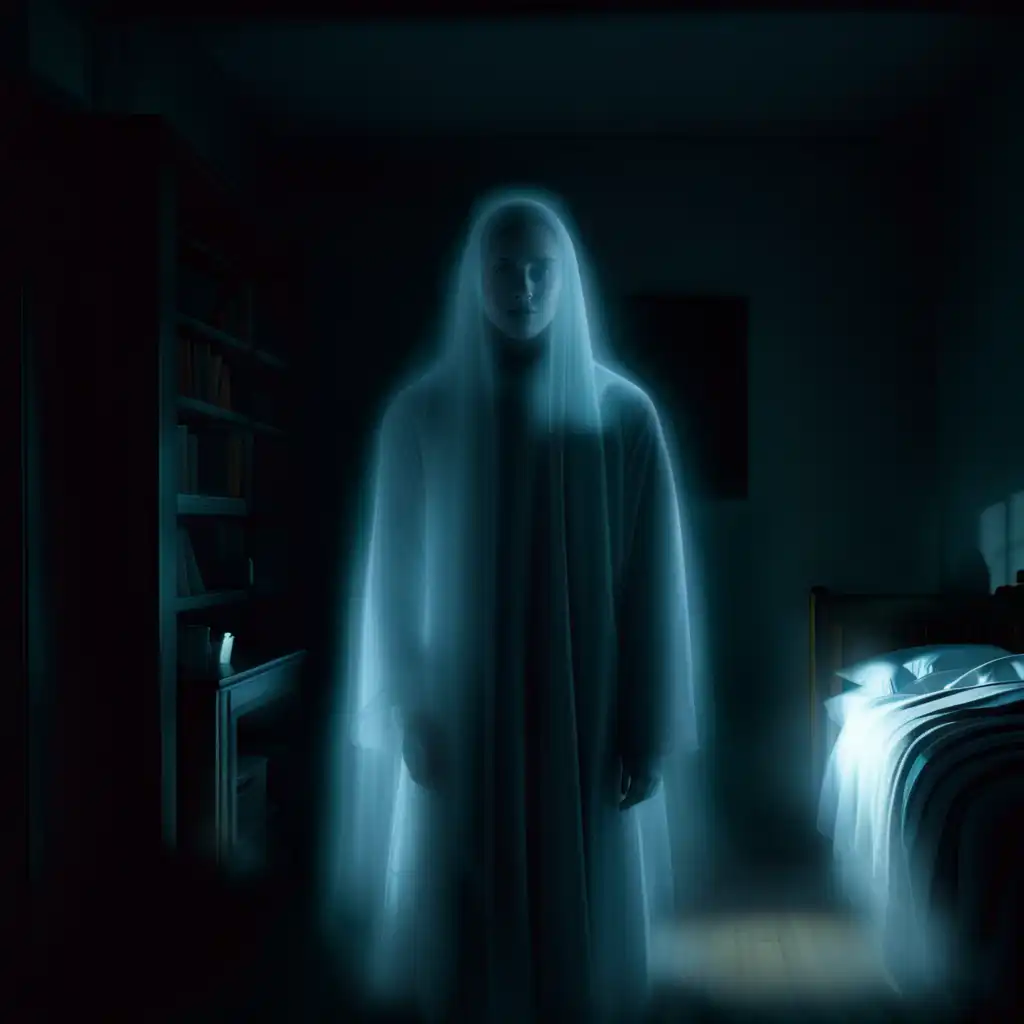
An illusion, apparition, or ghost that someone believes they saw.
In a dark, quiet room, he could still see his friend's phantasm at night.
phantasm
ˈfæntæzəm
読み込み中…
ˈfæntæzəm
An illusion, apparition, or ghost that someone believes they saw.
In a dark, quiet room, he could still see his friend's phantasm at night.

ˈfæntæzəm
A mental imagery or vision that isn't real.
His fear of flying is purely a phantasm in his mind.
音声を読み込めませんでした。しばらくしてからもう一度お試しください。
The word "phantasm" means something that appears in your mind or in front of you but isn't real. You might use this word to describe a scary dream or to talk about an imaginary creature. It's not a very common word, so you might not encounter it very often.
Both apparition and phantasm refer to something that appears or seems to be present but is not physically real.
Apparition typically refers to a supernatural or ghostly image or form that appears unexpectedly. For example, a person might report seeing the apparition of a loved one who has passed away.
Apparition is more commonly used in the context of supernatural or paranormal experiences, while phantasm can refer to a broader range of perceptions and illusions.
単語を開く: Apparition →Delusion refers to a false belief that someone holds despite any evidence or proof to the contrary. It is generally a personal belief that is not shared by others and can be caused by mental illness, deception, or mistaken interpretation of reality.
It can include hallucinations or illusions that are experienced by an individual, but they are not shared by others in the same way as a delusion.
Delusion is a false belief that is held by an individual, while a phantasm is a perception or image that may not be real.
Delusion is generally used in the context of mental illness, while phantasm is more commonly used in literature or artistic works to describe imaginary or surreal elements.
単語を開く: Delusion →Ghost usually refers to the spirit or soul of a dead person that is believed to wander around haunting a place or person.
Ghost describes a supernatural or paranormal occurrence, while phantasm describes an imaginary or illusory experience.
単語を開く: Ghost →Hallucinate means to see or hear something that is not really there or to experience things that are not real, usually due to a medical condition or drug use.
Hallucinate refers to an experience in which someone is perceiving something that isn't real, while phantasm refers to the idea or image that is entirely imaginary.
Hallucinate is generally used in the context of something being experienced by someone, while phantasm is more often used to describe a vague, ethereal concept or idea.
単語を開く: Hallucinate →Illusion refers to something that seems real but is actually fake or deceptive. It could be a trick of the eye, like a mirage in the desert, or a misinterpretation of reality, like thinking a shadow is a person.
In simpler terms, an illusion is like a mirage and a phantasm is like a monster in a dream.
単語を開く: Illusion →A mirage is an optical illusion caused by the reflection of light that can make distant objects appear closer or distorted.
It occurs naturally in hot and dry environments, usually in deserts. Mirage is applicable in situations where something appears to be there but is actually an illusion.
The main difference between the two words is that a mirage is a physical illusion caused by light reflection, while a phantasm is a mental construct created by the mind.
単語を開く: Mirage →Both phantasm and spectre refer to supernatural or ghostly entities, but they have slightly different connotations.
Spectre typically refers to a ghost or spirit that haunts a place or person. It has a more sinister and ominous connotation, suggesting a haunting or foreboding presence.
For example, a spectre might be seen as a shadowy figure lurking in the corner of a room, or as a ghostly spirit that appears to haunt a particular location.
Phantasm refers to an imaginary or illusory image, while spectre refers to a ghost or supernatural presence.
単語を開く: Spectre →Phantasm and vision are words that describe things we see in our minds, but they have slightly different meanings.
A vision is a mental image that is based on reality. It's something that we see in our minds that is actually possible or has already happened.
For instance, if you recall a beautiful sunset you saw last summer, that would be a vision.
Phantasm describes something we imagine or dream up, while vision refers to something we have seen or can see in reality.
単語を開く: Vision →Nic's Charlie is something very particular. You can't really put them together. It's a phantasm.