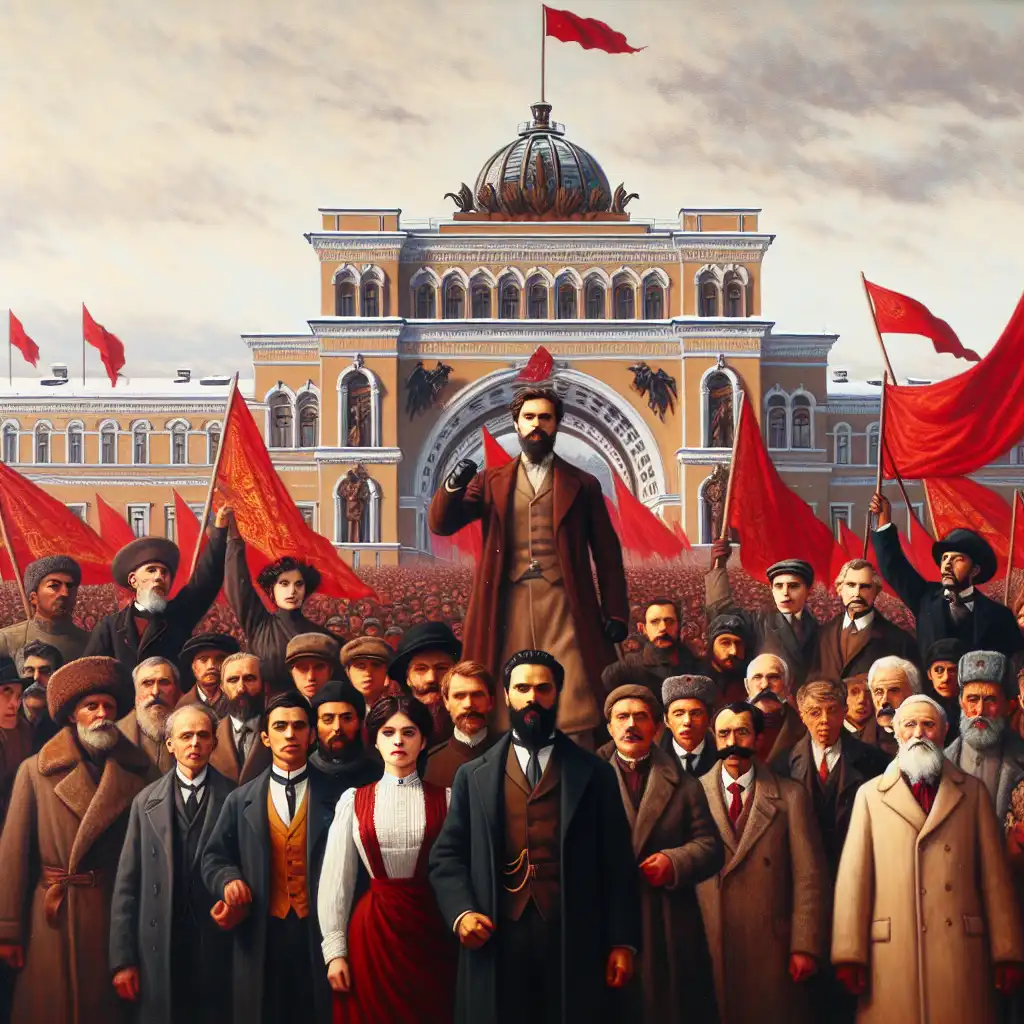
The word "bolshevik" refers to a member of the Russian Social Democratic Labour Party or a supporter of the Bolshevik Party during the Russian Revolution. It is often used to describe someone who is radical or extreme in their political views. The term can also be used to describe a person who supports a revolutionary or socialist movement. However, it is important to note that the word has historical connotations and should be used with care and consideration.
Communist is a broader term that refers to a political and economic system that advocates for the common ownership of property and the means of production.
While the Bolsheviks were communist, not all communists are Bolsheviks. The term communist can be used to refer to anyone who supports communism, regardless of whether or not they are part of the Bolshevik party or any other political party.
Leftist refers more broadly to someone who holds left-wing political views, which can include socialism, communism, anarchism, and other ideologies.
So while all Bolsheviks are leftists, not all leftists are Bolsheviks. The term Bolshevik is more specific to a certain moment in history and a certain ideology, while leftist can encompass a broader range of ideologies and political positions.
The term Marxist refers to someone who follows the principles and ideas of Karl Marx and his theories on a classless society where the means of production are owned collectively.
In summary, Marxist is a political ideology based on the ideas of Karl Marx, while Bolshevik refers to a specific faction that put Marxist principles into practice during the Russian Revolution.
Proletarian refers to the working class people who do not own the means of production and must sell their labor to make a living.
So, while the term Bolshevik is specific to a certain political movement, proletarian refers to a larger group of people who share similar economic circumstances.
Bolshevik might be used to describe someone's political beliefs or affiliations, while proletarian describes their economic class.
Radical refers more generally to someone who advocates for significant and often progressive change in society or politics.
Radical can be applied to various situations and contexts, including social, cultural, or economic changes.
In summary, Bolshevik is a specific term related to Russian communist history, while radical is a more general term indicating a desire for significant change.
Red, on the other hand, is a more general term that has been used to describe various communist or socialist groups and movements throughout history.
While both terms are often associated with communism and socialism, Bolshevik is more narrowly focused on a specific political party and historical event, while red is a broader term that can refer to a range of leftist ideologies and movements.
In general, Bolshevik is less commonly used today outside of historical discussions or discussions about Russian politics, while red is still used more widely as a general descriptor for leftist or socialist ideologies.
Revolutionary, on the other hand, refers more generally to someone who seeks significant and far-reaching change to a political or social system.
While a Bolshevik is always a revolutionary, not all revolutionaries are Bolsheviks. Bolshevik is applicable when discussing the specific political party that came to power in Russia, while revolutionary can be used in a broader sense to describe individuals or movements seeking significant change.
Socialist is a broader concept that refers to a political and economic system in which the means of production, such as factories and land, are owned and controlled by the community as a whole.
While all Bolsheviks were socialists, not all socialists were Bolsheviks. Socialist beliefs can be applied in a variety of ways and can range from democratic socialism to state socialism.