
damsel
noun damsel
ˈdæmzl
A young, unmarried woman
She was a damsel in her early 20s, just graduated from college.
damsel
ˈdæmzl
読み込み中…
ˈdæmzl
A young, unmarried woman
She was a damsel in her early 20s, just graduated from college.
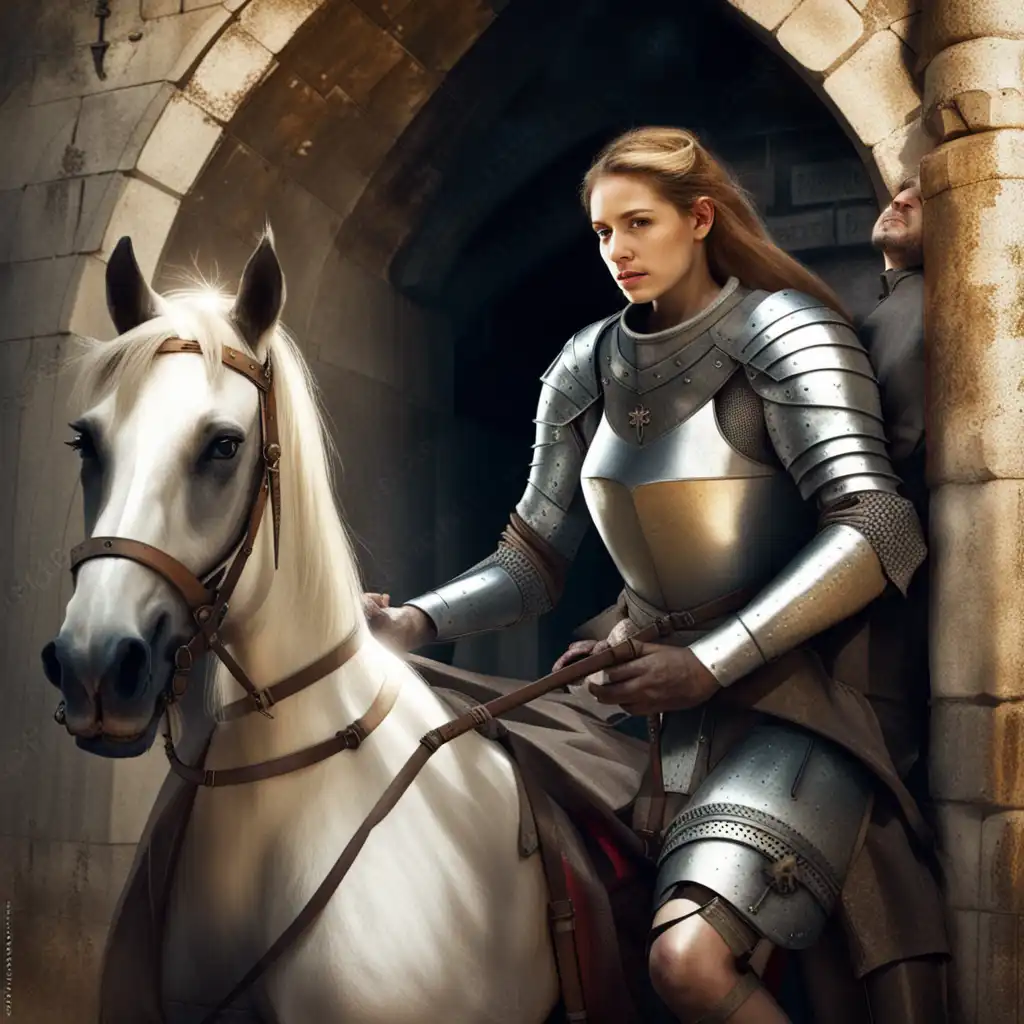
ˈdæmzl
A woman or girl who needs help, often in a romantic context
The knight saved the damsel who was locked in the tower.
音声を読み込めませんでした。しばらくしてからもう一度お試しください。
The word 'damsel' is an old-fashioned term that is used to describe a young woman, especially one who is seen as delicate or vulnerable. It is often used in literature or fairy tales to describe a princess or a woman in distress who needs to be rescued. However, it is not commonly used in modern-day conversations, and it can also be considered sexist by some people. So, it is better to avoid using this word in daily conversations unless you are talking about a historical or literary context.
Damsel typically refers to a young woman who is unmarried and of noble birth, while the word girl refers to a young female of any social status or marital status.
Damsel is more formal and typically used in historical or fantasy contexts, while girl is a more general term that can be used in any setting.
In modern times, it is generally more appropriate to refer to a female as a girl rather than a "damsel."
単語を開く: Girl →Both words damsel and lass are used as synonyms for 'young woman', but there are subtle differences in their meanings.
Lass is more commonly used in Scotland and Ireland to refer to a female, usually a girl or young woman. It carries a more informal and friendly connotation, and can be used to refer to any young woman.
Lass is often used in the context of a group of friends, where it can be an affectionate way of addressing a female acquaintance.
Damsel is more archaic and is often used in the context of fairy tales and medieval stories. Lass is a more informal and friendly word used more common in Scotland and Ireland.
単語を開く: Lass →The words damsel and maiden both refer to young women, but they have slightly different connotations. Damsel is a more romantic or chivalrous term, often used in fairy tales or medieval stories to refer to a young woman in distress who needs rescuing.
Maiden, on the other hand, is a more general term for a young, unmarried woman.
It can be used in any context, not just in stories or historical settings. Damsel is applicable in a more specific context of a young woman in distress, while maiden is a more general term for any unmarried young woman.
単語を開く: Maiden →Damsel and miss are both words used to refer to a young woman, but they have different connotations and applications.
Miss is a more general term that simply indicates an unmarried female.
For example, if you were introducing yourself to a group of people and there was a young woman you didn't know, you might say "Hello, my name is ______, and this is Miss _______."
単語を開く: Miss →Both damsel and nymph refer to young women, but they have different connotations and origins.
Nymph typically refers to a mythological spirit or creature, often associated with nature. Nymphs were believed to be beautiful young women who lived in the woods, streams, or other natural places, and were often associated with specific things like trees or bodies of water.
Nymph can also describe a young woman who is perceived as exceptionally beautiful or graceful.
Damsel is a more straightforward term for a young woman, while nymph typically carries more mythical or poetic associations.
単語を開く: Nymph →Virgin refers to a person who has never had sexual intercourse.
Damsel is a term used to describe an unmarried woman, while virgin refers to a person's sexual history.
単語を開く: Virgin →and you get the chance to save a damsel in distress falling from a helicopter. So you hold out your arms, hoping to catch her. Seconds later you will find yourself holding her lifeless body. What happened?
YouTube で見る ↗The media had built my perception of being a strong woman because of my personal life. I wanted to play the damsel in distress, but I wasn't given an opportunity to explore that kind of a character.
bram klepner amelia's great nephew is describing an amelia earhart that many people never hear about when she is re-characterized this way as a fighter for equality she is no longer some captive waiting to be rescued from saipan or the damsel under the red tree
YouTube で見る ↗When I look around the world, I don't see too many damsels in distress. If they're a damsel in distress, they're manipulating some guy to help them.
this damsel was in distress and needed saving. The first I knew about this was when the Coast Guard plane turned up overhead. I tried to tell them to go away. We had a bit of a battle of wills. I lost and got airlifted. Awful really awful. It was one of the worst feelings of my life,
YouTube で見る ↗The fun and imaginative world of Disney is always full of fairytale fantasies. A Disney damsel is creative and resourceful - especially when it comes to beauty tips and tricks!
The idea of the damsel in distress is fast becoming obsolete.
The narrative needs to change. Asian-American actresses don't want to be the damsels in distress anymore. We don't want to be saved, especially by a white man.
I just don't want to be the damsel in distress. I'll scream on the balcony, but you've got to let me do a little action here.
I don't do damsel in distress very well. It's hard for me to play a victim.
I would like to do an action film, and in which I am doing the action. I don't want to be a damsel in distress. I want to be a superhero. I would love to do that.
Too often, women are portrayed in two ways: as prizes to be won by men or as damsels in distress.
Remember that you are not a damsel in distress, waiting for some prince to rescue you. Forget that prince. With your brain and your resourcefulness, you can rescue yourself.