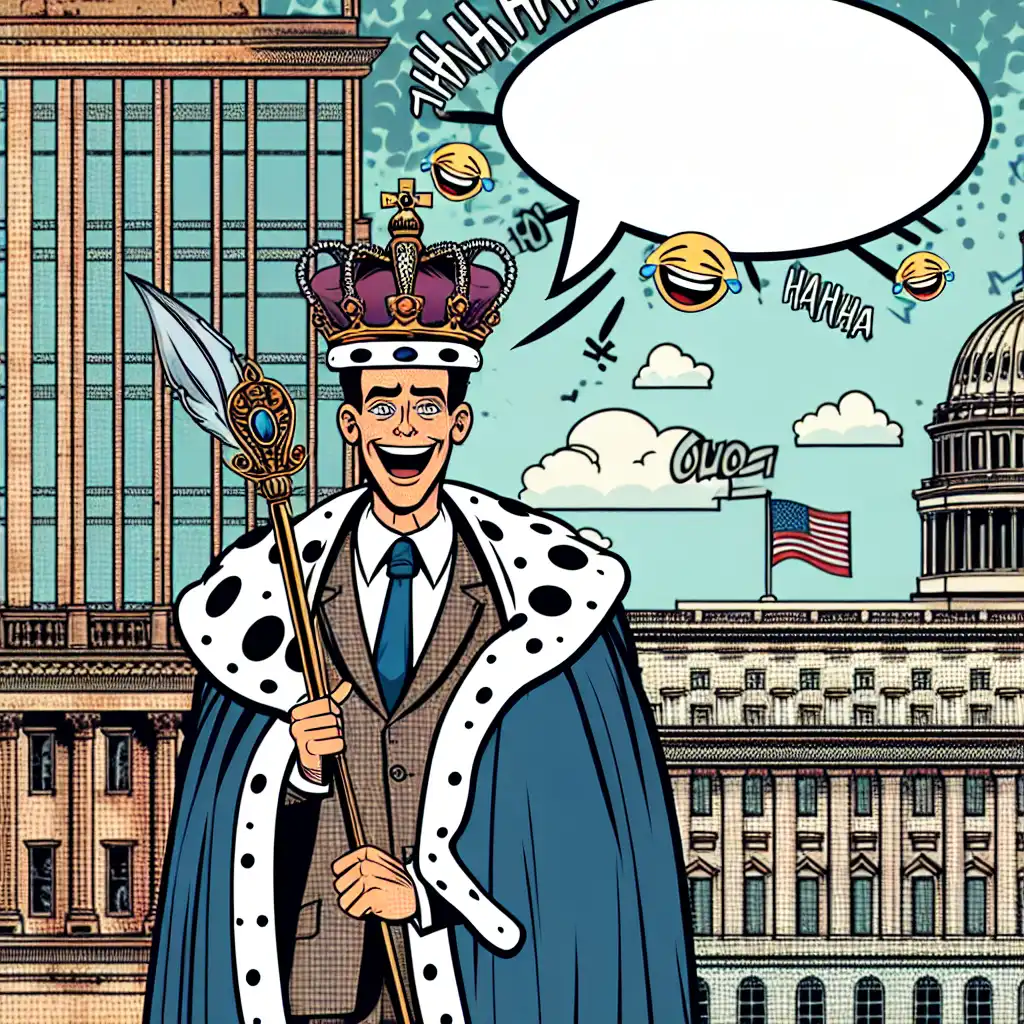
satire
noun satire
ˈsætaɪər
A way of criticizing people or ideas in a humorous way, especially in order to make a political point.
His novel uses bitter satire to attack the government.
satire
ˈsætaɪər
Chargement…
ˈsætaɪər
A way of criticizing people or ideas in a humorous way, especially in order to make a political point.
His novel uses bitter satire to attack the government.
ˈsætaɪər
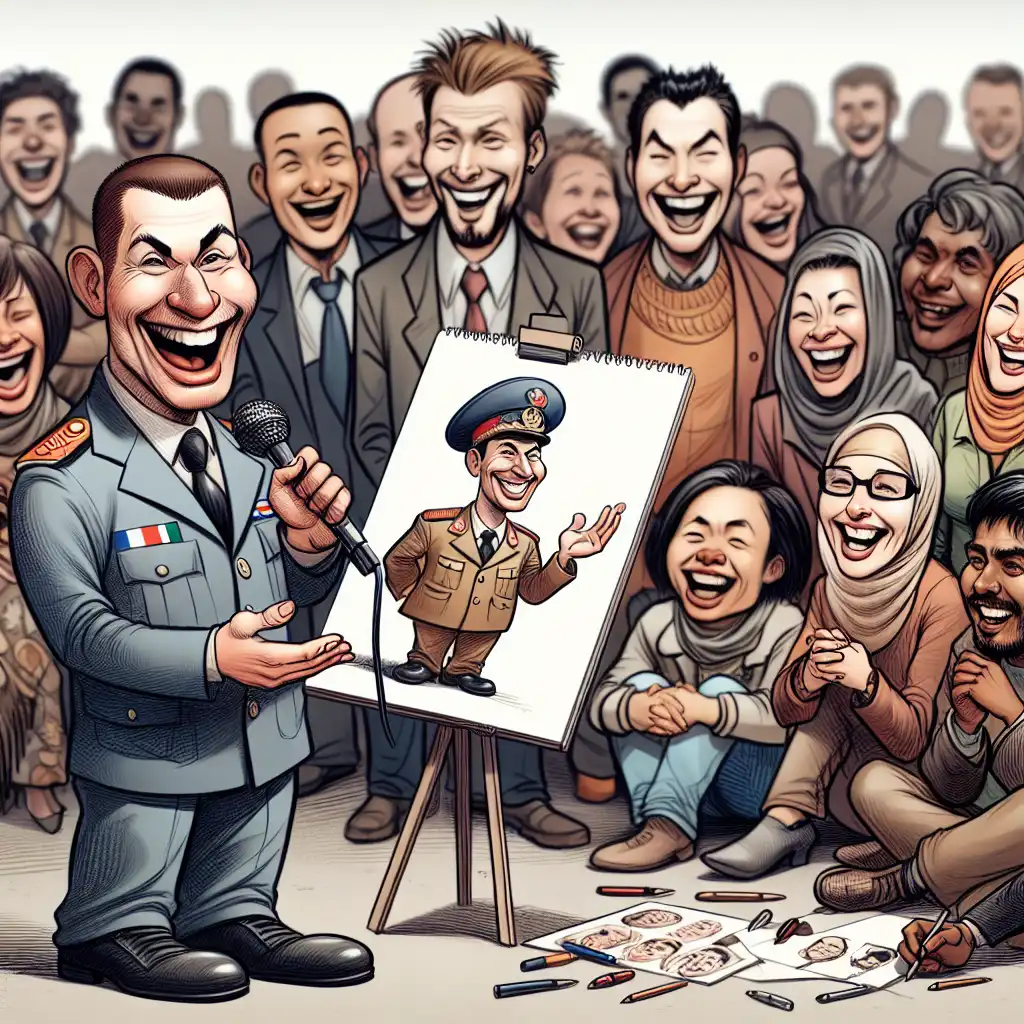
A piece of writing, drawing, etc. in which humor and mockery are used to say something about a person, government, etc.
His columns are often a satire on the politics of our times.
Impossible de charger l’audio. Réessayez plus tard.
Satire is a type of humor or writing that makes fun of certain people or things in a clever or sarcastic way. It's often used to criticize something that the author disagrees with or thinks is wrong. Satire can be found in books, newspapers, TV shows, and movies. It's important to understand the context and tone in which satire is used because it can be easily misinterpreted.
Burlesque and satire are both forms of entertainment that use humor to make a point, but they have different purposes and methods.
Burlesque is a type of comedy that exaggerates certain qualities or features in order to make fun of them or to entertain.
For example, a burlesque show might include over-the-top costumes, exaggerated gestures, or silly voices to make fun of a particular style or genre.
Burlesque is more focused on entertainment and humor, while satire is more focused on social commentary and criticism.
Burlesque is often associated with live performance and theater, while satire can appear in various forms, including literature, film, television, and other media.
Ouvrir le mot: Burlesque →Caricature is a drawing or image that exaggerates the physical features of a person or thing for humorous or dramatic effect.
Caricature is a form of visual art that exaggerates physical features for humor, while satire is a form of writing or performance that uses humor, irony, or exaggeration to ridicule or criticize a subject for a serious purpose.
Ouvrir le mot: Caricature →Farce and satire are both literary devices used for comedic effect, but they are applied in different ways.
A farce is a type of comedy that relies on exaggerated and absurd characters, situations, and dialogue to create humor.
It often involves slapstick, physical humor, and mistaken identities. Farces are typically fast-paced and silly, and they aim to make the audience laugh at the ridiculousness of the situations and characters.
Farce is used for light-hearted and silly comedic effect, while satire is used for more sarcastic and critical humor.
Ouvrir le mot: Farce →Irony refers to situations where the opposite of what is expected occurs or when there is a discrepancy between what is said or done and what is meant.
Satire is a genre of literature or art that pokes fun at individuals, institutions, or society as a whole. It uses humor, irony, and exaggeration to expose flaws and criticize society.
So, while irony refers to a specific type of situation or event, satire is a broader category of creative expression that uses humor to criticize society.
Irony can occur naturally, while satire is typically intentional creative work.
Ouvrir le mot: Irony →A lampoon is a type of written or spoken criticism that aims to make someone or something appear ridiculous or absurd.
It is often meant to be humorous or mocking, and may use exaggeration or ridicule to make a point. Lampoons are generally more light-hearted and playful than satire.
It can take many forms, including literature, music, film, and art. Unlike lampoon, satire is not necessarily meant to be humorous - it can be serious or even biting.
Both lampoon and satire can be used in similar situations and can aim at the same targets.
However, lampoons are generally more focused on a single person or entity, while satire often looks at larger societal issues.
Additionally, lampoons are generally more playful and mild compared to the more biting nature of satire.
Ouvrir le mot: Lampoon →Parody is a humorous imitation of a specific work, such as a movie or song. Satire mocks society or politics through a more general commentary on human behavior.
Parody is applicable when one is trying to make fun of a particular work of art, while satire is useful when one wants to ridicule general societal issues.
For example, Saturday Night Live creates parodies of movies and TV shows, while political cartoons often utilize satire to comment on social and political issues.
Ouvrir le mot: Parody →Ridicule refers to teasing or laughing at someone or something in a cruel or mocking way. Satire is a type of humor that uses irony, sarcasm, and exaggeration to criticize and mock something, usually a social or political issue.
Ridicule is usually used to make fun of someone or something in a mean-spirited way, while satire is used to criticize a particular issue or idea without necessarily personally attacking anyone.
For example, if someone is making fun of someone else's appearance or intelligence, that is ridicule. But if someone is using humor to criticize a politician's policies or a societal trend, that is satire.
Ouvrir le mot: Ridicule →Sarcasm is the use of irony to mock or ridicule something or someone.
Sarcasm is often used in personal conversations to express individual opinions, while satire is used in wider contexts to expose and critique societal issues.
Ouvrir le mot: Sarcasm →Satire and spoof are both forms of humor that comment on society or culture.
Spoof is a parody or imitation of something or someone. It typically exaggerates the original material for comedic effect.
Spoofs are meant to be silly and entertaining, rather than insightful or critical. Examples of spoof include movies like "Scary Movie" or "Airplane.".
Satire is a form of humor that uses criticism to make a point, while spoof is a type of humor that imitates and exaggerates for comedic effect.
Ouvrir le mot: Spoof →Satire is a form of humor that uses irony, exaggeration or ridicule to criticize people's foolish or bad behavior. Wit is a clever use of words or ideas that is humorous, but not necessarily critical or mocking.
It is used to bring awareness to serious issues in a humorous way. Wit is applicable when you want to amuse someone or make them laugh with clever wordplay or puns.
However, if you were trying to make your friend laugh with a clever joke, you may use wit to come up with a funny pun or wordplay.
Ouvrir le mot: Wit →trading letters with their delightfully wicked friend Jane. But this unique brand of tongue-in-cheek humor is just one of the many feats found in her sly satires of society civility and sweeping romance. Written in the early nineteenth century,
Voir sur YouTube ↗There is a place in this world for satire, but there is a time when satire ends and intolerance and bigotry towards religious beliefs of others begins.
of our time. Showing that the emperors have no clothes, that's the task of satire right? Speaking truth to power. This has always been the historical role of political cartooning.
Voir sur YouTube ↗It's a great time to be doing political satire when the world is on a knife edge.
greatest pantomime clowns ever how the clowns get involved in the circuit well now we got to go to France where Napoleon I was a social commentary and satire on the one place he didn't do it with in the circus so English pantomime
Voir sur YouTube ↗When you have satire, it has to be real. No matter how outrageous the comedy becomes, you have to believe in the characters.
gentle satire can you stand it um okay I have my aunt Bonnie lives in Seattle Washington and she spent like thirty five years as an inner-city low-income
Voir sur YouTube ↗I feel like comedy is important, and I think political satire can be really important.
The bards sang of the brave deeds of their ancestors and praised the accomplishments of warrior kings— and composed biting satires about cowardly or selfish leaders.
Voir sur YouTube ↗Crime, horror, and satire each aim to reveal an ugly or uncomfortable truth: one that, after the reveal, will ensure we'll never be the same. The big difference between those genres being the effect they create.
his fingerprints are visible upon comic techniques everywhere, from slapstick to double acts to impersonations to political satire. Through the praise of free speech and the celebration of ordinary heroes,
Voir sur YouTube ↗Gulabo Sitabo' is a simple satire on life. It's a genre I have tried for the first time.
with liberals more likely than conservatives to appreciate things like abstract art or even stories that lack a clear ending. In my experimental work, I've also found that these differences help explain why ironic political satire is more likely to be appreciated
Voir sur YouTube ↗Life serves up satire. Unfortunately. Or fortunately. I don't know. You have to reel it in to drama.
and it's expensive. But we need human beings to look at the content and context of a deepfake to figure out if it is a harmful impersonation or instead if it's valuable satire art or education.
Voir sur YouTube ↗By the very nature of satire or parody, you have to love and respect your target and respect it enough to understand every aspect of it, so you can more effectively make fun of it.
in terms of our own self-interest, we finally begin to grasp our ability to respond our responsibility to the rest of the world. Now as to what I mean by the best comedy and satire, I mean work that comes first and foremost
Voir sur YouTube ↗It seems like there's a lot of people who just do not understand satire. They think it's weird. There's people who just don't understand you portray something or just explore a character, it means you're condoning it, saying this is the way to live.
The novel was a bleak satire of a classic island adventure story, a popular genre where young boys get shipwrecked in exotic locations. The protagonists in these stories are able to master nature while evading the dangers posed by their new environments.
Voir sur YouTube ↗We've managed to keep a spirit of fun, I guess, of urban satire and finding new and odd interesting angles to the ways of life to put on the stage.