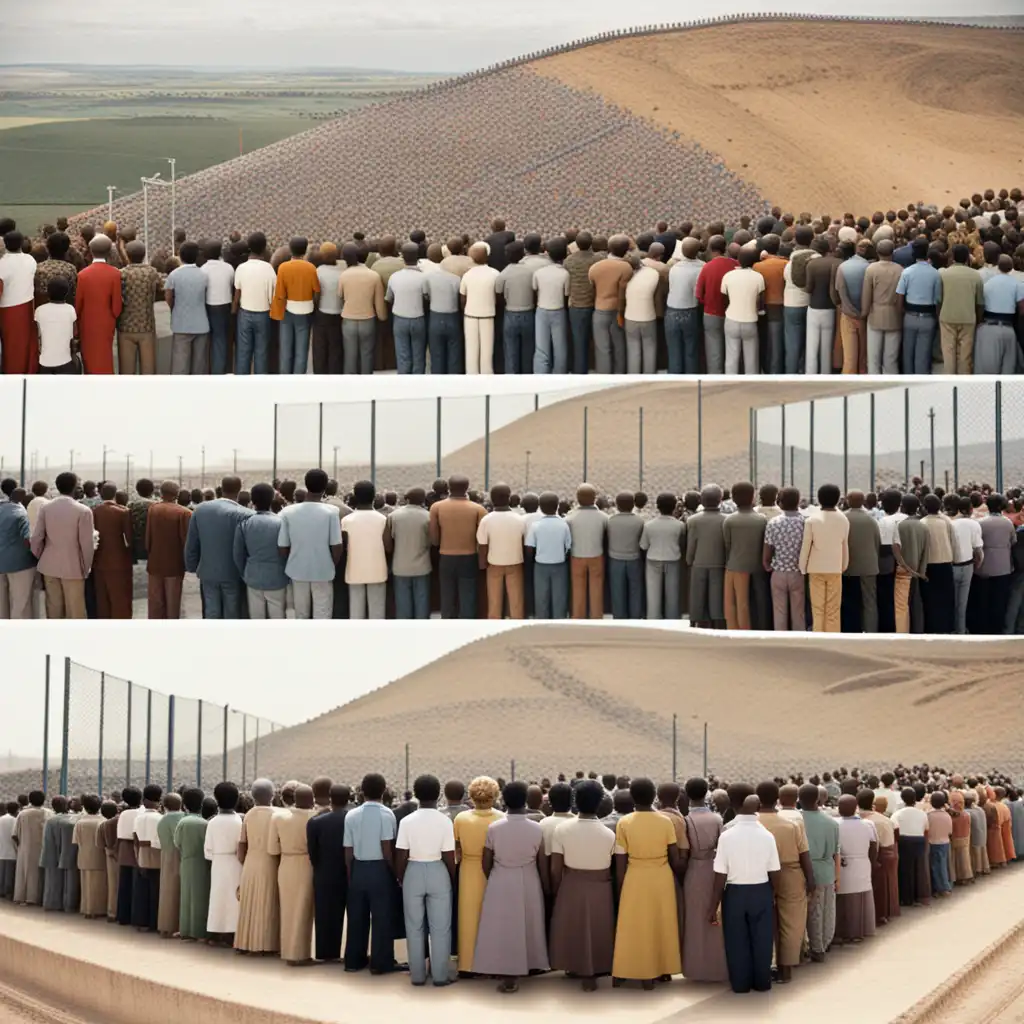
Apartheid was a system of laws and policies that separated people based on their race in South Africa. It was a way for the white people in power to keep the black people and other minority groups oppressed and disadvantaged. Nowadays, the word apartheid is used to describe any unfair discrimination or segregation based on race, religion, or other differences. We use this word to show disapproval towards such practices and to call for equality and justice for all people.
Apartheid refers to a system of institutionalized racial segregation and discrimination, which was practiced in South Africa until the early 1990s.
Discrimination refers to the unjust or prejudicial treatment of individuals or groups on the basis of certain characteristics, such as their race, gender, religion, or sexuality.
Apartheid is a very specific term that applies to the historical context of South Africa during the 20th century. Discrimination, however, is a broader term that can be applied to any situation where unfair treatment is based on certain characteristics.
Apartheid specifically refers to a system of racial separation in South Africa, while discrimination can happen anywhere and is based on a broader range of characteristics.
Distinction refers to the recognizing of differences between things, people, or ideas. It is a way to separate or differentiate one thing from another based on certain features or characteristics.
Distinction can be used in a range of contexts, such as academic or social situations, to identify differences between individuals or groups.
Apartheid specifically applies to the institutionalized system of racial discrimination that occurred in South Africa, while distinction is a broader term that refers to recognizing differences between things or people.
It was an extreme form of division where black South Africans were not allowed to vote, own land and were forced to live in separate areas than white South Africans.
Division generally refers to any separation or disunity between two or more groups of people. It is a much broader term that can refer to any kind of separation, whether it is racial, cultural, political, or social.
Division can occur anywhere and at any time, which makes it a more generic term as compared to Apartheid.
Exclusion refers to the act of withholding opportunities, resources, or acceptance from individuals or groups based on various factors, such as race, gender, sexuality, religion, or socio-economic status.
Exclusion can manifest in many forms, from physical segregation to systemic discrimination and marginalization.
Apartheid is a more extreme and institutionalized form of exclusion, often associated with a particular historical and political context, whereas exclusion is a broader term that encompasses various forms of discrimination and marginalization in many different contexts.
Prejudice refers to a preconceived opinion or judgment about a person or group of people without any evidence or reason.
It can be based on factors such as race, ethnicity, gender, sexual orientation, religion, etc. Prejudice is a personal bias that can lead to discrimination, but it is not as severe as apartheid.
Apartheid is a legal system of segregation and discrimination based on race, whereas prejudice is a personal bias against a person or group.
Apartheid is applicable in a society with a legal policy of segregation, while prejudice can happen in any society where personal biases exist.
Racism is any attitude, behavior, or practice that treats people differently based on their race or ethnicity.
So, while apartheid was a specific system of institutionalized racism implemented in South Africa, racism is a broader issue that can occur in any society.
Apartheid is a form of institutionalized racial segregation that was practiced in South Africa from 1948 to 1994, where the government enforced strict racial boundaries and discrimination.
Segregate means to separate or divide people or things based on specific characteristics.
Apartheid is a particular type of segregation that was specific to South Africa, whereas segregate is a broader term that can apply to any form of separation based on specific characteristics.
It is often associated with South Africa's history, where black and white people were separated and treated differently by the authorities.
It refers to a government-sanctioned practice of separating people based on race or ethnicity.
Separate refers to the act of dividing or keeping things or people apart. For instance, in a classroom, students may be separated according to their alphabetical order or academic performance.
Apartheid is a term used to describe discriminatory practices based on race, whereas separate is a general term that refers to dividing or keeping things apart.
Being a journalist, being exposed to the world, to social injustice, to intolerance, growing up here, under apartheid, benefitting from that, has all shaped who I am and what my passions are, and of course that's going to come through in my writing.
If I were able to write, I probably would. But movies have given me a part of my life where I can express feelings and bring convictions to an audience as if I could write. So I made 'Gandhi' about human relations, prejudice and the empire. In 'Cry Freedom' I expressed my horror and disgust about apartheid.
My life had been defined by the apartheid years. Now we were going into an era of democracy... and I believed that I didn't really have a function as a useful artist in that anymore.
Yes, I learned history at school; I know everything about apartheid. My dad, he bought the books about it, stuff like that. But I just move on with my life. It's completely different for me.
The working-class Africans are not doing very well, and one of the problems is their education is so shocking. It is routinely said it is a result of apartheid. Deliberately, black people were not allowed to know too much. They could read and write a bit to be useful, but that's about it.
I've been offered jobs by companies that supported apartheid many times in the 25 years of my modeling career, but I have never taken one of them. I have to refuse that money, because I'm not going to work against my people. They've suffered enough.
The minute you got the Nobel Peace Prize, things that I said yesterday, with nobody paying too much attention, I say the same things after I got it - oh! It was quite crucial for people, and it helped our morale because apartheid did look invincible.