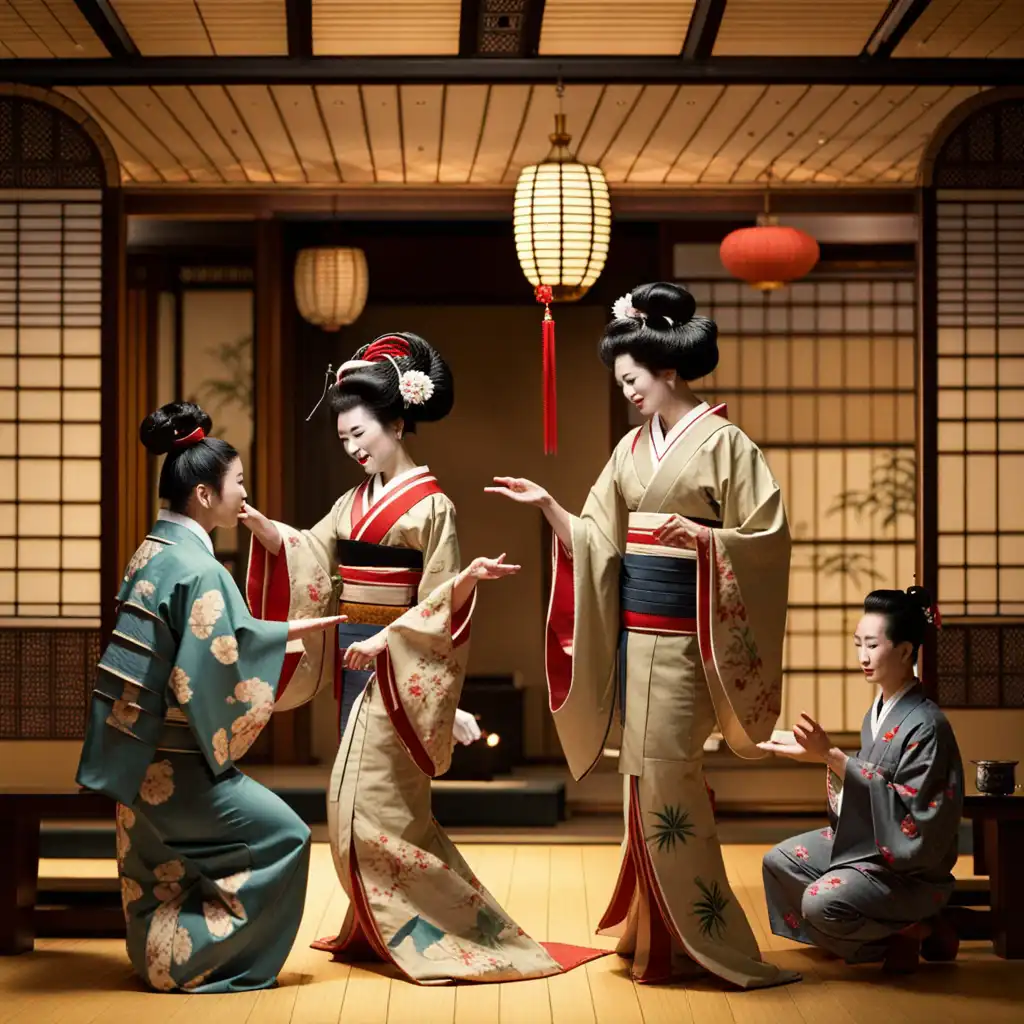
geisha
noun geisha
ˈɡeɪʃə
A Japanese woman who is trained to entertain men with conversation, dancing, and singing.
The geisha entertained her clients with her elegant dance and intellectual conversations.
geisha
ˈɡeɪʃə
読み込み中…
ˈɡeɪʃə
A Japanese woman who is trained to entertain men with conversation, dancing, and singing.
The geisha entertained her clients with her elegant dance and intellectual conversations.
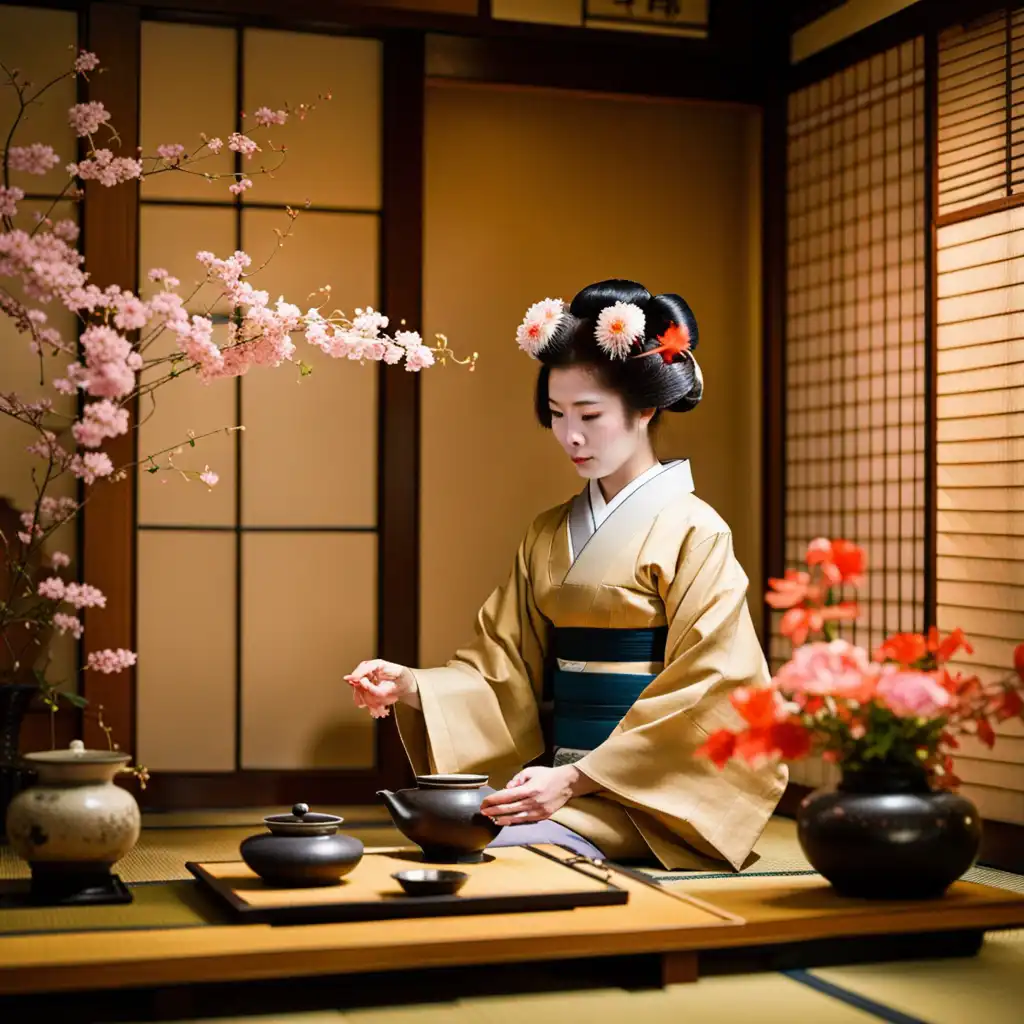
ˈɡeɪʃə
A woman who is skilled in Japanese traditional arts such as tea ceremony and flower arrangement.
In addition to music and dance, the geisha is also adept in the Japanese tea ceremony and ikebana.
音声を読み込めませんでした。しばらくしてからもう一度お試しください。
A geisha is a traditional Japanese female entertainer who usually performs songs, dances, and other cultural activities for guests at a party or event. Geishas are known for their beauty, elegance, and skill. The word "geisha" should be used only in reference to this specific cultural practice and should not be used in a disrespectful or derogatory way. It is important to understand and respect cultural differences when using words from other languages.
A companion is someone who accompanies and spends time with another person for friendship or socializing purposes. They could be a friend, a partner, or a travel companion.
Overall, companionship is a general term for spending time with someone, while a geisha is a specific cultural role and profession in Japan.
単語を開く: Companion →A courtesan is typically a prostitute that is highly skilled in socializing with men and navigating high society.
While both may engage in sexual activities with their clients, the primary focus of a geisha is to provide entertainment and preserve cultural traditions, while a courtesan's main focus may be sexual pleasure and companionship.
Courtesans were popular in Europe during the Renaissance period and can still be found in some parts of the world today.
単語を開く: Courtesan →A dancer is a person who performs dance as a profession or hobby. This can include different types of dance such as ballet, hip hop, modern, etc.
A dancer can perform alone or with a group and may train for years to perfect their skills.
A dancer is someone who performs dance as a profession or hobby, while a geisha is a traditional Japanese entertainer who is skilled in a variety of arts and cultural practices.
単語を開く: Dancer →Entertain means to provide someone with enjoyment or amusement through music, dance, theatre, games, or other activities.
Geisha refers to a traditional female entertainer in Japan who is trained in various performing arts such as music, dance, and conversation.
Geisha typically entertain guests at traditional tea houses, restaurants, and other social events.
Entertain is a general term for providing enjoyment or amusement in various settings, while geisha refers to a specific type of trained female entertainer in Japan.
単語を開く: Entertain →A geisha is a traditional Japanese female entertainer who acts as a hostess and whose skills include performing various arts such as dancing, playing musical instruments, and conversation.
A hostess is typically a woman who works in a customer service role in restaurants, bars, or other entertainment venues.
Unlike geishas, hostesses do not typically have extensive training in traditional arts or culture.
In summary, geishas are highly skilled entertainers who offer a sophisticated form of entertainment rooted in traditional Japanese culture, while hostesses are typically employed in customer service roles and focus more on providing a fun and engaging atmosphere in social settings.
単語を開く: Hostess →A musician is a person who plays, creates, or performs music, regardless of gender or cultural background. Geisha is a term mainly used in the context of Japanese culture, while a musician is a more general term applicable to any culture or society.
Simply put, geisha is a specific cultural role, while a musician is a more general occupation related to creating or performing music.
単語を開く: Musician →A performer is a broad term that refers to anyone who entertains an audience by performing. This can range from singing, acting, playing an instrument, or doing comedy.
Both terms have a focus on entertaining an audience, but geishas have a specific cultural and historical context in Japan, whereas performers can refer to anyone in any culture who does some form of public entertainment.
単語を開く: Performer →A geisha is a traditional Japanese female entertainer who performs various arts such as dance, music, and conversation skills, while a singer is someone who performs music using their voice.
Geishas are primarily found in Japan and are trained in traditional Japanese arts to entertain clients at social events, while singers can be found in all parts of the world and perform in various settings such as concerts, clubs, and theaters.
The main difference is that a geisha is a type of entertainer who specializes in traditional arts, while a singer is someone who specializes in music.
単語を開く: Singer →Japan Geishas %\PIPE% National...
YouTube で見る ↗For myself I don't like the geisha look. It's like a mask.
The Secret Somali...
YouTube で見る ↗Martial arts is just practice. Being a geisha requires complete control.
Kabuki: The people's...
YouTube で見る ↗What I really wanted to know, though, was what it was like to be a geisha? Where do you sleep? What do you eat? How do you have your hair done?
Tatcha is my favorite beauty brand. They were also founded in San Francisco. Their entire line is based off of geisha tradition and ritual. The line has transformed my skin.
I was really interested in geishas' work, and wanted to meet real geishas.
To be a geisha, you have to have to an iron-clad layer around you - around your physical body and your heart.
It is confusing, because in this culture we really don't have anything that corresponds to geisha.
Geisha because when I was living in Japan, I met a fellow whose mother was a geisha, and I thought that was kind of fascinating and ended up reading about the subject just about the same time I was getting interested in writing fiction.
There's nothing in Chinese culture that is an equivalent of the geisha. It's so different, so special to Japan.
I studied Japanese language and culture in college and graduate school, and afterward went to work in Tokyo, where I met a young man whose father was a famous businessman and whose mother was a geisha. He and I never discussed his parentage, which was an open secret, but it fascinated me.