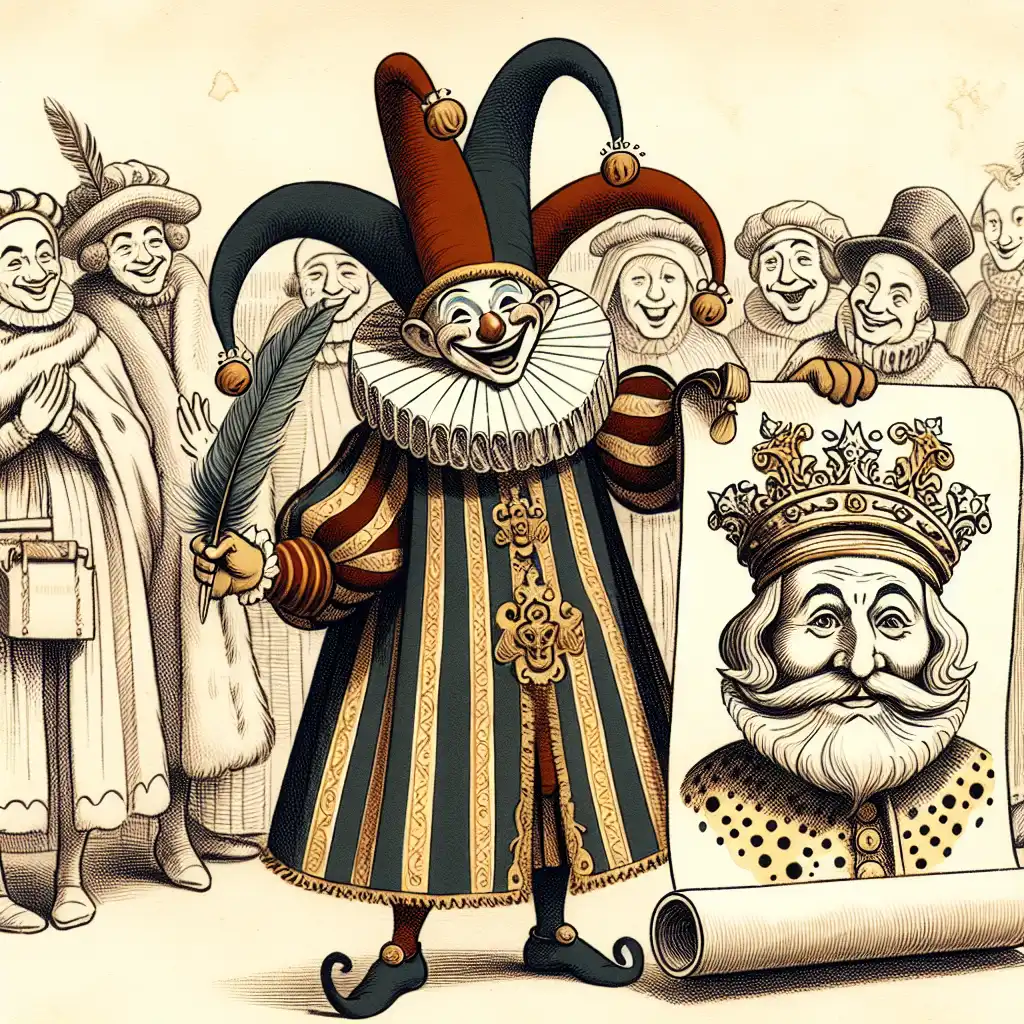
satirical
adjective satirical
səˈtɪrɪkl
Using humor to criticize or mock people or situations.
He wrote a satirical poem about the government's plans.
satirical
səˈtɪrɪkl
読み込み中…
səˈtɪrɪkl
Using humor to criticize or mock people or situations.
He wrote a satirical poem about the government's plans.
音声を読み込めませんでした。しばらくしてからもう一度お試しください。
'Satirical' is a word used to describe when someone is using humor or irony to criticize something or someone. It's often used in writing, like in a book or article, but can also be used when talking about a movie or TV show. Satirical humor is used to make a point and is often used to draw attention to problems in our society, politics, or culture. So, when someone says something is 'satirical', they mean it's meant to be funny and critical at the same time.
Caustic refers to language or behavior that is harshly critical and intended to hurt or destroy someone's reputation or self-esteem.
It is typically cruel and often insulting towards the person being targeted. For example, a caustic remark might be made about someone's appearance or intelligence.
Caustic language targets individuals with intentions to hurt them personally, while satirical humor seeks to expose flaws in society in a less personal way.
単語を開く: Caustic →Derisive means to mock or insult someone or something in a disrespectful way.
Derisive is used when someone is being mean and hurtful towards someone else, while satirical is used when someone is making fun of something in a witty and clever way to bring attention to problems or issues.
単語を開く: Derisive →Ironic refers to a situation where the opposite of what is expected happens, often with a humorous or unusual twist. For example, if a firefighter's house burns down, that would be considered ironic.
単語を開く: Ironic →Both words, mock and satirical, have a similar meaning of making fun of something or someone.
However, mock generally means to imitate something or someone in a way that is meant to be humorous or insulting. Satirical means using humor, irony, or exaggeration to criticize or expose something, such as society or politics.
For example, a comedian might mock a celebrity's fashion choices, while a political cartoonist might create a satirical illustration mocking a politician's policies.
Mock is more about teasing or making fun of someone, while satirical is about critiquing and exposing larger issues.
単語を開く: Mock →Ridicule refers to making fun of someone or something in a mean way. It often involves mocking and insulting the target of the ridicule.
Ridicule is more negative and hurtful, while satire is more incisive and thought-provoking. Ridicule is more applicable in situations where the goal is to belittle someone or something, while satire is more applicable in situations where the goal is to comment on or criticize a larger issue or system.
単語を開く: Ridicule →In summary, sarcasm is a way of speaking that is sarcastic, usually used in day-to-day conversations, while satire is a form of artistic expression, found in literature and media, that uses humor to criticize society's flaws.
単語を開く: Sarcastic →Sardonic refers to a humor that is mocking, sarcastic, and often bitter.
The key difference between sardonic and satirical is that sardonic humor is meant to be mean-spirited, while satirical humor is meant to be critical but ultimately constructive.
単語を開く: Sardonic →Witty, on the other hand, refers to a type of humor that is clever and quick-thinking, often involving wordplay or clever observations.
Both types of humor can be used in various contexts, but satirical humor is typically used to comment on social and political issues, while witty humor is often used in more lighthearted or everyday situations.
単語を開く: Witty →There's no such thing as...
YouTube で見る ↗It's rare in satirical comedy not just to be cynical.
How false news can...
YouTube で見る ↗I'm crushed by the responsibility of writing a satirical book.
Safari Live - Day 35 %\PIPE%...
YouTube で見る ↗Reviewers try to square the antics of a writer's life with the antics in the fiction. Even satirical verbal play is too often read and admired as autobiographical expression. And thanks to the democratic exposures of the web, it's easier than ever to document private experiences and divulge the most intimate secrets.
Beware of nominalizations...
YouTube で見る ↗Most important to any fake story is a plausible, realistic edge with a satirical twist that is topical.
Is the world getting...
YouTube で見る ↗I was greatly influenced by 'The Goons' and 'Monty Python' reconstituting what comedy was - it could come from a funny word, not just a set up and a pay-off. I liked the zaniness; they were satirical, slightly saucy and very literary in their references.
A free world needs...
YouTube で見る ↗My films, sometimes, have my own reflections of life. They have life lessons I've had that I put across in a humorous or satirical way.
How young people join...
YouTube で見る ↗I want to be part of movies that have important and interesting subjects but are not depressing and are rather satirical and funny.
What we'll learn about...
YouTube で見る ↗Journalists who are devoted to strictly factual reporting take particular pleasure from satirical news outlets that have the liberty to laugh and even mock the hypocrisy that reporters and editors must simply observe without comment.
Ronald Rael: An...
YouTube で見る ↗The importance of satire is bringing more people to the table. There are a lot of average citizens who aren't interested in politics and would be more interested if it's brought to them in a comedic, funny, satirical way.
Safari Live - Day 214 %\PIPE%...
YouTube で見る ↗Well, I think that if you sincerely try to imagine what life is like for another person - not in a mocking way, not in a satirical way, but in a sincere, compassionate way - I don't think that's exploitive.