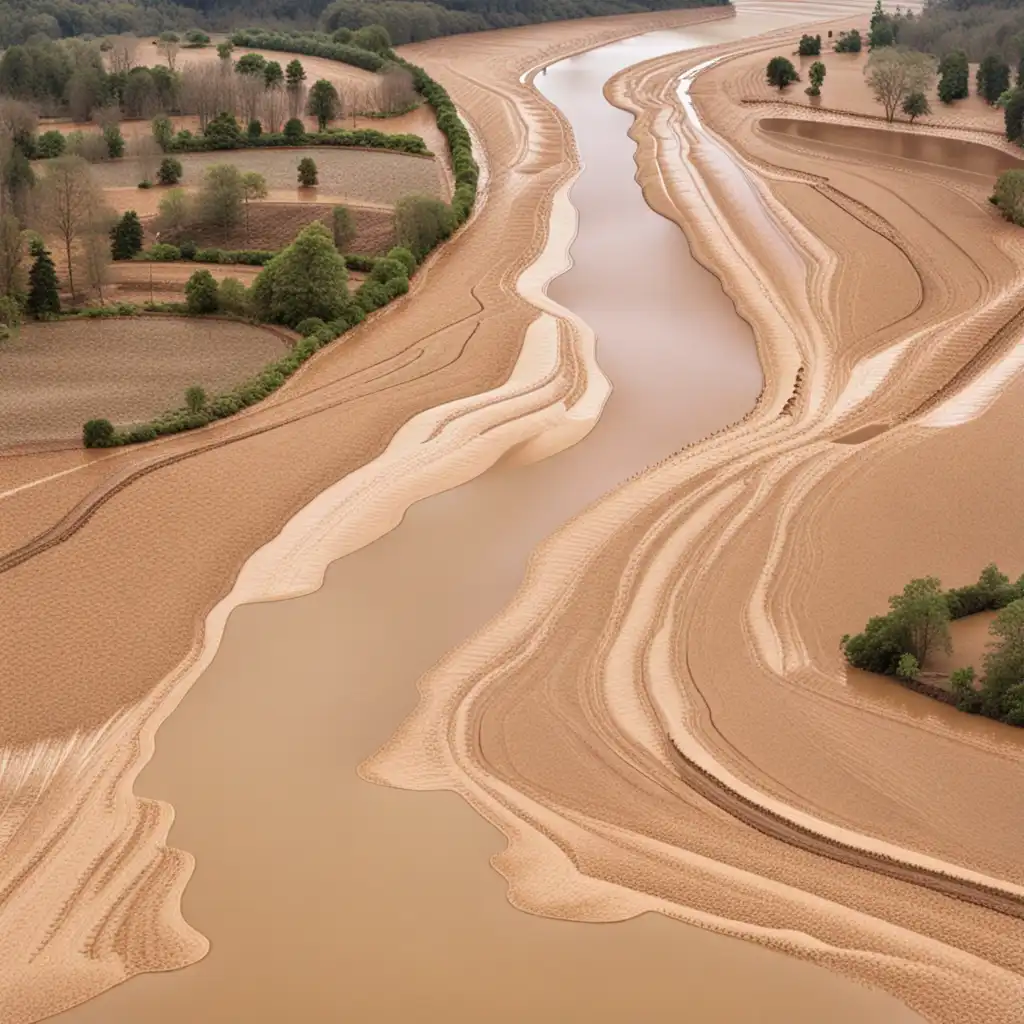
alluvium
noun alluvium
əˈluːviəm
A deposit of clay, silt, and sand left by flowing floodwater in a river valley or delta.
During the flood, alluvium was deposited, which improved the soil's fertility.
alluvium
əˈluːviəm
Loading…
əˈluːviəm
A deposit of clay, silt, and sand left by flowing floodwater in a river valley or delta.
During the flood, alluvium was deposited, which improved the soil's fertility.
Audio could not be loaded. Please try again later.
Alluvium refers to the sand, soil, and rock particles that are deposited by a river or flood onto the nearby land. This can create fertile ground for agriculture or mining for minerals. The word is normally used in a scientific or technical context, particularly in geology and geography.
Alluvium refers specifically to sediment or soil that has been transported and deposited by water, typically by a river or stream.
Deposits can refer more broadly to any material that has been left behind in a particular location, such as sand, clay, or minerals.
Deposits can be formed by a variety of processes, including erosion, weathering, and volcanic activity.
Deposits can be found in a wider variety of geological settings, including mountains, deserts, and ocean floors. Both terms are used in geology and earth science to describe the formation and distribution of various types of sediment and minerals.
Open word: Deposit →Alluvium refers to the mixture of sediments like sand, clay, silt, and gravel that are deposited by a river or stream.
Gravel is a type of rock made of small to medium-sized fragments of rock or stone that have been weathered and worn down by erosion or other natural processes.
Alluvium is a mixture of sediment that is created by flowing water and tends to be nutrient-rich, while gravel is a type of rock that is used for construction.
Open word: Gravel →Residuum refers to the remains of rock or mineral deposits left behind after weathering and erosion. Residuum is typically found in areas with low water flow, such as areas on hillsides or plateaus.
In simpler terms, alluvium is the stuff that gets carried by rivers and deposited in riverbeds, while residuum is what's left over after rocks and minerals break down.
Alluvium creates fertile land, while residuum is found on hillsides or plateaus.
Open word: Residuum →Sand refers to small granules of minerals or rock that range in size from 0.063 to 2 mm in diameter. They are commonly found on beaches and in deserts.
Alluvium can include sand but it may also include other types of sediment, such as silt or clay.
Sand is often used in construction and in the manufacturing of glass and electronics.
Sand is a small granular material that can be found in a variety of places, while alluvium specifically refers to sedimentary material deposited by water.
Open word: Sand →Alluvium and sediment are both materials that are deposited by moving water, but they have slightly different meanings.
Sediment refers more broadly to any material that has been eroded or weathered and then deposited elsewhere by natural forces such as wind, water, or ice.
You would use the term alluvium when referring specifically to sediment that has been deposited by water, while sediment can be used to refer more generally to any kind of eroded material that has been deposited elsewhere.
Open word: Sediment →Silt is fine-grained sediment that is often deposited by flowing water. It is smaller than sand and larger than clay particles.
Silt is usually found in areas like river deltas, floodplains, or in lakes.
In simpler terms, alluvium is the larger particles that settle near the river or stream and silt is the smaller particles that settle farther away.
Alluvium is found near the source of the water, while silt can be found downstream.
Open word: Silt →Alluvium and soil are two different terms used to describe the earth's surface material.
Soil refers to the uppermost layer of the earth's crust, composed of minerals, organic matter, water, and air. Soil is formed through the weathering and erosion of rock, combined with the decomposition of plant and animal matter.
Soil can be classified based on its composition, texture, and color, and it's essential for the growth and survival of plants.
Alluvium is primarily formed by the deposition of materials transported by water, while soil is formed by the weathering of rocks and the decomposition of organic matter.
Alluvium is typically found in river beds and floodplains, while soil can be found virtually anywhere on land.
Open word: Soil →That ere long, now that curiosity has been so much excited on this subject, some human remains will be detected in the older alluvium of European valleys, I confidently expect.