electrode
noun electrode
ɪˈlektrəʊd
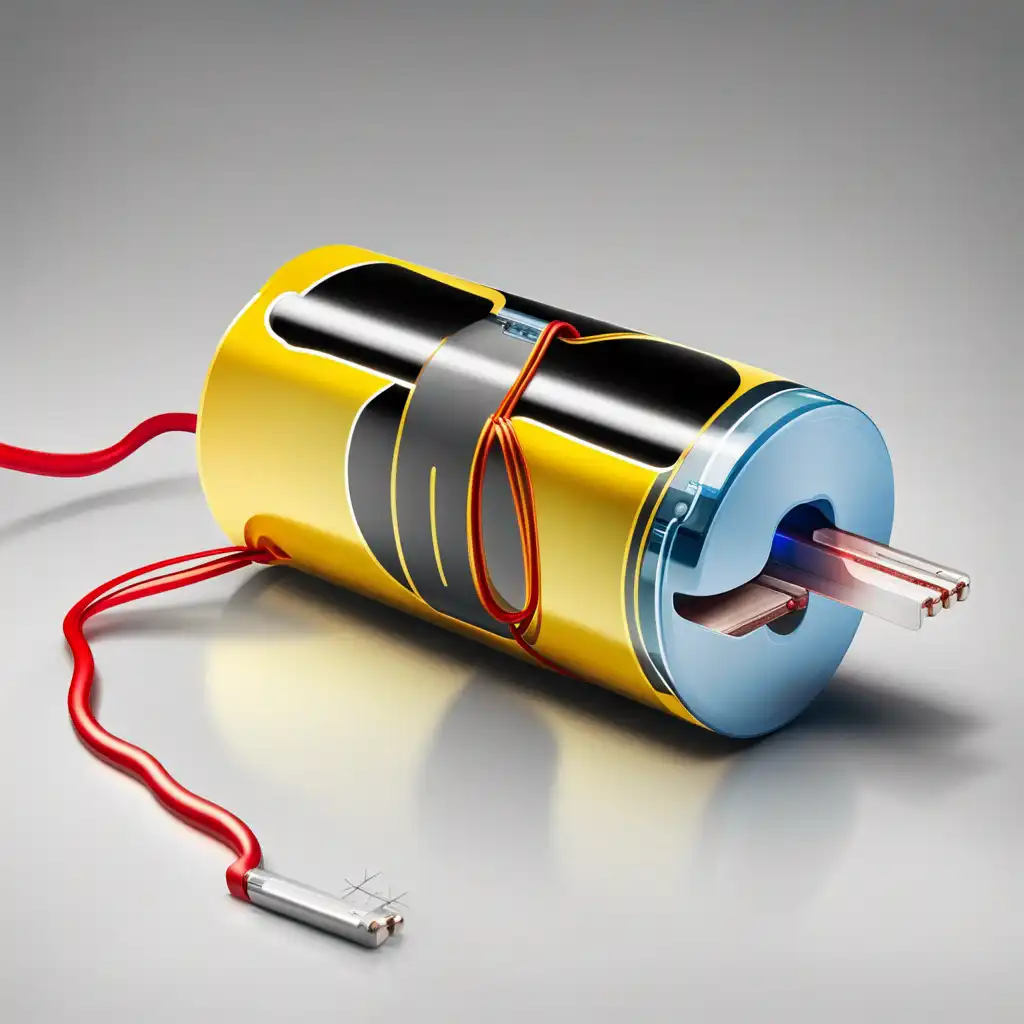
A conductor of electricity, usually a metal, which is used to connect an object to a source of electricity.
The battery has a positive electrode and a negative electrode.
electrode
ɪˈlektrəʊd
Chargement…
ɪˈlektrəʊd
A conductor of electricity, usually a metal, which is used to connect an object to a source of electricity.
The battery has a positive electrode and a negative electrode.

ɪˈlektrəʊd
A tool used to insert electricity into something, like your body, during medical treatments.
In electroconvulsive therapy, an electrode is attached to the patient's head.

ɪˈlektrəʊd
A device used in scientific experiments that produces electricity by changing a chemical or physical process.
In the science lab, she set up an experiment using a metal electrode.
Impossible de charger l’audio. Réessayez plus tard.
An electrode is a metal wire or rod used to conduct electricity in a device or machine. It is often found in batteries, wires, and electrical circuits. In medical applications, electrodes are used to monitor or stimulate activity in the body. In welding, electrodes are used to melt and join metals together. In short, an electrode is a type of conductor that helps to move electrical energy from one place to another.
An anode is a type of electrode that is positively charged and attracts negatively charged particles such as electrons.
Electrode is a more general term that refers to any conductor through which electricity flows, including anodes.
An anode is a specific type of electrode that is positively charged and used in certain applications, while an electrode is a more general term that encompasses all types of conductors used to conduct electricity.
Ouvrir le mot: Anode →An electrode can be a cathode or an anode.
A cathode is an electrode where reduction (gain of electrons) takes place. It is the negatively charged electrode in a battery or electrolytic cell.
Cathodes are commonly used in electronic devices such as vacuum tubes, fluorescent lights, and computer monitors.
An electrode is a conductor which carries electricity in and out of a system, while a cathode is a type of electrode where a reduction reaction takes place.
Ouvrir le mot: Cathode →A conductor is a material that can carry electricity and allows electrons to flow freely through it. Examples of conductors are metals like copper and aluminum.
Conductors are used to transmit electricity in power lines, as well as in electronics such as wires, circuits, and batteries.
A conductor allows electricity to flow through it, while an electrode is a specific contact point where electricity enters or leaves a substance.
Ouvrir le mot: Conductor →Connect refers to bringing two things together, to join them or establish a link or relationship between them.
It can be applicable in various contexts, such as connecting two electronic devices, connecting two people for business purposes, or connecting ideas to piece together a concept.
Connect is a general term for linking things or ideas, while electrode is a specific term used for conducting electricity in scientific or medical applications.
Ouvrir le mot: Connect →Contact refers to the point where two things meet or touch each other.
It can also refer to communication or reaching out to someone. For example, when you shake someone's hand, your hand makes contact with theirs.
Contact refers to touching or communicating with someone or something, while electrode refers to a conductor used to transmit electricity.
Ouvrir le mot: Contact →A probe is a device used to investigate, explore or measure something.
Electrodes are commonly used in fields such as electronics, medicine, and biology, while probes are used in fields such as physics, chemistry, and geology.
Essentially, electrodes focus on the transfer of electric current, while probes focus on measuring or exploring a specific object or material.
Ouvrir le mot: Probe →A sensor is a device that detects or measures a physical property and outputs a signal.
Sensors can be used to detect temperature, pressure, light, sound, or other physical phenomena.
They are used in a wide range of applications, from automotive sensors that inform the engine control unit about the status of the engine, to sensors used in medical devices to monitor the vital signs of a patient.
In summary, electrodes are used to measure electrical activity, while sensors are used to detect and measure physical properties.
Ouvrir le mot: Sensor →A terminal can refer to different things depending on the context. In electronics, a terminal is a screw or other connector used to attach wires or other components to a circuit board or other electrical device.
In transportation, a terminal is a place where vehicles or passengers begin or end their journeys.
Overall, electrodes are primarily used in scientific or medical contexts, while terminals are used more broadly in electronics and transportation.
Ouvrir le mot: Terminal →How to control someone...
Voir sur YouTube ↗As actors, we're all encouraged to feel that each job is the last job. They plant some little electrode in your head at an early stage and you think, 'Be grateful, be grateful, be grateful.
National Geographic...
Voir sur YouTube ↗It must be born in mind that one does not see directly - as is the case in the exploration of the surface of the brain - where the electrodes are attacking.
How do brain scans work?...
Voir sur YouTube ↗Electrodes aren't the only things we may someday start implanting in our brains. Consider what you could do with a chip in your head that linked directly to the Internet: Within milliseconds, you could retrieve just about any piece of information.
Asking where consciousnes...
Voir sur YouTube ↗This is the pain pacemaker. I've got a battery under my skin. From that battery are two electrodes that go into the spine where they cut bone away to accommodate it. Now I put on the power here. If I have the pain, the stimulator starts. It's tingling, like when your foot falls asleep, you know?
What happens when our...
Voir sur YouTube ↗The thermodynamic properties of electrolyte solutions can be determined from the measurements of the voltage between electrodes reversible to both ions.
Sleep is your superpower...
Voir sur YouTube ↗I have had this view of the optimization of the electrode design for a long time. Historically we went through various phases in the work and eventually worked on large sheets - very large sheets - of palladium.
The brain benefits of...
Voir sur YouTube ↗It's no fun feeling your thoughts are being controlled by an electrode, and someone else is holding the clicker.
Donald Sadoway: The...
Voir sur YouTube ↗Watching cold fusion is like watching water boil in slow motion. First, sufficient deuterium has to penetrate the palladium electrode. This can take a few weeks. Then, if excess heat is generated during the next month or two, accurate temperature readings require extreme precautions to exclude environmental effects.
The brain may be able to...
Voir sur YouTube ↗A robot that runs and...
Voir sur YouTube ↗