hansom
noun hansom
ˈhænsəm
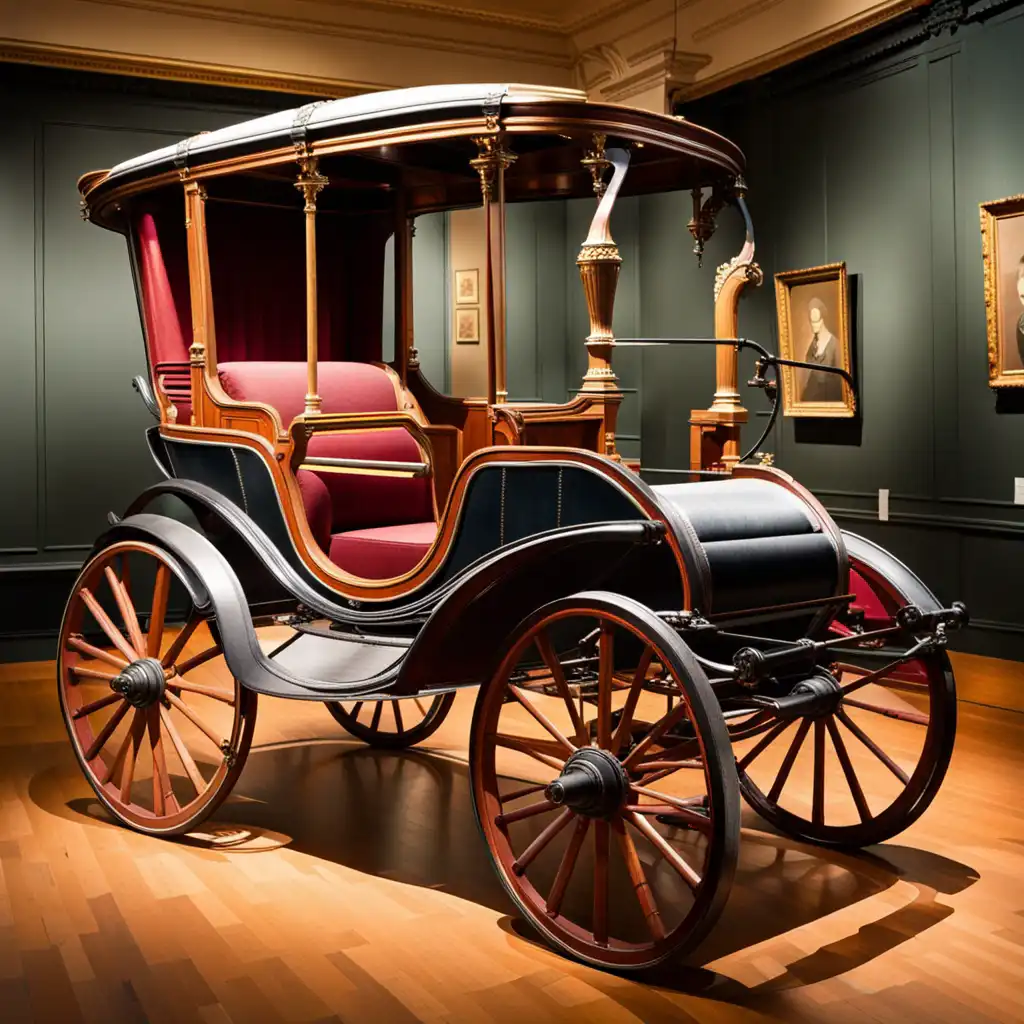
A type of horse-drawn carriage, designed in the 19th century.
In the art museum, there was a meticulously restored hansom from the Victorian era.
hansom
ˈhænsəm
Cargando…
ˈhænsəm
A type of horse-drawn carriage, designed in the 19th century.
In the art museum, there was a meticulously restored hansom from the Victorian era.
No se pudo cargar el audio. Inténtalo de nuevo más tarde.
The word 'hansom' is used to describe a type of carriage that was popular in the past. It typically had two wheels, a small driver's seat in the front, and a passenger compartment in the back. The word 'hansom' can also refer to a type of taxi that was modeled after these carriages. However, this type of taxi is not commonly used anymore.
Buggy refers to a small horse-drawn carriage that used to be common in the United States during the 19th and early 20th-century.
To summarise, a buggy is a small carriage used for leisure and short trips, while a hansom is a larger and more formal carriage used for transportation to and from fancy events.
Abrir palabra: Buggy →Both cab and hansom are types of vehicles used for transportation, but they are different in their design and usage.
A cab is a term used to describe a general public transportation vehicle that is driven by a hired driver. It usually refers to a taxi, which is a car that can be hailed on the street or reserved in advance through a phone call or a mobile app.
Cabs are used by people to go from one place to another within a city or town, and are commonly seen on the roads.
A hansom is a specific type of cab, known for its unique design. It is a horse-drawn carriage that was commonly used in the 19th and early 20th century in cities and towns.
The hansom has a high driver seat that is separated from the cabin where the passengers sit. The passengers enter the vehicle through a door at the back, and the driver controls the horse from a perch high above the front wheels.
Cab is a general term for any type of public transportation vehicle, while hansom is a specific type of horse-drawn carriage used in the past.
Nowadays, the term hansom is less commonly used, and cabs refer to motorized vehicles used for transportation.
Abrir palabra: Cab →Carriage is a general term for a vehicle that carries people, usually with four wheels and pulled by horses or other animals.
Hansom is a specific type of carriage that was popular in the late 19th and early 20th centuries in cities like London and New York.
It is a two-wheeled carriage with a driver's seat in the front and a passenger compartment at the back. It was designed to be fast and maneuverable, making it ideal for urban areas where horses could be quickly driven through crowded streets.
Carriage is a general term for vehicles that carry people or goods, while hansom is a specific type of carriage that was designed for fast transportation in cities.
Abrir palabra: Carriage →A chaise usually refers to a chair with a long seat for one person and a backrest, often with armrests. It's meant to be a comfortable sitting furniture and is usually found indoors.
A chaise is a type of chair, while a hansom is a type of carriage.
Abrir palabra: Chaise →A coach is a large vehicle typically used to transport groups of people, like a bus or a long-distance train with compartments.
It can also refer to a person who helps others improve their skills, such as a sports coach or a life coach.
So, while a coach is applicable for large groups and coaching people, a hansom is a type of carriage used for short trips with only two passengers.
Abrir palabra: Coach →The words hackneyed and hansom are not related to each other, and have different meanings and applications.
Hackneyed refers to something that is overused and lacking in originality, often to the point of being boring or clichéd.
For example, a hackneyed phrase might be "time heals all wounds," because it is a commonly used and predictable saying.
Hackneyed describes something that is overused, while hansom describes a type of carriage.
Abrir palabra: Hackneyed →Puffins %\PIPE% National...
Ver en YouTube ↗