runnel
noun runnel
ˈrʌnl
A small stream or narrow channel of water
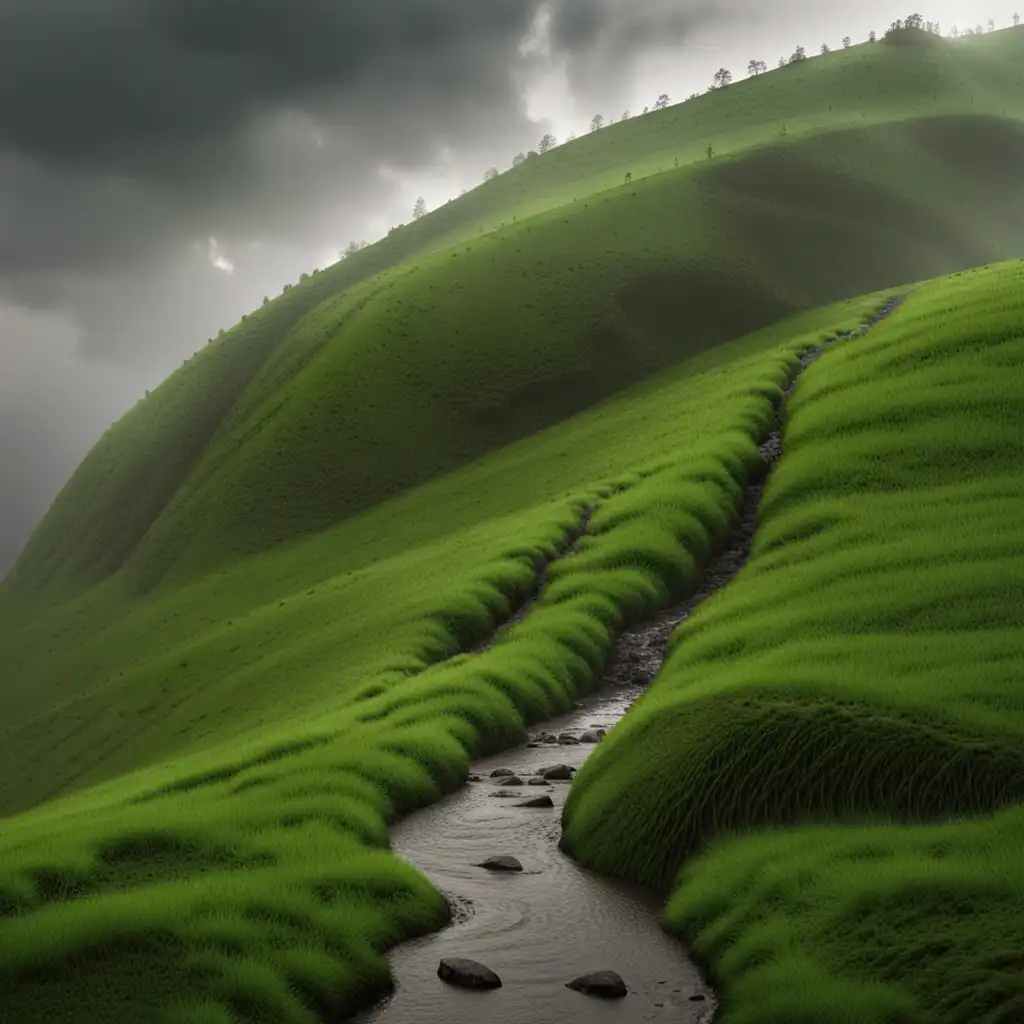
Small runnels of water flowed down the hill after the heavy rain.
runnel
ˈrʌnl
लोड हो रहा है…
ˈrʌnl
A small stream or narrow channel of water
Small runnels of water flowed down the hill after the heavy rain.

ˈrʌnl
A small gutter or groove in a surface for guiding liquid
The architect designed a runnel along the edges of the roof for rainy days.
ऑडियो लोड नहीं हो सका। कृपया बाद में फिर कोशिश करें।
A runnel is a small and narrow channel of water or stream that flows on the ground, often carved out by rainwater. You can use the word runnel when you talk about the flow of water in a river, stream, or any other body of water. For example, "The runnel flowed gently down the side of the hill." It is a word that is commonly used when describing the natural landscape or water features in nature.
A channel is a broader and larger body of water, such as a river or a canal.
A runnel is a small stream or narrow channel of water that may only flow temporarily.
Essentially, a channel is a bigger and more permanent body of water, while a runnel is smaller and more temporary. Channels are used for transportation, irrigation, and power generation, while runnels are often found in natural settings such as in the mountains or after rainfall.
शब्द खोलें: Channel →A conduit is a larger, man-made channel used to transport water or other fluids.
Conduits can be used for irrigation, water supply, or as part of a sewer system.
The main difference between the two words is their size and whether they are man-made or natural. Conduits are usually larger and made by people, while runnels are smaller and can be natural or human-made.
शब्द खोलें: Conduit →Both creek and runnel refer to a small, flowing body of water, but the main difference between them is the amount of water flow.
A creek is a larger, wider stream that can be deep enough to go swimming in or even paddle a canoe or kayak.
A runnel is a small and shallow stream that can easily be stepped over or crossed without getting wet. Runnel is a less common word and is often used to describe a small, insignificant stream or trickle of water, while creek is a more commonly used term for a small to mid-size waterway that flows into a river or other larger body of water.
शब्द खोलें: Creek →Drainage refers to the process of water flowing away from a particular area to a designated channel or outlet, whereas runnel refers to a small, shallow channel or stream that carries water.
Drainage is applicable in large areas such as towns or cities, where water needs to be effectively removed to prevent flooding.
शब्द खोलें: Drainage →Both gully and runnel refer to a small channel or waterway, but gully tends to be larger, deeper and wider compared to runnel.
A gully is a large ditch or trench found on the side of a street, road or in hilly terrain caused by erosion and heavy rain.
It can sometimes be dry and sometimes filled with water. Gully is typically used to describe a larger waterway, often carved out by a river or stream.
Gully describes a larger and deeper waterway, while runnel describes a smaller and shallower waterway.
शब्द खोलें: Gully →Both rill and runnel refer to a small stream or brook. The main difference between the two is that rill is typically used to describe a small, shallow stream that usually dries up during the summer months, while runnel describes a slightly larger stream that may have a more consistent flow even during dry spells.
A rill is a small and shallow stream, whereas a runnel is a slightly larger stream with a more consistent flow.
शब्द खोलें: Rill →However, rivulet is often used to describe a small stream of water that constantly flows, while runnel describes a small stream of water that occasionally flows.
Think of rivulet as a consistent trickle and runnel as a sporadic trickle. Both words are applicable to describe flow of water in nature such as a creek, brook, or a stream.
शब्द खोलें: Rivulet →