chaff
noun chaff
tʃæf
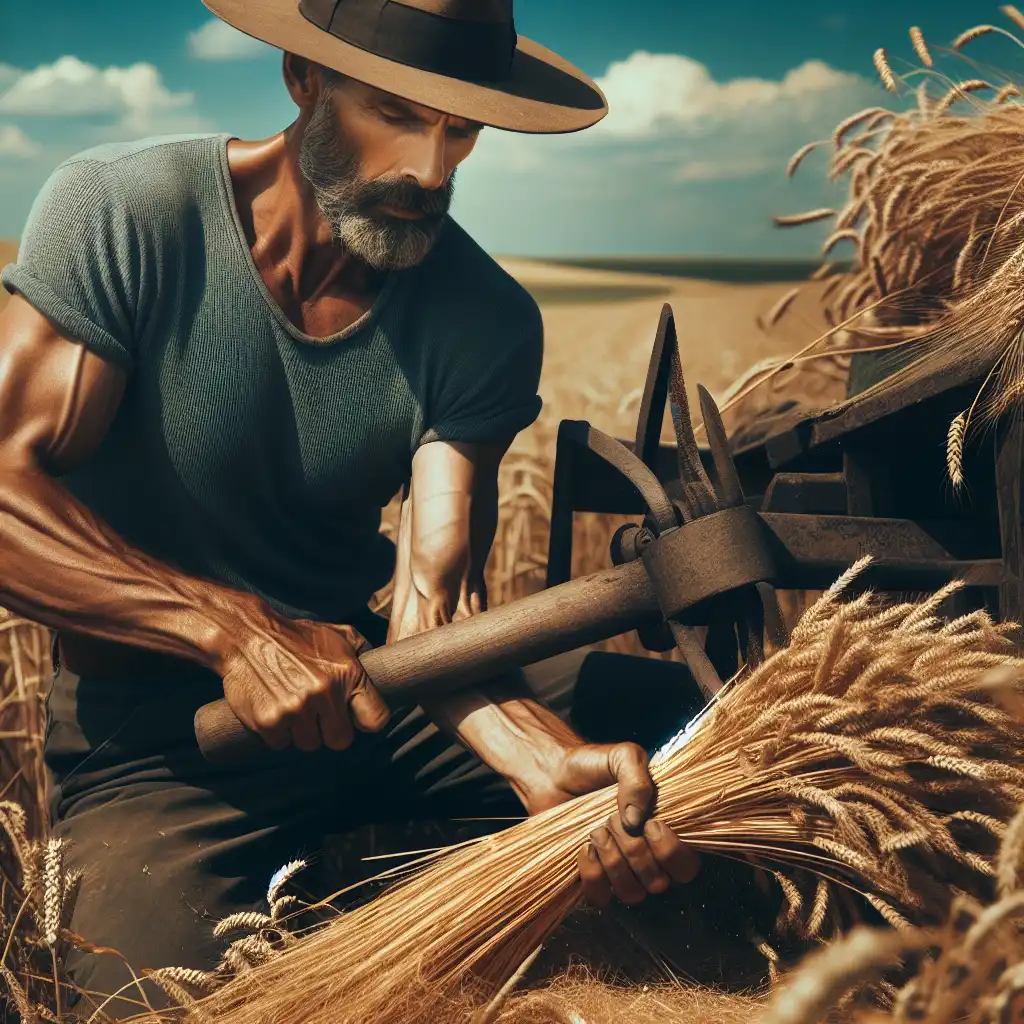
The husks of grains and grasses that are left over after threshing
The farmer separated the wheat from the chaff
chaff
tʃæf
加载中…
tʃæf
The husks of grains and grasses that are left over after threshing
The farmer separated the wheat from the chaff

tʃæf
Things that are considered worthless or useless
He had to sift through a lot of useless information, sorting the valuable from the chaff.

tʃæf
Strips of metal or foil dropped by an aircraft to confuse enemy radar
The aircraft released chaff to confuse enemy radar and avoid missile attacks.
音频无法加载,请稍后再试。
The word 'chaff' can be used to describe the husks or outer casings that surround cereal grains such as rice or wheat. These husks are usually removed during the process of milling, to reveal the edible part of the grain. The term can also be used more metaphorically, to describe something that is considered to be worthless or of little value. For example, a comment that is made purely to annoy someone else may be described as "chaff". In everyday conversation, this word is not commonly used and may be more commonly found in writing, particularly in more formal contexts.
Bran refers to the hard outer layer of cereal grains like wheat, that contains a lot of fiber and nutrients.
It is often removed during the milling process to make refined flour. Bran is edible and can be used in various recipes like bread, muffins, and breakfast cereals.
Bran is a nutritious part of the grain that is used in food, while chaff is the protective outer layer of the grain that is usually discarded or used for non-food purposes.
打开单词: Bran →Debris is a general term used to describe any scattered pieces of waste, rubble or broken parts.
Debris can include items such as rocks, metal, and other non-organic material.
Debris can be used in a variety of contexts ranging from construction sites to natural disasters.
Chaff is waste material from crops, whereas debris refers to any scattered broken pieces of waste, rubble or broken parts.
打开单词: Debris →It is usually considered to be of little value and is often discarded. Detritus is debris or waste material that has been left behind after a process or event, such as the remains of a natural disaster or decay of dead organic matter.
While both words refer to things that are considered to be useless or unwanted, chaff is typically used in the context of agriculture, while detritus is used more generally to describe waste or debris.
Chaff may also be used metaphorically to refer to meaningless or trivial ideas or speech, while detritus is usually used in a more literal sense.
打开单词: Detritus →Chaff and husk both refer to the outer protective covering of grains or seeds. Chaff specifically refers to the outer part that is lighter and separates from the actual grain during threshing, while husk refers to the tough outer layer that needs to be removed to get to the edible part of the seed or grain.
Husk is applicable to grains like rice, corn, and oats, which have a hard, fibrous outer layer that needs to be removed before the grain can be eaten.
The husk protects the grain during growth and is removed either manually or through mechanical processes.
Chaff refers to the lightweight outer layer of grains that is easily removed, while husk refers to the tough outer layer that needs to be removed to access the edible part of the grain.
打开单词: Husk →It is not useful for human consumption, but can be used as animal feed or bedding material. Refuse refers to waste or garbage that is no longer wanted or useful.
It includes things like food scraps, packaging, and other materials that are thrown away. Chaff is applicable in agriculture, while refuse is applicable in daily life and waste management.
打开单词: Refuse →The words chaff and shuck both refer to the outer layer of something that is discarded, but they are used to describe different things.
Shuck, on the other hand, is typically used to refer to the outer layer of a plant, like corn or peas, that is removed before eating.
The shuck is usually tougher and more fibrous than the edible part of the plant and is considered to be inedible.
Chaff is associated with grains and shuck is associated with plants.
打开单词: Shuck →Chaff and straw are two different things that come from plants.
Straw is the stems of cereal grains that are left over after the chaff and grain are removed. Straw is tougher and coarser than chaff, and it can be used for animal bedding, as insulation, or as a building material.
Straw can also be used as fodder for animals, although its nutritional value is low compared to other feed.
Chaff is the light outer coating of cereal grains that is removed during threshing, while straw is the tough stems of cereal grains that are left over after threshing.
Chaff is not very useful as food or material, while straw can be used for animal bedding, insulation, building, or even as feed.
打开单词: Straw →Stubble refers to the remaining stalks of the harvested crop, which are left in the ground after the grains or seed heads are removed.
Stubble is often left on the field as it is an important part of soil conservation and preservation.
To summarize, chaff is the outer layer of a grain while stubble is the remains of the stalks left behind after harvesting.
Chaff has agricultural usage for feeding livestock, while stubble plays a role in soil conservation.
打开单词: Stubble →Safari Live - Day 190 %\PIPE%...
在 YouTube 上观看 ↗We're obviously in a strange environment where practically anyone can set themselves up as a pundit of sorts. It's all about sorting the wheat from the chaff, and I'm very interested in reading different points of view, and certainly different generations than my own that have such a very different world view.
Adorable Tiger Cub...
在 YouTube 上观看 ↗Scientists need the infrastructure for scientific search to aid their research, and they need it to offer relevancy and ways to separate the wheat from the chaff - the useful from the noise - via AI-enabled algorithms. With AI, such an infrastructure would be able to identify the exact study a scientist needs from the tens of thousands on a topic.
How autism freed me to...
在 YouTube 上观看 ↗We must never throw away a bushel of truth because it happens to contain a few grains of chaff.
People review my comic books. People review every article I write - 'The Atlantic' even publishes them. A great deal of the critique of 'Between the World and Me' was from a feminist perspective. bell hooks pushed back, among others. Some of that has value. Some of it does not. I try my best to separate the wheat from the chaff.
Zombies are so popular. There's a lot of chaff out there. For every one person who is legitimately passionate about zombies, there are a hundred people who are thinking, 'Hey, I can make a buck off of this.' The problem is that some of their stuff is so lame.
Editor: a person employed by a newspaper, whose business it is to separate the wheat from the chaff, and to see that the chaff is printed.
I do like making people feel uncomfortable - it's separating the wheat from the chaff.
Newspaper editors are men who separate the wheat from the chaff, and then print the chaff.
The real challenge in this line of work is being able to weed the productive ones from the chaff, to decide which you're going to spend the next six to nine months turning into something that people will pay for.
It is unfortunate that people chose the star power of Sunny Deol over the hard work of Sunil Jakhar. Maybe our democracy is yet to become evolved to separate the wheat from the chaff.