haft
noun haft
hæft
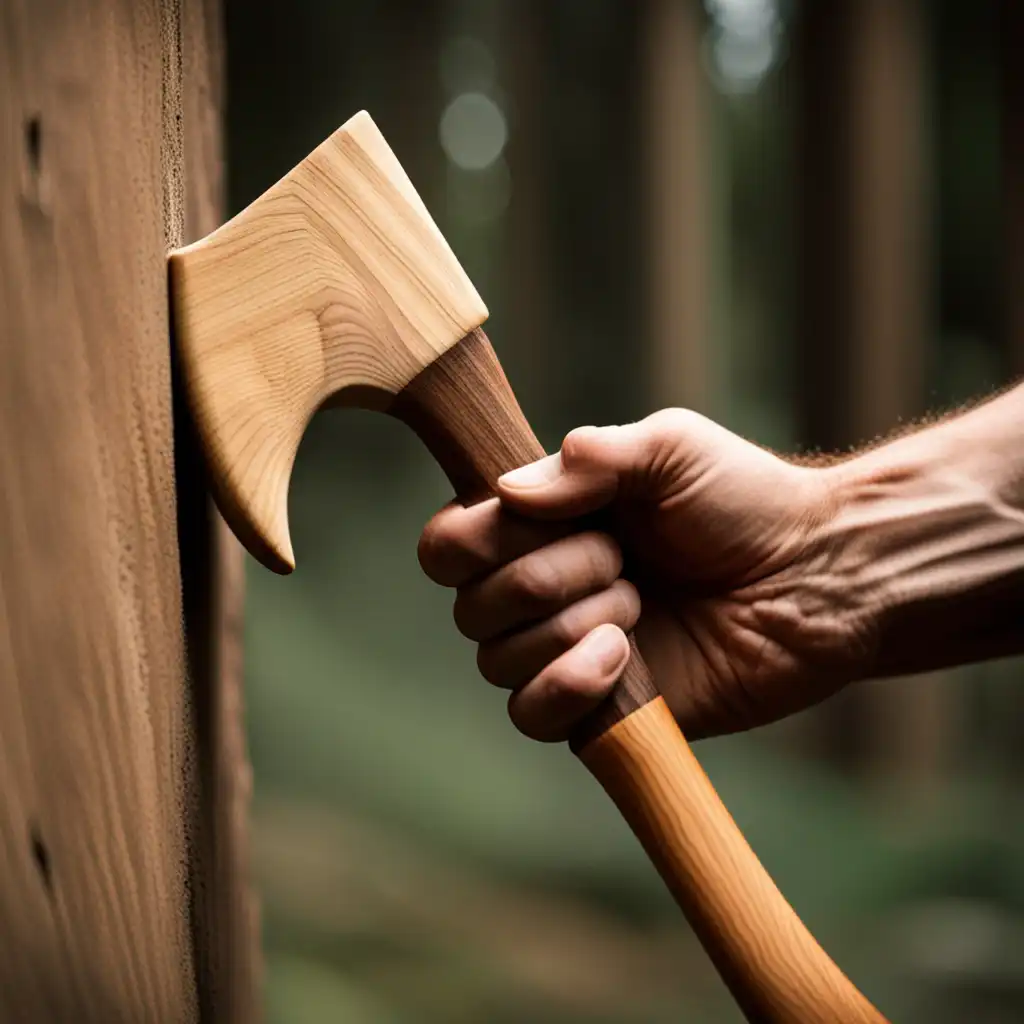
The handle of a tool or weapon
The haft of the axe was made from sturdy oak wood.
haft
hæft
加载中…
hæft
The handle of a tool or weapon
The haft of the axe was made from sturdy oak wood.

音频无法加载,请稍后再试。
'Haft' is a word that is used to describe the handle of a tool, weapon or instrument. For example, the handle of a hammer is called a haft. It is also used to describe the handle of a knife or sword. When using the word 'haft', it is important to make sure that you are referring to the handle specifically, and not the whole object. This word is typically used in the context of woodworking or blacksmithing, where handles are important parts of the tools being used.
Grip refers to the act of holding onto something tightly. For example, you might grip a handlebar while riding a bike.
So while both words have to do with holding onto something, grip applies to the act of holding, while haft refers specifically to the handle of a tool or weapon.
打开单词: Grip →Both haft and handle refer to the part of an object that is held or gripped with the hand.
However, haft typically refers to the handle of a tool or weapon that is made of a different material than the object itself.
Handle can refer to the grip on any object, not just tools and weapons. For example, a coffee mug has a handle that is typically made of the same material as the rest of the mug, such as ceramic or glass.
In simpler terms, haft refers to the handle of a tool or weapon, while handle can refer to the grip on any object.
打开单词: Handle →Haft refers to the handle of a tool or weapon, while hilt specifically refers to the handle of a sword, knife, or dagger.
Haft can describe the handle of a hammer, axe, or other tool, while hilt is only used to describe the handle of a bladed weapon.
打开单词: Hilt →Haft and pole are both words that refer to the handle or grip of a tool, weapon or object.
Pole refers to a longer and typically slender handle, often made of wood or a lightweight metal like aluminum, that is used to manipulate or control an object from a distance.
For example, a fishing rod has a pole that is used to cast the fishing line into the water and reel in fish.
Haft is applicable to objects with a solid, rigid handle, while pole is applicable to objects with a longer, slender handle used for control from a distance.
打开单词: Pole →Shaft refers to a long, thin, and straight object that runs through an object, like a rod or a pole. An example of a shaft is the long part of an arrow.
Haft describes the handle of a tool or weapon, while shaft describes a long, straight object that runs through something.
打开单词: Shaft →Haft and shank are both terms used to describe the handle of a tool or weapon, but they are used in different contexts.
A shank usually refers to the metal part of a tool or weapon that extends from the handle. For example, the shank of a hammer is the metal part that connects the handle to the head of the hammer.
The shank of a screwdriver is the metal shaft that extends from the handle and is used to turn screws.
A haft is typically made of wood and refers to the handle of a tool or weapon, while a shank is typically made of metal and refers to the part of the tool or weapon that extends from the handle.
打开单词: Shank →Haft and staff are both terms that refer to long, straight objects used for various purposes. The main difference between the two is their shape and function.
A staff is a long pole used for walking, support, or decoration.
A haft is used to grip a tool or weapon, while a staff is used for walking or support.
打开单词: Staff →Both haft and tang refer to the handle of an object, but they are used in different contexts.
Tang usually refers to a shorter handle that's embedded in the object it's attached to, so it might be used to describe a knife, fork or spoon, or a tool with a shorter handle.
So in short: haft is used for longer handles like weapons or tools that require a longer reach, while tang is used for shorter handles embedded in an object.
打开单词: Tang →Safari Live - Day 384 %\PIPE%...
在 YouTube 上观看 ↗Even a very little girl can wield a slide rule, the cursor serving as a haft.