sedge
noun sedge
sedʒ
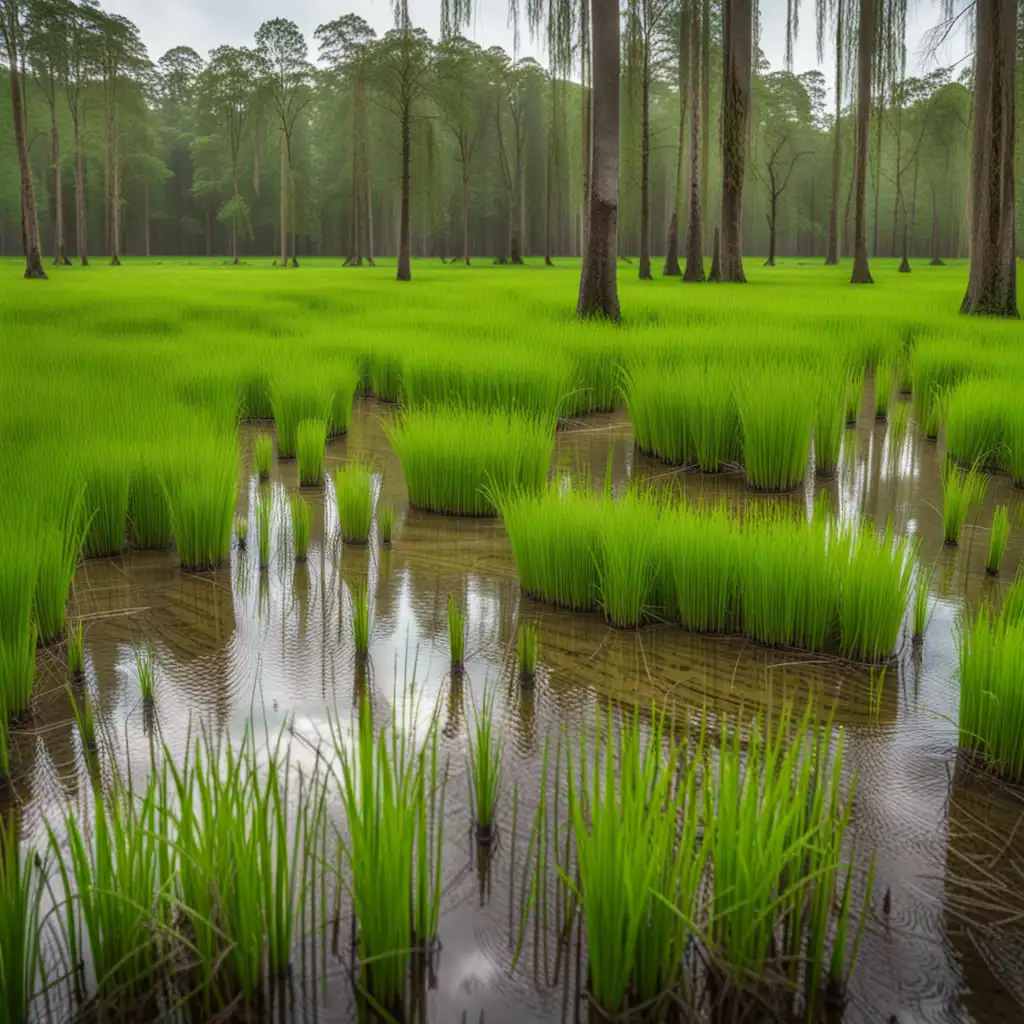
A type of plant that normally grows in wet ground or near water.
The swamp was full of tall, green sedges.
sedge
sedʒ
Cargando…
sedʒ
A type of plant that normally grows in wet ground or near water.
The swamp was full of tall, green sedges.
No se pudo cargar el audio. Inténtalo de nuevo más tarde.
'Sedge' is a type of grass that grows in wetlands or near bodies of water such as rivers and lakes. It has a triangular stem and can be used to provide food and shelter for animals. So, if you are in a place where there is water or wetland, you may use the word 'sedge' to describe the type of grass you see growing there.
Bulrush and sedge are both types of wetland plants commonly found in marshy areas, but they have some differences.
Bulrush refers to a tall, slender plant with a cylindrical stem and sharp-pointed leaves. They typically grow in stands or clusters and produce brown, sausage-shaped flower heads at the end of their stems.
Bulrushes are often found in shallow, still water and provide important habitat for various wildlife species, such as birds and fish.
Sedge refers to a group of plants with grass-like leaves that grow in wetland areas. Unlike bulrushes, sedges have triangular stems and usually form clumps rather than stands.
In summary, bulrushes are tall and slender with cylindrical stems and flower heads, while sedges have grass-like leaves with triangular stems and inconspicuous flowers.
Abrir palabra: Bulrush →Grass and sedge are both plants that have leaves and grow in grasslands, but they are different in a few ways. Grass has long and narrow leaves that are flat and grow from the base of the plant.
Grass is also typically an important food source for many animals, including cows and horses.
On the other hand, sedges have leaves that are usually shorter and wider than grass leaves, and they tend to grow in clumps rather than spreading out like grass.
In summary, while grass and sedge may look similar, they have distinctive differences, with grass being a food source and typically growing more widely, and sedge preferring wetter environments and growing in clumps.
Abrir palabra: Grass →Reed and sedge are both types of plants that look similar but have some differences.
Reed is a tall, slender plant that usually grows in wetlands or near water bodies. It has a hollow stem and long, narrow leaves.
Reeds are often used for thatching roofs, making musical instruments, and as ornamental plants in landscaping.
Sedge is also a plant that grows in wetlands but has a triangular stem and leaves that are usually shorter and broader than reeds.
In summary, reeds are tall and slender with long, narrow leaves, while sedges have triangular stems and shorter, broader leaves.
Abrir palabra: Reed →Rush and sedge are both plants, but they belong to different families. Rushes are mostly found in wetlands and have round stems with no leaves or hollow stems with small leaves.
Rush is more commonly used to refer to a plant that grows in damp locations, such as Juncus effusus (common rush) or Scirpus lacustris (bulrush).
Rush describes a plant that has a round stem and is found in wetlands, while sedge describes a plant with a triangular stem and three rows of leaves, also found in wetlands.
Abrir palabra: Rush →Desert Penguins %\PIPE%...
Ver en YouTube ↗A Collection Of Autumn...
Ver en YouTube ↗