
flume
noun flume
fluːm
A man-made channel for water, like a slide or chute in an amusement park or inside a mill or factory.
We floated down a water flume at the amusement park.
flume
fluːm
Cargando…
fluːm
A man-made channel for water, like a slide or chute in an amusement park or inside a mill or factory.
We floated down a water flume at the amusement park.
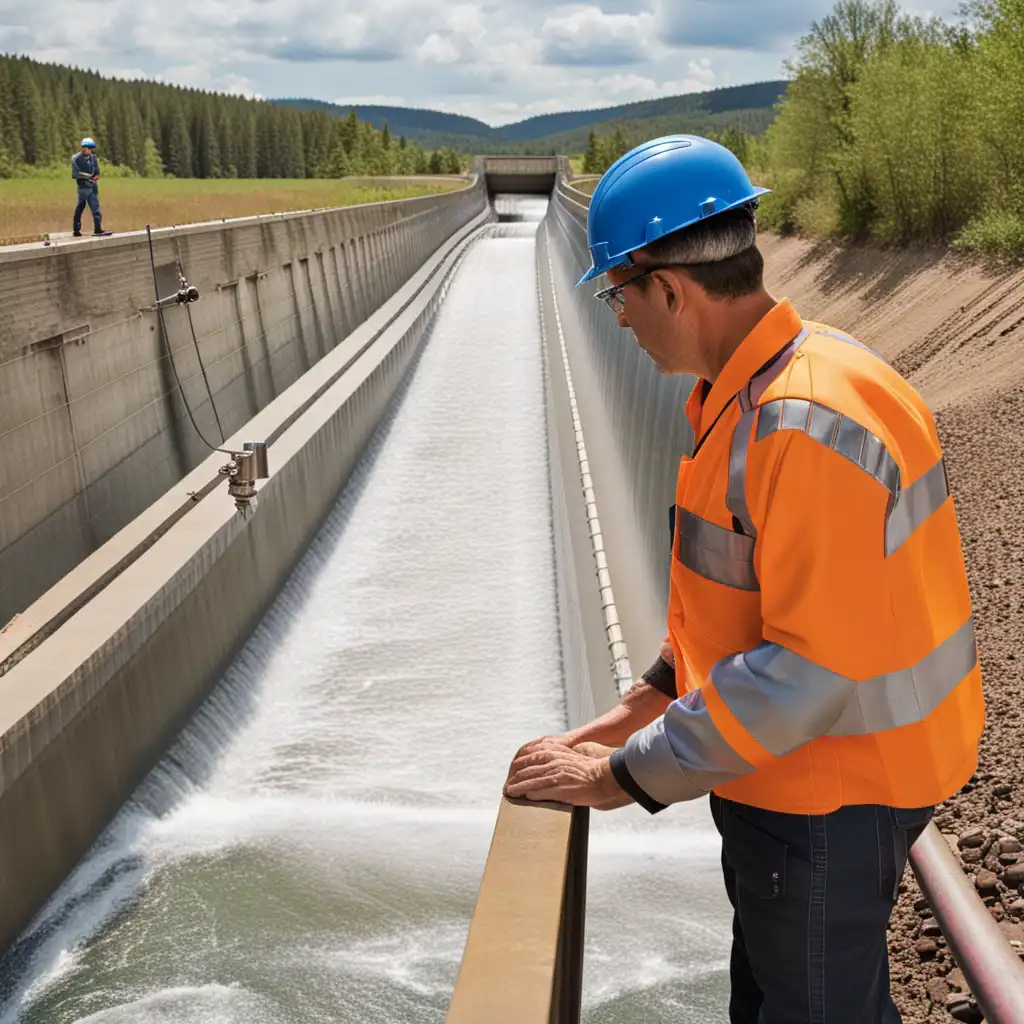
fluːm
A narrow passage for directing and measuring the flow of water in hydraulic investigations.
The engineer used a flume to measure the water flow in the dam project.
No se pudo cargar el audio. Inténtalo de nuevo más tarde.
A flume is a narrow channel that is used to move water from one place to another. It is commonly used in irrigation systems or for transporting water from a dam to a power station. It can also be used for recreational purposes, such as in water parks where people can ride down a flume on a raft or in a log. So, if you hear the word flume, it generally means a channel or duct that directs water towards a certain destination.
An aqueduct is an artificial channel or pipe that is used for carrying water over a long distance, often from a source such as a river or lake, to a destination such as a city or farm.
Aqueducts are typically made of concrete or stone and can be several miles long. They are commonly used in modern times for irrigation or to supply water to cities.
In summary, aqueducts are used to transport water over long distances, while flumes are used to move water over short distances or down steep slopes.
Abrir palabra: Aqueduct →Canal and flume both refer to artificial channels used to transport water, but there are some differences.
A canal is typically larger and wider than a flume, and it is often used for irrigation, transportation, or power generation.
Canals are often man-made and can be several miles long. The sides of a canal are usually sloped or lined with concrete, and they can be navigable by boats.
In summary, canals are larger channels that are used for transportation and irrigation, while flumes are smaller channels used for power generation and moving water quickly downhill.
Abrir palabra: Canal →A channel is a natural or artificial passage through which water flows.
A flume is a man-made channel designed to transport water for specific purposes, such as irrigation or hydroelectric power generation.
A channel is a general term for any pathway that carries water, while a flume is a specific type of channel designed for a particular use.
Abrir palabra: Channel →A chute is typically a narrow, sloping channel used to move or convey something, such as garbage or food, from one place to another.
A chute is for moving things, and a flume is for moving water.
Abrir palabra: Chute →A conduit is a channel or pipe that carries water or other fluids, electricity, or information.
It can be made of various materials such as metal, concrete, or PVC. Conduits are typically used to protect and direct the flow of substances or information, such as underground pipes for sewage or electrical wiring in homes.
In summary, conduits are used to transport a variety of substances or information and can be made of various materials.
Abrir palabra: Conduit →Both flume and sluice are used for conveying water, but they differ in the way they do it.
A sluice is a device or channel made of wood or stone that controls the flow of water, typically to divert it towards a specific location such as a mill or irrigation field.
A flume is a long and narrow channel used for moving water, and a sluice is a gate or channel used for controlling the flow of water.
Flumes are used to transport large quantities of water over long distances, while sluices are used to direct water to a specific location.
Abrir palabra: Sluice →A spillway on the other hand, is used to control the flow of water in a dam or reservoir. It is an opening or pathway that allows water to escape from the reservoir when it gets too full, preventing the dam from overflowing and potentially causing damage.
Spillways can be natural or man-made and are often designed with various features to help manage the flow of water more effectively.
So, in summary, flumes are typically used to move water from one place to another, while spillways are used to control the flow of water in a dam or reservoir.
Abrir palabra: Spillway →A trough is more of a general term that can refer to any kind of long, narrow container or channel. This could include a feeding trough for livestock, a gutter or drainage channel, or even a long, narrow container used for mixing or holding materials.
In summary, flumes are specifically designed for the purpose of moving water or other materials in a controlled manner, while a trough is a more general term that can apply to many different types of channels or containers.
Abrir palabra: Trough →Barbara Block: Tagging...
Ver en YouTube ↗What So Not used to be a lot more dance-y, and now it's becoming a lot more melodic. Flume has always had that melodic thing, but it's starting to become a bit heavier, so it's just difficult to navigate between the two.