pagan
noun pagan
ˈpeɪɡən
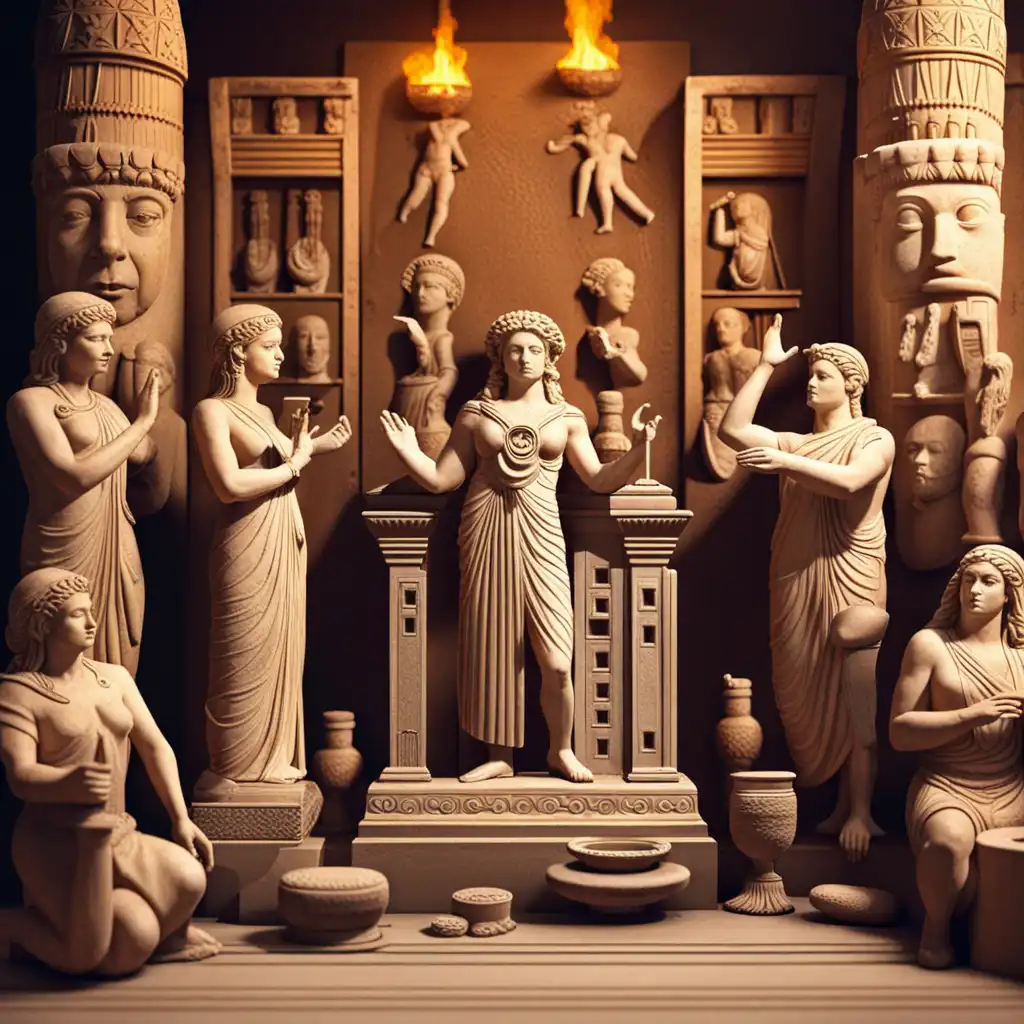
A person who follows a religion that is different from the main world religions and that existed before these religions.
The ancient Romans were pagans who worshiped many gods.
pagan
ˈpeɪɡən
Chargement…
ˈpeɪɡən
A person who follows a religion that is different from the main world religions and that existed before these religions.
The ancient Romans were pagans who worshiped many gods.
ˈpeɪɡən
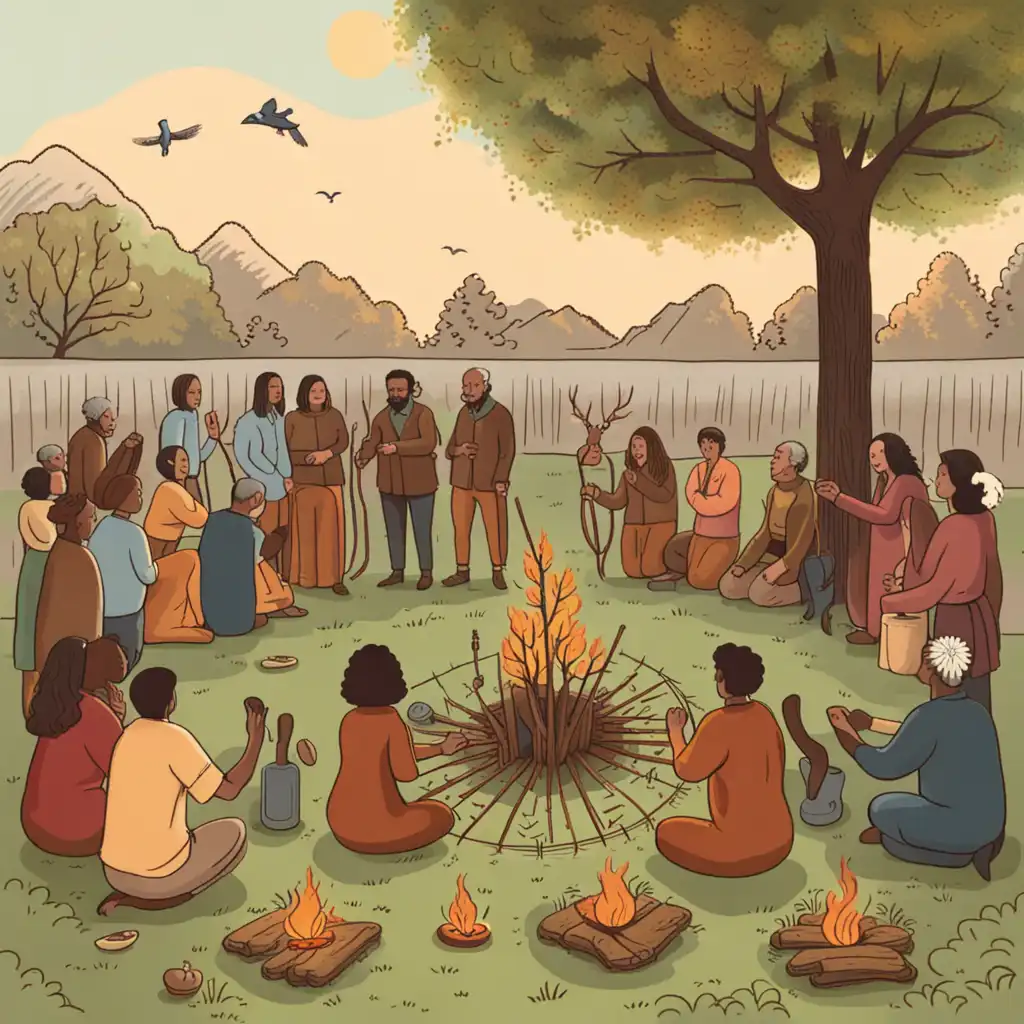
Relating to a religion that worships many gods, especially one that existed before the main world religions.
Pagan rituals often involve celebrating the cycles of nature.
ˈpeɪɡən
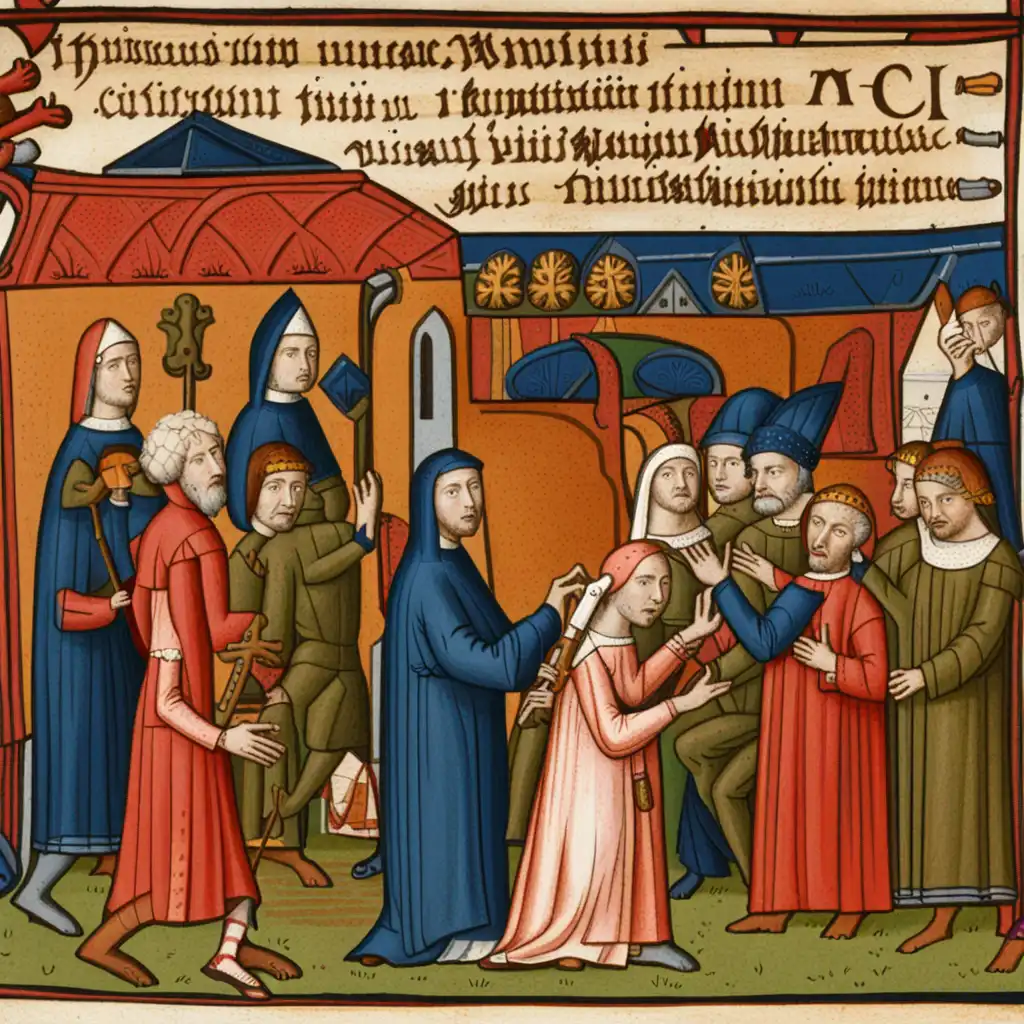
A person who has no religion or whose religion is not Christianity, Judaism, or Islam.
People who didn't convert to Christianity were considered pagans in the Middle Ages.
Impossible de charger l’audio. Réessayez plus tard.
The word 'pagan' is used to describe a person who follows a religion that is not one of the main religions like Christianity, Islam and Judaism. It is also used to describe beliefs or practices that are not considered part of a mainstream religion. The word originated from the Latin word 'paganus', which means 'rural' or 'country-dweller' and was used to describe people who were not part of the Roman Empire's main religion. Nowadays, the word 'pagan' is used more broadly to refer to a wide variety of beliefs and practices, including Wicca and other forms of modern paganism.
Both heathen and pagan are terms that have been historically used to describe people who aren't part of a particular religious tradition, normally Christianity.
Heathen has been used to describe people who don't have beliefs that fall in line with a particular religion, particularly Christianity.
The difference is that heathen is a more negative term that describes people who aren't religious, while pagan is a term used to describe people who follow a different religious tradition than Christianity or Judaism.
Ouvrir le mot: Heathen →Heretic refers to someone who disobeys or disagrees with established religious doctrines or beliefs, particularly in the context of Christianity.
A heretic challenges the accepted teachings and may be seen in a negative light by those who follow the religion.
The difference between the words heretic and pagan is that heretic refers to someone who challenges established Christian teachings, whereas pagan refers to someone who follows a non-major world religion or belief system.
Ouvrir le mot: Heretic →Infidel is a term used to describe someone who does not believe in the same religion as the speaker.
For example, a Christian might refer to a Muslim as an infidel, or a Muslim might refer to a Christian as an infidel.
Infidel typically refers to someone who does not follow the speaker's specific religion, while pagan refers to someone who follows a religion that is not one of the three Abrahamic religions.
Ouvrir le mot: Infidel →Service and say I've got a shelter a wall that I want to build I need some planning for my summer cabin or I want to build a pagan church can you help us and we say well yes we can we're producing wood now of vision boards and
Voir sur YouTube ↗Christmas is a story that has both religious and pagan origins, and to ignore its power is to ignore the power of myth - those symbols and legends that help us to ground our lives.
and persisted despite the church's efforts to eliminate pagan beliefs. Stories of vampires originated from misinterpretations of diseases, such as rabies, and pellagra, and decomposition.
Voir sur YouTube ↗There are a few people who are, let's say, personality-challenged, who would like to set up a cult, but in large part they fail due to the innate stroppiness and independence of their fellow pagans.
We have been called hostile We have been called pagan We have been called militant We have been called many names
Voir sur YouTube ↗To a pagan, there is no purpose to suffering. As a result, he lives a life of loneliness and frustration.
But all good things must end. In 391 AD the Christian Roman Emperor Theodosius banned pagan practices, so the world soon bid a fond farewell to the Olympic games. But just like those early pankration athletes, you can't keep a good one down,
Voir sur YouTube ↗There is something pagan in me that I cannot shake off. In short, I deny nothing, but doubt everything.
this tradition survived long after belief in these spirits had faded away. Many superstitions common today in countries from Russia to Ireland are thought to be remnants of the pagan religions that Christianity replaced. But not all superstitions are religious.
Voir sur YouTube ↗The pagan loves the earth in order to enjoy it and confine himself within it; the Christian in order to make it purer and draw from it the strength to escape from it.
pushing folk and musical boundaries to draw out the rawness of pagan ritual. Stravinsky brought this reverie to life in collaboration with artist Nicholas Roerich. Roerich was obsessed with prehistoric times. He had published essays about human sacrifice
Voir sur YouTube ↗When General Allenby conquered Jerusalem during World War I, he was hailed in the American press as Richard the Lion-Hearted, who had at last won the Crusades and driven the pagans out of the Holy Land.
renowned for pagan rituals we'll chair is cloaked in centuries of
Voir sur YouTube ↗Funerals are a pagan rite. There's not any doubt about it.
today in England witchcraft and it's more modern incarnation Wicca are pagan
Voir sur YouTube ↗I consider myself a pagan and a witch.
on saw 1 the villagers gathered and lit huge bonfires to drive the dead back to the spirit world and keep them away from the living but as the Catholic Church's influence grew in Europe it frowned on the pagan rituals like Sawin in the 7th
Voir sur YouTube ↗I enjoyed history at school. I'd always had a sense of pagan England.
And since the existence of a medieval Roman Empire suggested there were Europeans who’d never lost touch with antiquity, Western Europeans wanted to draw clear lines between the ages. To better distinguish the classical Latin-speaking pagan Roman Empire
Voir sur YouTube ↗I'm pagan.