junket
noun junket
ˈdʒʌŋkɪt
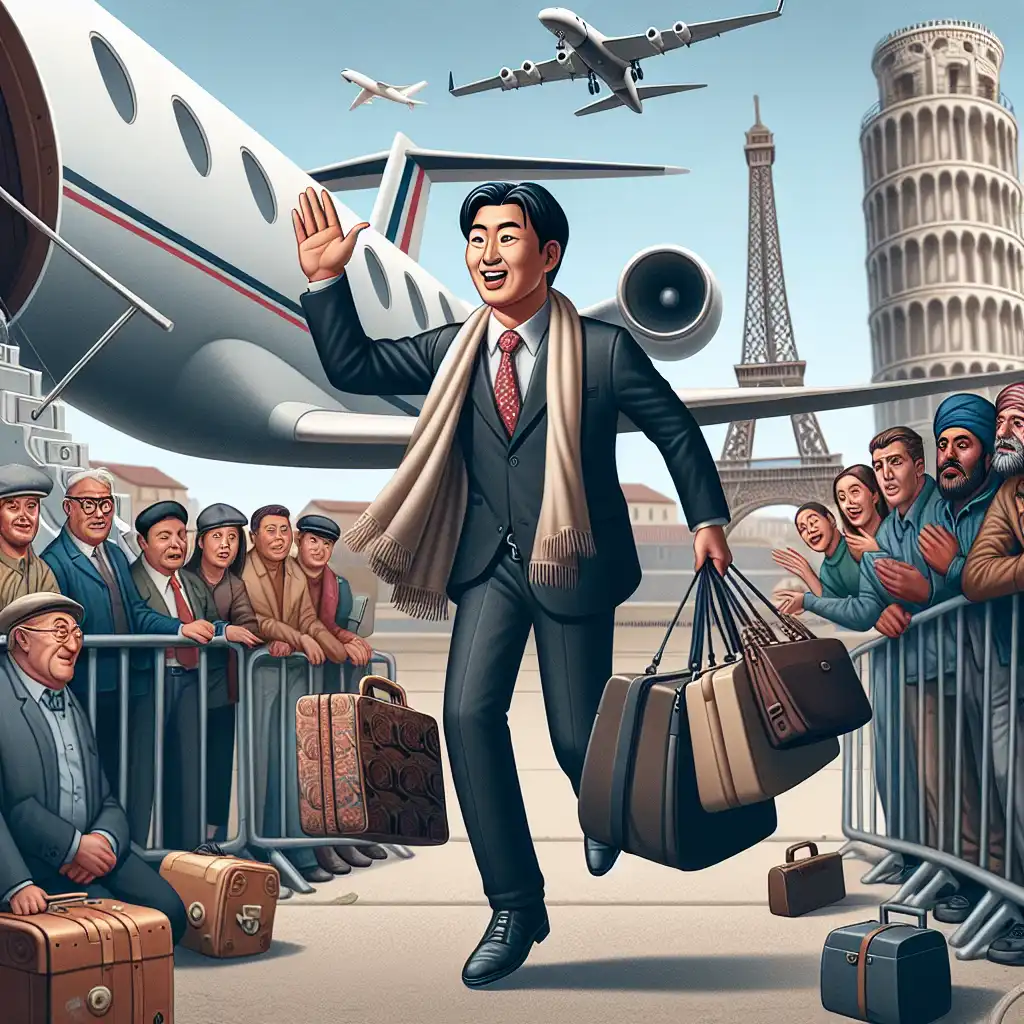
A journey or trip by a government official or politician that is paid for by the public and is often for pleasure.
The senator's foreign junket caused a public outcry.
junket
ˈdʒʌŋkɪt
加载中…
ˈdʒʌŋkɪt
A journey or trip by a government official or politician that is paid for by the public and is often for pleasure.
The senator's foreign junket caused a public outcry.

ˈdʒʌŋkɪt
A party, banquet or outing for fun or entertainment.
The company organized a junket to celebrate its success.

ˈdʒʌŋkɪt
A sweet, custard-like food made from milk and rennet.
She made some strawberry flavored junket for dessert.
音频无法加载,请稍后再试。
The word 'junket' is commonly used to refer to a trip, often made by politicians or officials, that is paid for by the government or a private organization. It is usually for the purpose of promoting or learning about something, such as a new product, service or idea. The word can also refer to a sweet, milk-based dessert that is flavored with fruit or other ingredients.
An excursion refers to a trip or outing taken for pleasure or education, often involving a group of people.
It can be a day trip to a nearby park or museum, or a longer journey to a different city or country. Excursions are usually organized and planned in advance.
Overall, excursions are more focused on leisure and education, while junkets are more focused on business and luxury.
打开单词: Excursion →Expedition refers to a journey made for a specific purpose, often involving exploration or research.
It is usually a long and challenging journey, intended to achieve a significant goal. Examples could be an expedition to climb a mountain or explore a remote region.
Expedition is a more serious and purposeful journey, while junket is more of a fun and leisurely trip.
打开单词: Expedition →A journey is a long and often difficult trip, especially one taken for a specific purpose, such as for work, study, or exploration.
Journeys usually involve a planned itinerary and can be physically demanding. For example, a journey could be hiking the entire length of the Appalachian Trail or traveling across a continent by train.
The main difference between a journey and a junket is that a journey is usually a long and purposeful trip, while a junket is a short and pleasurable one.
打开单词: Journey →Out refers to leaving a place or situation, often in a more casual or spontaneous way.
It can be used in a variety of contexts, such as going out to dinner with friends, going out for a walk, or simply leaving work or school at the end of the day.
Junket implies a more formal and structured type of trip or outing, while out is a more general term for leaving a place or engaging in leisure activities.
打开单词: Out →A tour is a trip taken by an individual or group to explore a specific destination or region, for the purpose of leisure, education or cultural exchange.
Tours are typically organized by travel agencies or individuals and may involve visiting historical sites, museums, galleries, natural landmarks, or entertainment venues.
The main difference between junkets and tours is that junkets are typically sponsored by a third party for business or promotional purposes, while tours are typically arranged for personal or educational reasons.
打开单词: Tour →It has a connotation of luxury or excess, often involving expensive accommodations and activities. Travel refers to any trip made from one place to another, regardless of the purpose or funding.
It can be for work, vacation, or personal reasons, and can range from budget to luxury. Junket refers to a specific type of travel that is often luxurious and funded by a third party, while travel is a broader term that encompasses all types of trip.
打开单词: Travel →A junket typically refers to a luxurious or extravagant trip or excursion that is often sponsored by a government or organization with a specific purpose, such as promoting tourism or business interests.
It can also refer to a trip taken to attend a conference, meeting, or other official event.
A junket is a more formal and organized type of trip.
A trip can refer to any journey or outing taken for pleasure or any other purpose, whether it's a weekend getaway, a family vacation, or a road trip.
A junket is a more formal and usually sponsored trip taken for a specific purpose, while a trip is a more general term that can refer to any outing or journey.
打开单词: Trip →It is often used to describe a lavish or extravagant trip taken by a celebrity or politician. Visit generally refers to a trip taken to see someone or something specific, like visiting a friend, relative or a tourist site.
It can also refer to a trip taken for business or professional reasons. So, while junket is more about enjoying oneself and having a good time, visit is more about connecting with people, places or things.
打开单词: Visit →Hailstone Chop Shop %\PIPE%...
在 YouTube 上观看 ↗I've been quite protected from the whole 'Lost' phenomenon because I'm not one of the core cast. So I haven't had to do the press junkets that they have.
I guess I kind of realized that my whole life isn't one giant press junket. I don't have to be smiling all the time and always have the perfect answer.
Well this is aptly called a junket, for both of us. I have never been to a house of prostitution, but I understand that you get in more than seven minutes.
Doing some of the 'Lord Of The Rings' press junkets got a bit claustrophobic.
But I made one mistake which I would never repeat as a member of Congress when I was in Washington, and that was when I was elected I didn't go on trips because I was so afraid of having someone accuse me of taking junkets.
As soon as I finish a job, I'm like, 'Geez, I got away with that, and I got paid all right!' But then you get to the press junket, and I'm like, 'Oh God, this is where you earn your money.
I've got my life and 'Harry Potter,' where I travel the world, I make films, I meet amazing people, I do press junkets and stuff. And then I go back home to Leeds, where I live, and I've got the same friends from before.
Interviews are usually a follow-up, like a press junket or a publicity junket, or something like that, and I'm not doing any of that right now. I don't have any axes to grind.
Press junkets are incredibly annoying. You sit in a chair for three to six hours and have different journalists shuttle in for three minutes at a time, asking cheesy movie questions to get a quick sound bite - and that's their only objective. You can't really move or eat. You're just stuck there. It's pressure, constant pressure.
With 'The Replacements,' it was insane. I'd never done a movie that opened up and made, like, seven million dollars. I'd never been part of, like, a four-day press junket for a movie that was international and domestic.