
disunity
noun disunity
dɪsˈjuːnəti
Absence of agreement or harmony between people or things
Their team lost the game due to disunity among its members.
disunity
dɪsˈjuːnəti
Loading…
dɪsˈjuːnəti
Absence of agreement or harmony between people or things
Their team lost the game due to disunity among its members.
dɪsˈjuːnəti
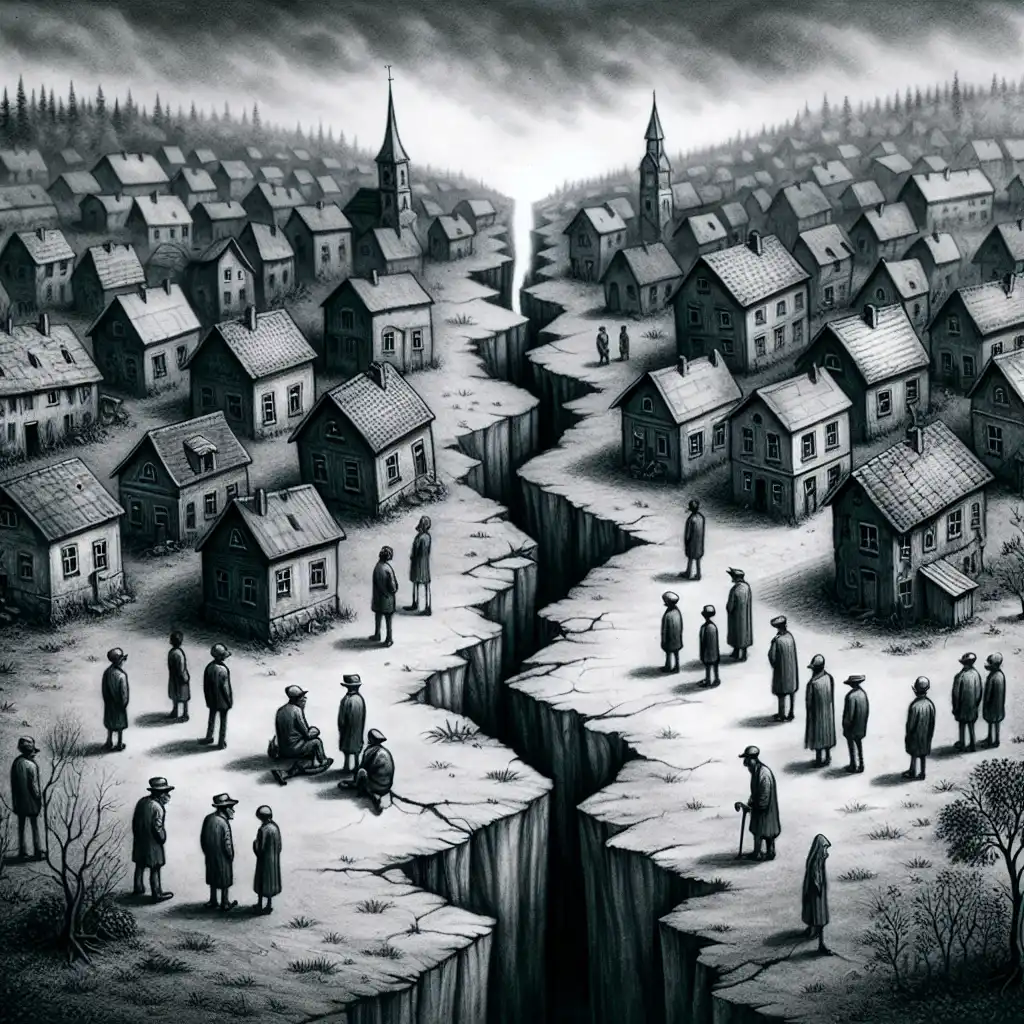
The state of being separate or divided
The country was torn apart by disunity after the war.
Audio could not be loaded. Please try again later.
Disunity is a word we use when we want to talk about a lack of agreement or harmony within a group of people. It means that instead of working together, the group is divided and not on the same page. Disunity can happen in families, communities, or even in larger organizations like companies or governments. It's important to try and address disunity and find ways to bring people together so that everyone can work towards a shared goal.
Disagree means to have a difference of opinion or to not be in agreement with someone or something. For example, if two friends are discussing a movie and one thinks it's great and the other thinks it's terrible, they disagree.
Disagree refers to a disagreement or difference of opinion between individuals, while disunity refers to a lack of unity or agreement within a group or community.
Open word: Disagree →The words discord and disunity both refer to a lack of agreement or harmony, but they are used in slightly different contexts.
Discord typically refers to a more active or vocal conflict, where people or groups are actively disagreeing or arguing with each other.
For example, if two people are having a heated argument, you could say that there is discord between them.
Discord is more about conflict and disagreement, while disunity is more about a lack of cooperation or agreement.
Open word: Discord →Disharmony refers to a lack of agreement or coordination between two or more things or people.
Disharmony can be caused by differences in opinions, beliefs, or values.
Disharmony refers to a lack of agreement or coordination between different things or people, while disunity refers to a lack of unity or cohesion within a group.
Disharmony is applicable in situations where there is a conflict of ideas or opinions, while disunity is applicable in situations where there is a fragmentation or divergence of interests, goals or ideologies within a group.
Open word: Disharmony →Disunity and division are similar in that they both refer to a lack of unity or cohesion.
Division refers to a separation or split between two or more groups or entities.
Division can occur when there are fundamental differences in beliefs, values, or interests that create a barrier between people or groups.
Both disunity and division can have negative consequences for individuals and groups, making it difficult to achieve common goals or maintain positive relationships.
However, disunity tends to imply a more temporary or fixable state of affairs, while division suggests more permanent and serious differences that may require more drastic solutions.
Open word: Division →Fragment refers to a small part of a larger whole that has been broken off, separated or divided.
In simpler terms, disunity is a state of conflict between different groups or individuals, and fragment refers to something that has been divided or broken into smaller parts.
Open word: Fragment →Schism refers to a formal division or separation within a group, often as a result of differences in beliefs or values.
Schisms are usually more serious and substantial than disunity and can lead to the formation of separate entities. The word is often used in religious contexts to describe a separation between two groups that were previously united.
Disunity refers to a lack of harmony among people or groups, while schism refers to a formal division or separation within a group.
Disunity is applicable in any setting where there is a conflict of interest or lack of agreement, while schism is often used in religious contexts to describe a division caused by differences in beliefs or values.
Open word: Schism →Separate means to divide or disconnect things. This can refer to physical separation such as moving apart from each other physically or dividing something into parts.
Separate is applicable in situations where objects or people need to be divided, such as separating recyclables from trash.
Open word: Separate →Disunity and strife both refer to a lack of agreement or conflict between people, but they have slightly different meanings.
Strife refers to open conflict or disagreements between people or groups. It often implies a more intense or hostile level of disagreement than disunity.
For example, two countries may have strife if they are in a war or if they have ongoing disputes that lead to violence or tension.
Disunity refers to a lack of collaboration within a group, while strife implies active conflict or hostility between people or groups.
Open word: Strife →The dynamic of globalisation in financial and economic terms, but also in geopolitical terms, confronts Europeans with a stark choice: live together, share a common destiny and count in the world; or face the prospect of disunity and decline.
The American fascists are most easily recognized by their deliberate perversion of truth and fact. Their newspapers and propaganda carefully cultivate every fissure of disunity, every crack in the common front against fascism.
Disunity costs votes.
Reformation names the disunity in which we currently stand. We who remain in the Protestant tradition want to say that Reformation was a success.