
crystallization
noun crystallization
ˌkrɪstələˈzeɪʃn
The process of forming solid crystals from a liquid or solution
The crystallization of salt happens when you leave seawater in the sun to dry.
crystallization
ˌkrɪstələˈzeɪʃn
लोड हो रहा है…
ˌkrɪstələˈzeɪʃn
The process of forming solid crystals from a liquid or solution
The crystallization of salt happens when you leave seawater in the sun to dry.

ˌkrɪstələˈzeɪʃn
The process of something becoming definite or taking a clear shape
The crystallization of my ideas took months, but I finally finished my book.

ˌkrɪstələˈzeɪʃn
In chemistry, it is the process to purify substances or separate them from a mixture
Crystallization is a common method used in labs to purify substances.
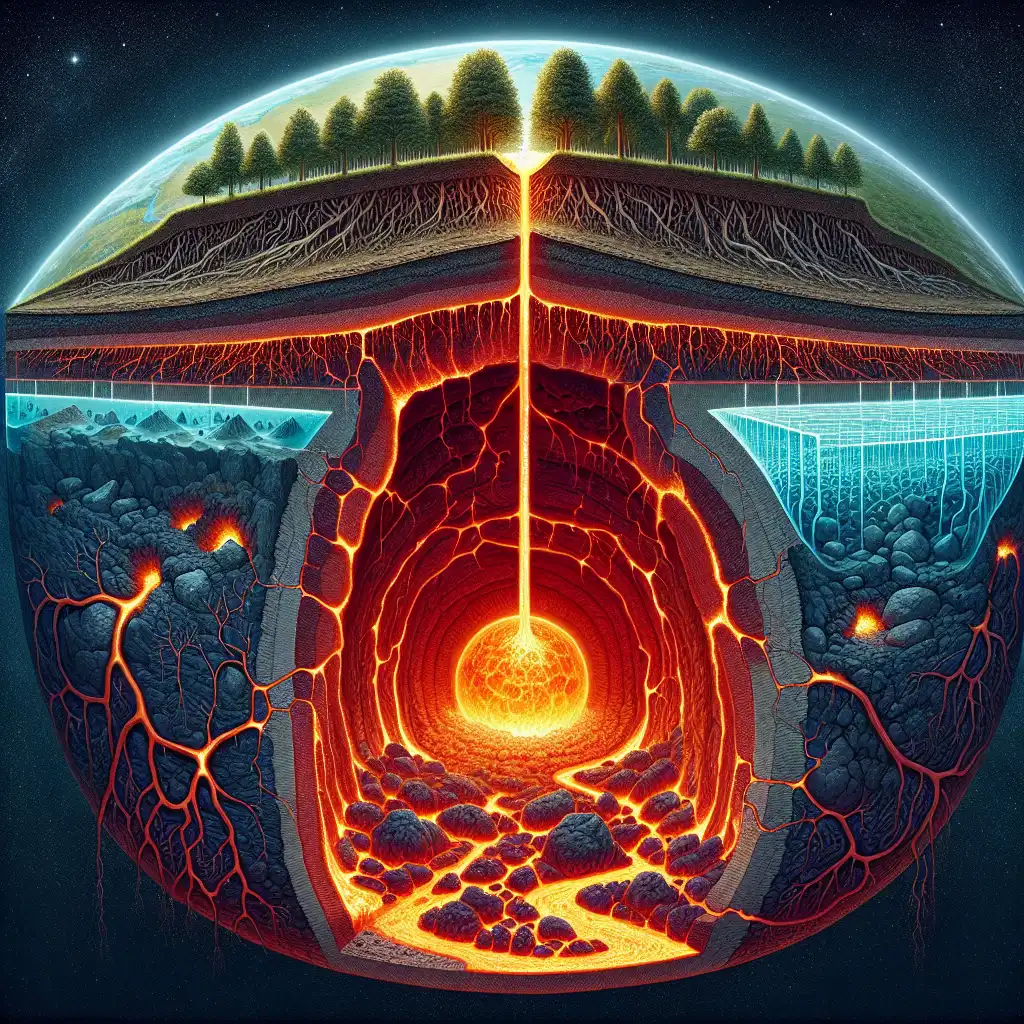
ˌkrɪstələˈzeɪʃn
In geology, it is the cooling and solidification process of magma or lava
The crystallization of magma beneath the Earth's surface forms intrusive igneous rocks.
ऑडियो लोड नहीं हो सका। कृपया बाद में फिर कोशिश करें।
Crystallization is a process where a substance is turned into crystals. It is often used in science, such as in chemistry or geology, to describe the formation of minerals or rocks. However, it can also be used in everyday language, for example, to describe the process of making sugar crystallize in cooking or the way a plan or idea becomes clearer and more defined over time.
Coalescence refers to the merging of two or more things into a single entity. This could refer to physical objects or even abstract concepts.
Coalescence is a merging of things, while crystallization involves the formation of crystals. Coalescence is applicable in many areas, from meteorology to business, while crystallization is more commonly used in the fields of chemistry and materials science.
शब्द खोलें: Coalescence →Condensation and crystallization are both processes of matter changing from one state to another, but they occur in different ways and have different purposes.
Condensation is the process by which a gas or vapor changes into a liquid state. This occurs when the temperature of the gas or vapor decreases, causing the molecules to come closer together and form a liquid.
An example of condensation is when water vapor in the air transforms into liquid droplets on a cold surface like a mirror or a window.
Condensation is the process of gas turning into liquid, while crystallization is the process of a liquid or gas turning into a solid crystal structure.
शब्द खोलें: Condensation →This term is applicable when discussing the formation of minerals, such as snowflakes or quartz.
Formation is a more general term that can refer to the creation or development of almost anything. For example, the formation of a rock can be due to various processes, such as solidification of magma, sediment build-up or pressure from tectonic activity.
Crystallization specifically refers to the formation of crystals while formation is a more general term with many possible applications.
शब्द खोलें: Formation →Freeze refers to the process of turning a liquid into a solid by lowering its temperature below its freezing point. This is applicable in daily life, such as when water turns to ice in a freezer or when a person experiences frostbite in extremely cold temperatures.
शब्द खोलें: Freeze →Crystallization and hardening are two different processes that are used in different contexts.
Hardening refers to the process where a material becomes more rigid and resistant to deformation. This is often done by increasing the material's strength through heat treatment or the addition of other materials.
Hardening is typically used in the production of metals, such as steel, to make them stronger and more durable.
Crystallization is the process of creating solid crystals from a liquid or gas, while hardening refers to making materials more rigid and resistant to deformation.
शब्द खोलें: Hardening →Crystallization and precipitation are both processes that involve forming solid particles from a liquid solution, but they differ in how they occur.
Precipitation occurs when two solutions are mixed together and the resulting reaction causes solid particles to form and settle out of the mixture.
In simpler terms, crystallization is a process of solidifying a substance from a liquid, while precipitation is a process of separating solids from a liquid mixture.
शब्द खोलें: Precipitation →Rigidity refers to a material's ability to resist deformation or bending. A rigid material is one that is stiff and does not easily flex or bend.
Crystallization refers to the formation of crystals in a material while rigidity refers to a material's stiffness.
Crystallization can occur in many materials while rigidity is a property that some materials have.
शब्द खोलें: Rigidity →Crystallization and solidification are both processes of changing a material from a liquid to a solid state, but there is a difference between the two.
Solidification is a broader term that refers to any process that turns a liquid into a solid. This can include crystallization, but it can also include other methods like cooling, curing, or drying.
Solidification can occur with or without the formation of crystals, and it is used in a wide range of industries such as construction, manufacturing, and food processing.
Crystallization is a specific type of solidification that involves the formation of crystals, while solidification can refer to any process that turns a liquid into a solid.
शब्द खोलें: Solidification →12 sustainable design...
YouTube पर देखें ↗Sometimes I had to spend a whole day mixing a boiling mass with a heavy iron rod nearly as large as myself. I would be broken with fatigue at the day's end. Other days, on the contrary, the work would be a most minute and delicate fractional crystallization, in the effort to concentrate the radium.
Tim Cope: On the Trail...
YouTube पर देखें ↗All experiment is made on a basis of tradition; all tradition is the crystallization of experiment.
The wacky history of...
YouTube पर देखें ↗There's a crystallization that goes on in a poem which the young man can bring off, but which the middle-aged man can't.
Architecture depends on its time. It is the crystallization of its inner structure, the slow unfolding of its form.