iambic
adjective iambic
aɪˈæmbɪk
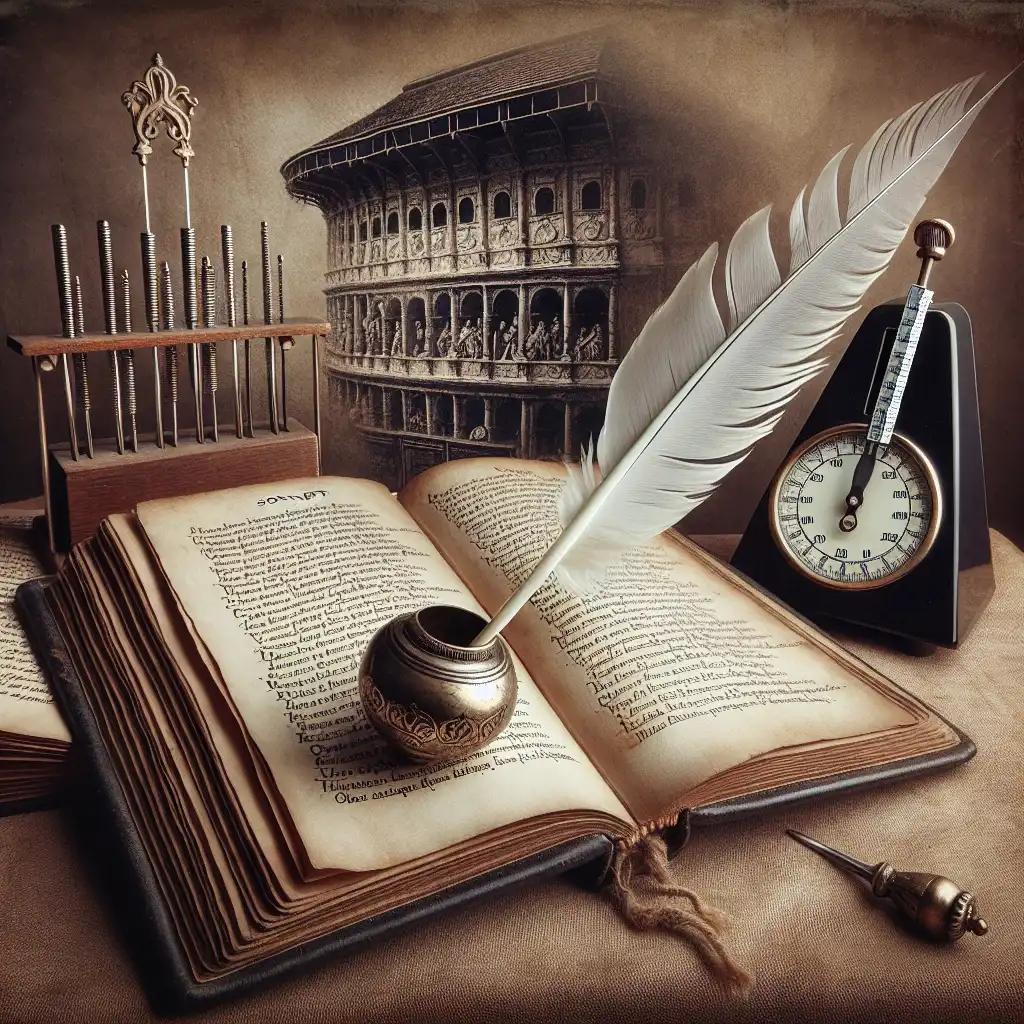
Related to a type of rhythm in poetry where one unstressed syllable is followed by a stressed one.
Shakespeare's sonnets are written in iambic pentameter.
iambic
aɪˈæmbɪk
Loading…
aɪˈæmbɪk
Related to a type of rhythm in poetry where one unstressed syllable is followed by a stressed one.
Shakespeare's sonnets are written in iambic pentameter.
Audio could not be loaded. Please try again later.
Iambic is a term used to describe a rhythm in poetry or speech. It means that the stress or emphasis is placed on every second syllable. For example, the word 'begin' is iambic because the stress falls on the second syllable 'gin'. Iambic is often used in sonnets and other poetic forms, and it can be helpful to know about it if you are studying literature or writing poetry.
Metric refers to the overall structure of a poem, including the number of syllables in each line, the rhyme scheme, and the overall pattern of stressed and unstressed syllables.
Iambic usually describes the rhythm of a line of poetry, while metric describes the overall structure and form of a poem.
Open word: Metric →Iambic and metrical both refer to the rhythm and structure of poetry.
Metrical refers to the overall structure or pattern of a poem's rhythm. It encompasses different types of rhythmic patterns, including iambic, and can refer to the total number of syllables per line, the total number of lines per stanza, or other variations.
For example, in a metrical poem, each line may have a set number of syllables and the overall structure of each stanza may follow a consistent pattern.
Metrical structure is used in many forms of poetry, including sonnets, haikus, and limericks.
Metrical refers to the overall structure or pattern of a poem's rhythm, which can include iambic and other rhythmic patterns.
Open word: Metrical →Iambic refers to a specific pattern of stress in language where every other syllable is stressed, like in the word "about." Poetic refers to the use of language in a creative way to create emotion, beauty, or meaning.
Iambic is applicable when analyzing the meter of a poem or in writing poetry using this specific pattern. Poetic is applicable to any type of creative writing, not just poetry, where the writer is using language in a way that is artistic and expressive.
Open word: Poetic →Rhythmic refers to any pattern of rhythm or beat, including iambic.
Essentially, rhythmic refers to any kind of pattern or beat, while iambic specifically refers to a certain type of pattern in poetry.
Open word: Rhythmic →Why Shakespeare loved...
Watch on YouTube ↗Here's the deal with 'Bastard.' I loved that show, and for me, it was such a palate cleanser, going from writing urban vernacular and crime to, essentially, iambic pentameter. I loved the mythology of that world based on history, but what it came down to was money.
Paper towns and why...
Watch on YouTube ↗I adored being at the RSC and working on the verse and getting the iambic pentameter right. You just skim across the surface, and the speech is over before you know it. You can just ride along on the music of it.
The iambic line, with its characteristic forward movement from short to long, or light to heavy, or unstressed to stressed, is the quintessential measure of English verse.
I would talk in iambic pentameter if it were easier.
I've spent so much time with iambic pentameter that I can now recognize it when I hear it in conversation or a movie - it's like a weird, useless superpower.
I tell you, once a girl's got a dose of novels she's a pushover for iambic pentameter.
The conventional wisdom with David Mamet is, you do not change a word. And that agrees with me. If you want to change any of David's words, it's like wanting to change the iambic pentameter in Shakespeare - you should do something else.
It's good to have a lot of once-in-a-lifetimes in your lifetime. If you get the chance to skydive, go skydiving. If you're offered a part in a weird Shakespeare play in San Diego, slap on some tights and rock out some iambic pentameter.
You know, I used to say, when people say, 'How do you think about what to write about in the poems every week?' And I say, 'Well, I have to turn it in on Monday, so on Sunday nights I turn the shower to iambic pentameter and it sort of works out that way.
You have to learn a few things, which you do along the way, but basically, poetry is a matter of the ear. Iambic pentameters or what constitutes a stanza comes naturally - your ears will know.