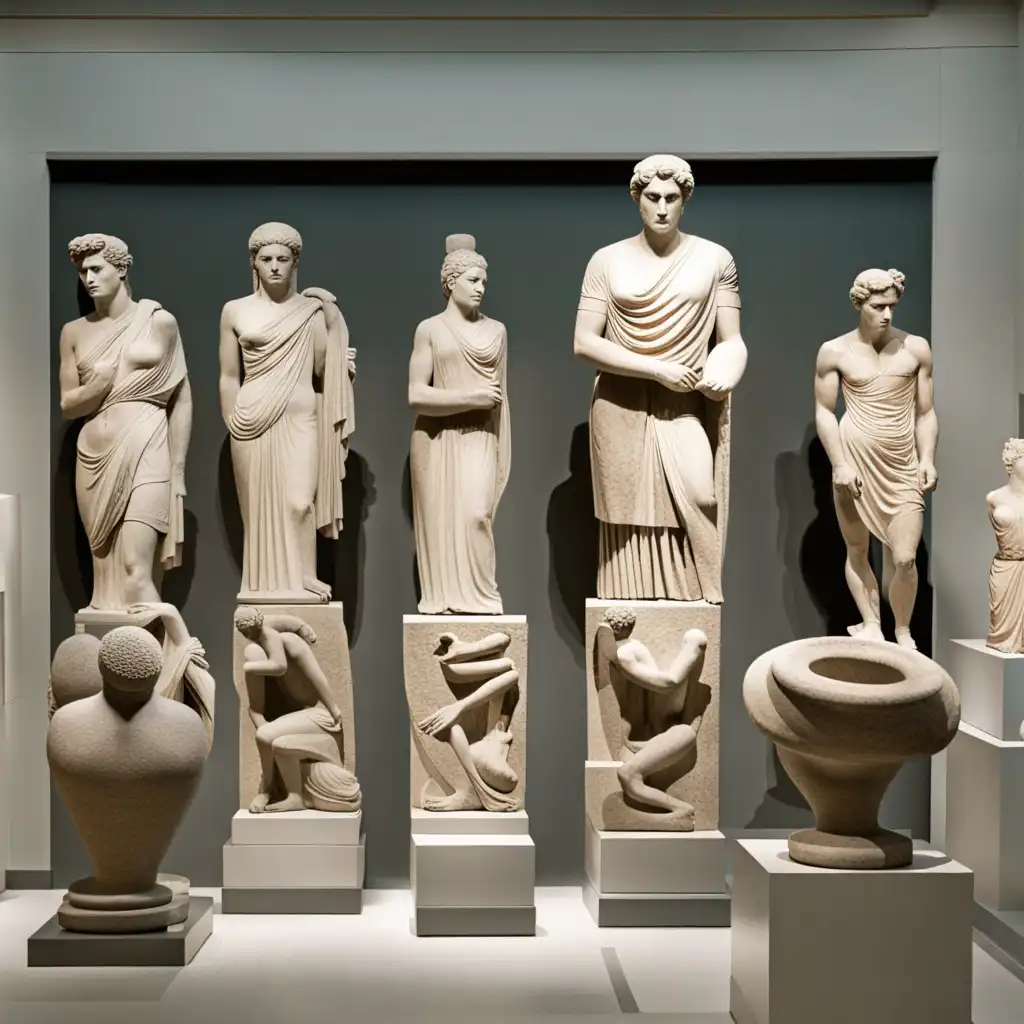
statuary
noun statuary
ˈstætʃueri
Sculptures or carvings of figures, especially made from stone
The art museum had a wide collection of statuary from ancient Greece.
statuary
ˈstætʃueri
Đang tải…
ˈstætʃueri
Sculptures or carvings of figures, especially made from stone
The art museum had a wide collection of statuary from ancient Greece.
ˈstætʃueri
Related to or involving statues
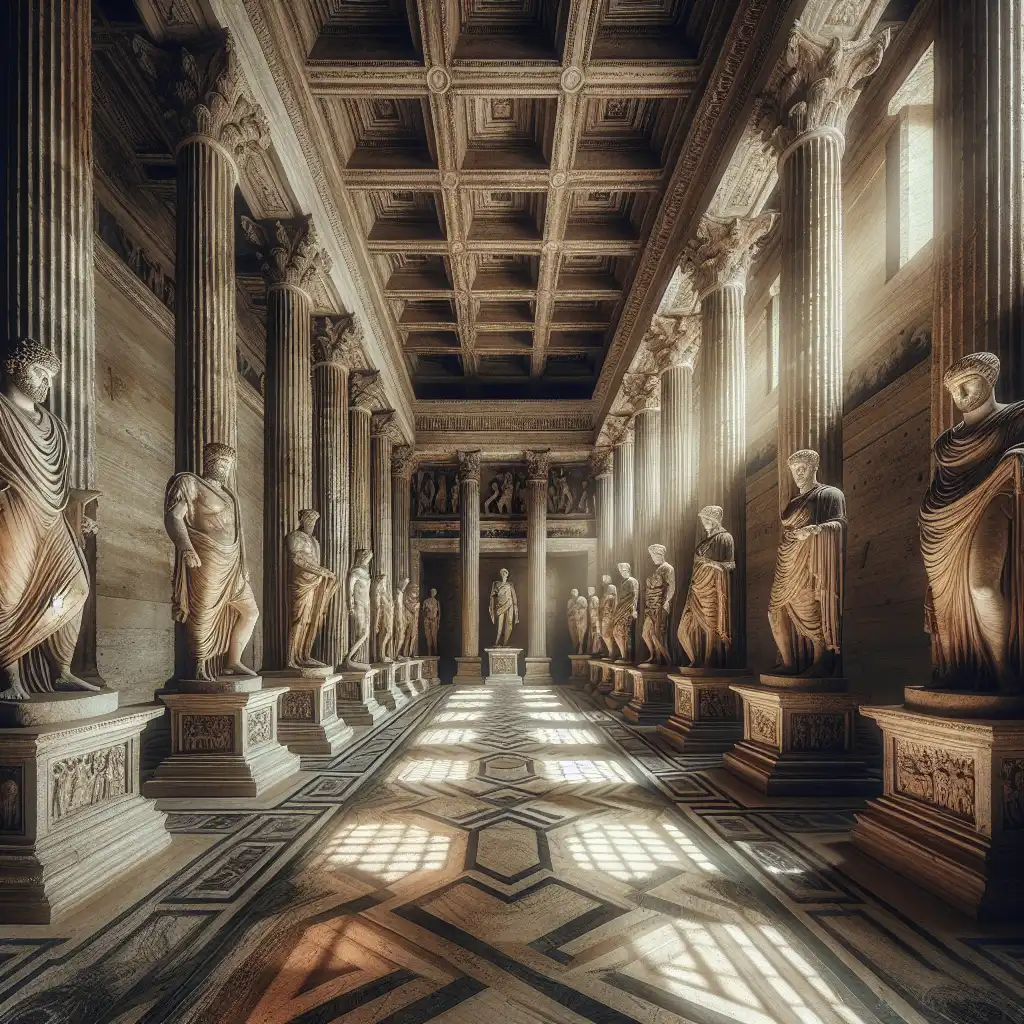
The statuary details within the ancient temple led historians to believe it was once a place of worship.
Không tải được âm thanh. Vui lòng thử lại sau.
The word 'statuary' refers to statues, sculptures, or other works of art made out of stone, metal, wood or any other solid material. It can be used to describe a collection of statues displayed in a park or museum or the art of making such statues. For example, "The park's statuary includes a bronze sculpture of a famous leader" or "He's an expert in statuary, creating intricate carvings out of marble."
A bust is a three-dimensional sculpture depicting a person's upper body, usually from the chest up, including the head and shoulders.
It's often used to create a likeness of the subject's face, which can be very detailed and lifelike. Busts are usually made of clay, stone, or metal, and they are often used as a decorative element in homes and public places.
A bust is a type of sculpture that focuses on the upper body of a person, while statuary refers to a collection of sculptures that can be made of any material and depict a range of characters or events.
Mở từ: Bust →Carve means to cut and shape something, usually wood or stone, using a tool like a knife or chisel. It is applicable to creating two- or three-dimensional shapes or designs.
In simpler terms, carve means to cut and shape small 3D objects, while statuary refers to larger sculptures that are more likely to be ornamental or representational in nature.
Mở từ: Carve →Effigy refers to a sculpture or model of a person, often intended to represent someone who is disliked or who has died, whereas statuary refers to a collection of sculptures or statues, often found in public spaces or in museums.
Effigy is generally used in a negative or critical context, while statuary is used more broadly to describe any collection of sculptures.
Mở từ: Effigy →Figure typically refers to a representation of a person or animal in a smaller size, made out of material like plastic or clay, and usually mass-produced.
Figure describes smaller, usually mass-produced, representations of people or animals, while statuary refers to larger and more intricately designed sculptures of people or animals, typically made by a skilled artist.
Mở từ: Figure →An image is a representation or picture of someone or something, usually in a two-dimensional form, such as a photograph, painting, or graphic illustration.
An image can also refer to the way something is perceived or represented in someone's mind.
So, while both terms refer to representations of people or objects, an image is typically two-dimensional and can refer to many different types of visual representation, while statuary specifically refers to three-dimensional sculptures.
Mở từ: Image →Replica refers to a copy of an object or artifact that is made to look exactly like the original. For example, a replica of the Mona Lisa painting would look exactly like the original one painted by Leonardo da Vinci.
A replica is often made to be used in a museum, for educational or historical purposes.
So while a replica is a copy of a specific object, statuary refers to a larger collection of sculptures or statues.
Mở từ: Replica →Sculpture refers to the art of creating three-dimensional objects out of various materials, such as stone, wood, metal, or clay.
It can be any type of three-dimensional art, including figurative, abstract, and conceptual sculptures.
Statuary refers specifically to sculptures that are intended to be displayed as public monuments, or as decorative elements in gardens or buildings.
Sculpture is a broad term that encompasses all types of three-dimensional art, while statuary refers specifically to sculptures intended as public monuments or decorative elements.
Mở từ: Sculpture →Statuary refers to a collection of statues.
It is used when referring to a group of statues that are displayed together, such as in a park or museum. For example, "The statuary in the park includes several historical figures.".
A statue is a singular figure made of stone, metal, or other materials that represent a person or an animal.
It is used when referring to a single sculpture, such as a statue of a famous person or an animal in a public square. For example, "The statue of Abraham Lincoln is located in the Lincoln Memorial.".
You use statuary when referring to a group of statues, while you use statue when referring to a single figure.
Mở từ: Statue →Bran Ferren: To create...
Xem trên YouTube ↗That a nation's statuary will reflect beliefs and attitudes that are no longer current or congenial hardly needs arguing. In most instances, it doesn't at all imply a continuing reverence.
Terry Hunt and Carl...
Xem trên YouTube ↗It is right that people should have a statuary right to holidays and a maximum working week. It is right that part-time workers should have the same equality when it comes to hourly rates.
I started under my master, Etienne Decroux, who taught me a new grammar for mime he called statuary mime. This grammar brings style creations. Without it, no art survives.