No se pudo cargar el audio. Inténtalo de nuevo más tarde.
Cómo se usa
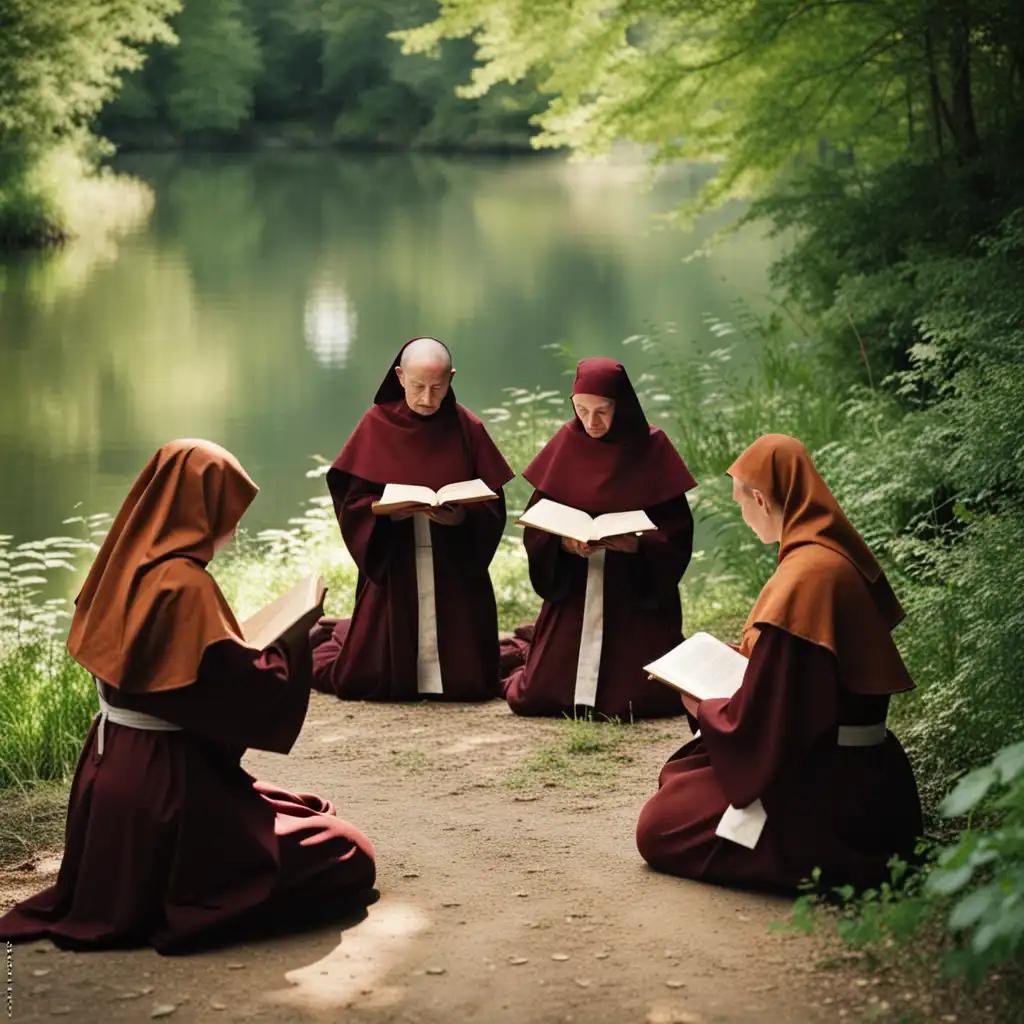
Monasticism refers to the way of life followed by monks or nuns in a monastery. Monasticism involves living a simple life focused on prayer, meditation, and service to others. Monks and nuns often take vows of poverty, chastity, and obedience, and spend their days in quiet contemplation, work, and study. Monasticism is found in many different religious traditions, including Christianity, Buddhism, and Hinduism. The word 'monasticism' can be used when talking about these practices and ways of life.
Asceticism and monasticism are related ideas, but they refer to different things.
Asceticism refers to a lifestyle of extreme self-discipline and self-denial, often undertaken for spiritual or religious reasons.
Monasticism refers specifically to a communal lifestyle of asceticism practiced by monks or nuns within a religious community.
Asceticism is a personal choice to live a life of self-discipline and self-denial, while monasticism is a communal lifestyle of asceticism practiced within a religious community.
Contemplative refers to a person who spends time in deep thought and reflection, often for spiritual or philosophical purposes, whereas monasticism refers to the practice of living a life of religious devotion and simplicity in a community called a monastery.
Contemplative can be applicable to anyone, anywhere, who wants to take the time to think and reflect on their life and purpose.
Devotion refers to a strong attachment or dedication to a particular religious belief or practice. It involves showing love, respect, and reverence towards a particular deity or spiritual path, and may involve regular prayer, meditation, or other religious practices.
Devotion can be practiced by anyone, regardless of whether they are part of a formal religious institution or not.
So, in short, devotion is a personal expression of faith, while monasticism is a more formal religious practice that involves joining a community of similarly committed individuals.
Solitude refers to the state of being alone or isolated from others, either by choice or circumstance.
Monasticism involves living in a religious community with a specific set of rules and practices, while solitude refers to being alone and seeking contemplation and reflection.
Monasticism is applicable to those who want to live in a religious community and dedicate their lives to religious devotion and service, while solitude is applicable to those who seek personal reflection and introspection on their own.
Spiritualism refers to a belief system that emphasizes the spiritual nature of reality and the possibility of communicating with spirits, angels, or other supernatural entities.
Monasticism is a specific way of living devoted to a particular religious or spiritual tradition, while spiritualism is a broader belief system that can be adopted by people in various ways and contexts.
Withdrawal refers to the act of stepping back or removing oneself from a particular situation or environment. This can be for a variety of reasons, such as to take a break, reflect on one's life, or seek solitude.
While monasticism involves a particular way of life and a commitment to a specific religious tradition, withdrawal can be more temporary and flexible, and doesn't necessarily involve a religious aspect.
The fact that monasticism preceded the identification of greed as a primal sin is an important reminder that our very ability to name sin is a theological achievement.
Theology is endlessly interesting in that you can study it without believing in anything. I do believe, but you don't have to. I got very caught up in the 11th-century monasticism and the Cistercians. My dissertation was about Aelred of Rievaulx and one of his books.