disarrange
verb disarrange
ˌdɪsəˈreɪndʒ
To mess up the order of something, to make things not neat or tidy
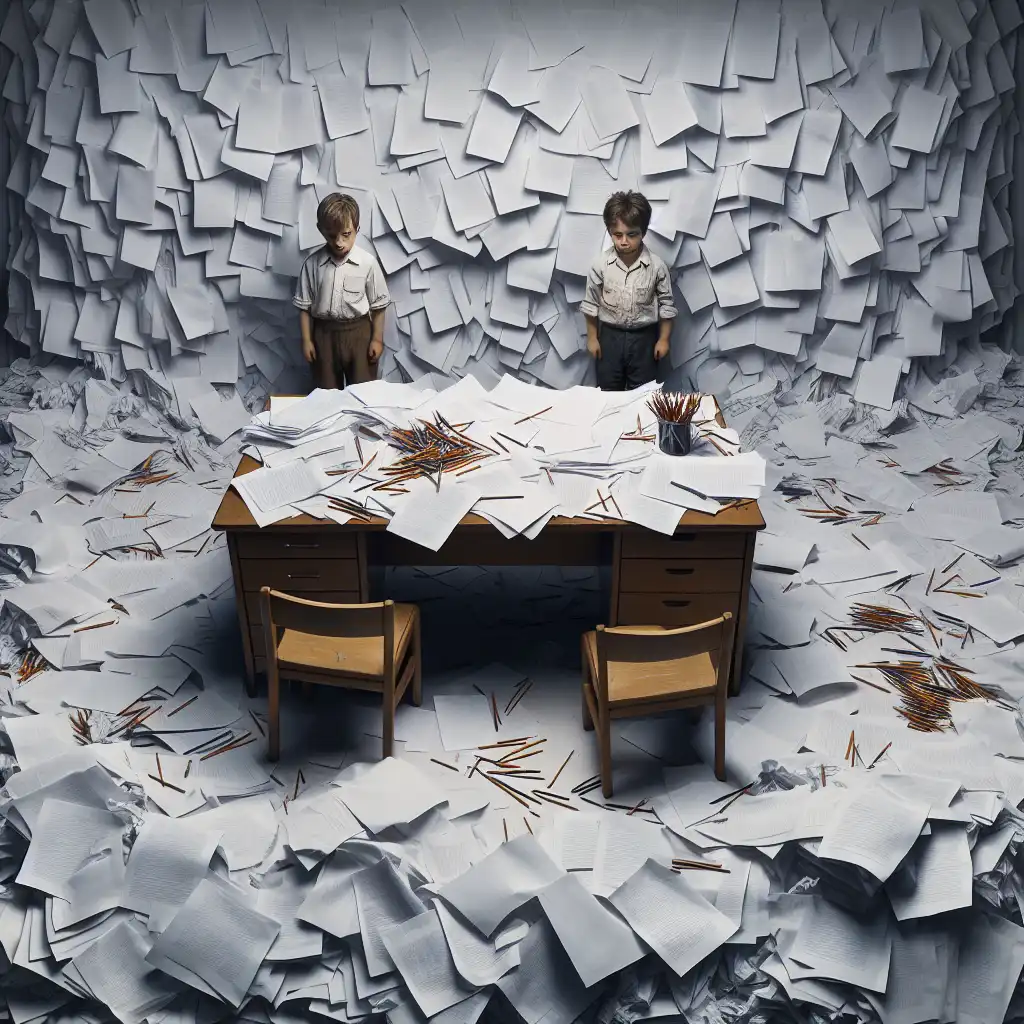
The kids disarranged the piles of papers on the desk.
disarrange
ˌdɪsəˈreɪndʒ
불러오는 중…
ˌdɪsəˈreɪndʒ
To mess up the order of something, to make things not neat or tidy
The kids disarranged the piles of papers on the desk.
오디오를 불러오지 못했어요. 잠시 후 다시 시도해 주세요.
The word 'disarrange' means to cause things or objects to be out of order or disorganized. It is used when talking about things that were once arranged in a particular order or position, but have been now disturbed or unsettled. For example, if you accidentally knock over a stack of books and they fall out of place, you can say you've 'disarranged' them. Similarly, if you've neatly organized your closet and someone comes in and rummages through it, they've 'disarranged' your clothes. It's important to note that 'disarrange' is not a commonly used word and you might use simpler words like 'mess up', 'disorganize', or 'scramble' instead.
Disarrange and disorder are both verbs that relate to the state of being messy or not arranged properly.
Disorder is a more general term that can refer to a variety of different situations where things are not arranged properly.
It can relate to physical objects, as in a messy room or a disorderly desk, or it can refer to a lack of order or structure in other areas of life, such as social behavior, a political system or an ecosystem.
Disorder can also refer to a medical condition or psychiatric disorder, such as attention deficit hyperactivity disorder (ADHD) or post-traumatic stress disorder (PTSD).
Disarrange specifically implies making something messy by moving things around or changing their positions, while disorder is a general term that describes any situation where things are not arranged properly.
단어 열기: Disorder →The main difference between disarrange and jumble is their intensity. Disarrange is when you put things in the wrong order or mess up the way they were arranged before.
Jumble refers to a chaotic mess or mixture of things. Jumbling is often accidental or unintended. For example, a pile of clothes thrown together in a laundry basket would be a jumble.
Both words can be used in similar situations, but disarrange implies that there was an original order that was disrupted, while jumble implies that the items were always mixed up or in disorder.
단어 열기: Jumble →The phrase mess up means to make something messy or untidy.
It can be used in a broader sense than disarrange, and can apply to situations that don't necessarily involve things being in a specific order before they are messed up.
For example, if you spill food all over the floor, you have messed up the space.
Disarrange is more specific to disrupting an order, while mess up is more generally about making something untidy or disorderly.
단어 열기: Mess up →The words disarrange and mix up both have a similar meaning of making something disorderly or confusing.
However, disarrange implies a deliberate act of putting things out of order, whereas mix up can be accidental or unintentional.
For example, if you deliberately move papers on someone's desk, you would have disarranged their workspace. If you accidentally put two files in the wrong folder, you have mixed them up.
The use of disarrange is more specific and intentional, while mix up is broader and can include accidental actions.
단어 열기: Mix up →Disarrange means to disturb or mess up the order or arrangement of something, while the word muddle means to confuse or mix up things.
Muddle is used when things are mixed up or confused accidentally, often due to lack of attention or poor organization.
For instance, if someone is given too many tasks at once and feels overwhelmed, they might muddle the instructions and make mistakes.
Disarrange has a more intentional connotation, while muddle connotes a more accidental and confused state.
단어 열기: Muddle →Scatter means to spread out things in a random or disorganized manner. For example, if you throw a handful of marbles on the floor, they will scatter across the room.
Both words are used to describe things that are in a state of disarray, but disarrange emphasizes the act of disrupting an existing order, while scatter emphasizes the result of things being spread out in an unorganized way.
단어 열기: Scatter →Scramble means to mix things up in a haphazard or chaotic way.
It is used when referring to something that needs to be mixed together, often in cooking or in a sport. For example, you might say "we need to scramble the eggs for breakfast" or "the players scrambled for the loose ball on the basketball court.".
단어 열기: Scramble →Settle means to calm something down or make it peaceful.
It is used when you want to describe the action of bringing something into order or harmony. For example, if two people are arguing and then they come to an agreement, they have settled the argument.
So the main difference between disarrange and settle is that disarrange is used when you want to describe something becoming disorganized or chaotic, while settle is used when you want to describe something becoming calm or peaceful.
단어 열기: Settle →