
assume
verb assume
əˈsuːm
To think something is true without having proof or certainty.
He assumed she would be at the meeting, so he was surprised when she didn't show up.
assume
əˈsuːm
Loading…
əˈsuːm
To think something is true without having proof or certainty.
He assumed she would be at the meeting, so he was surprised when she didn't show up.

əˈsuːm
To take on or begin to have (a quality, appearance, or extent).
He assumed a look of surprise when he heard the news.

əˈsuːm
To take on (a job or duty).
When the boss retired, his daughter assumed the responsibility of managing the company.

əˈsuːm
To pretend to have or be; to put on
To blend in at the party, she assumed an air of sophistication.
əˈsuːm
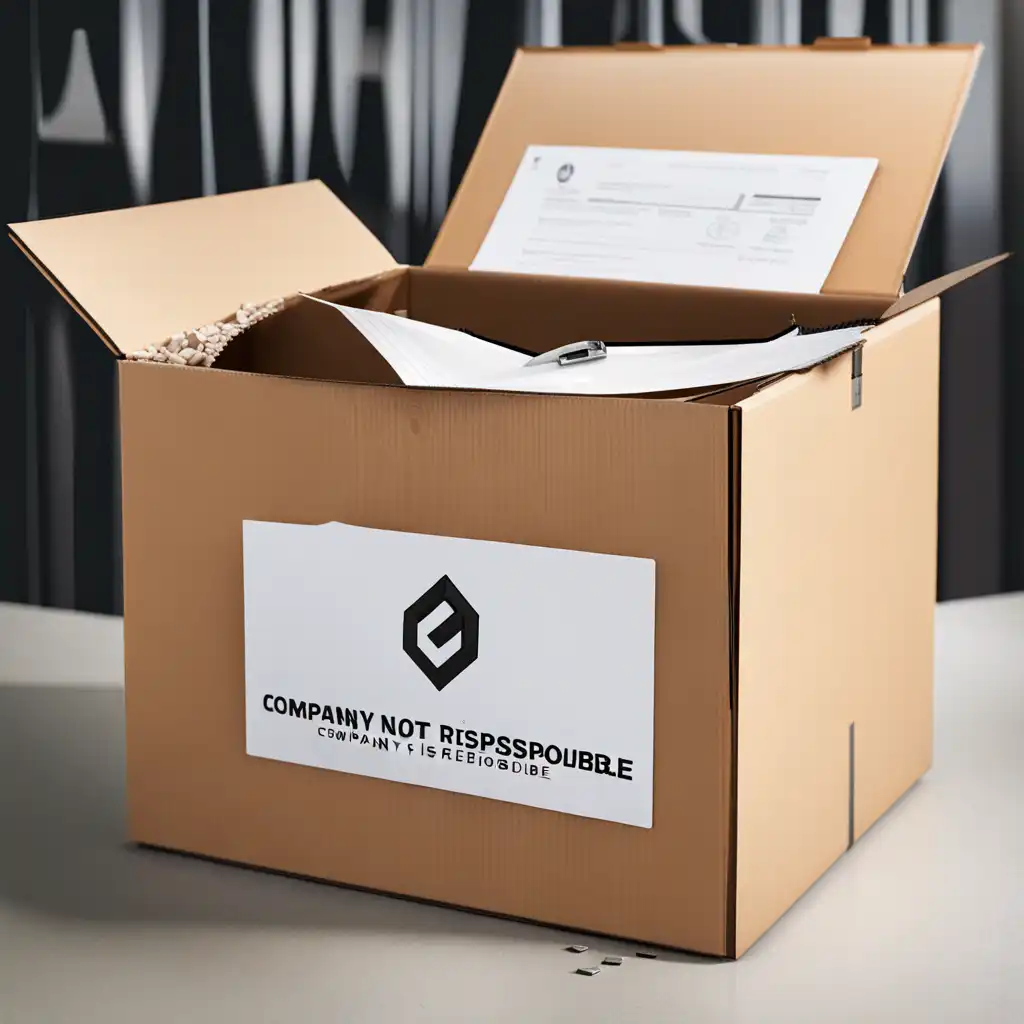
To accept without question or objection, especially in a legal context
The company assumes no responsibility for items lost or damaged in transit.
Audio could not be loaded. Please try again later.
The word "assume" means to believe or guess something without having all the evidence or information to support it. It's important to use this word carefully because it can lead to misunderstandings. For example, you might assume that your friend is angry with you, but it could be that they are just having a bad day. It's better to ask them how they are feeling to be sure. You can use the word "assume" in situations where you are making a guess or jumping to a conclusion, but it's always a good idea to check with others and gather more facts before acting on your assumptions.
Conjecture is similar to assume, but it leans more towards making an educated guess based on incomplete evidence.
In other words, someone might conjecture about something when they don't have enough information to make a solid conclusion.
Using the same example as before, if a meteorologist stated his or her conjecture about whether it was going to rain or not, they would be providing their best guess based on the limited information they had - but it would still just be a guess.
Open word: Conjecture →Deduce means to arrive at a conclusion based on reason or logical thinking. It’s when you use information that you already know to come up with a new idea, based on evidence.
For example, if you deduce that someone has been smoking because you can smell the smoke and see a cigarette packet nearby, you’re using your reasoning skills to put two and two together.
Assume is more about predicting or guessing something without much evidence, while deduce is about using evidence to arrive at a logical conclusion.
Open word: Deduce →However, assume typically implies taking for granted something that could be incorrect, while guess is more about making a prediction based on limited information.
For example, when you assume something, you are making an educated guess, but you do not have all the facts to confirm whether what you assumed is accurate.
Guessing involves making an estimation based on projecting possibilities.
You might assume that the traffic will be heavy during rush hour but you can only guess what time you will arrive home.
You should use assume when you are unsure, but choose guess when you need to make a prediction based on limited information.
Open word: Guess →Infer means to come to a conclusion based on evidence, clues, or reasoning. It involves using information to make an educated guess or deduction.
For example, one might infer that someone is angry based on their facial expression, body language, and tone of voice.
Assume is used when we presume something without evidence, while infer is used when we use evidence and reasoning to come to a conclusion.
Open word: Infer →Assume and postulate are both verbs that describe the act of proposing something to be true without necessarily having proof for it.
Postulate is used when we propose something to be true based on logical reasoning or hypothesis. For example, "Scientists postulate that dark matter exists because of its gravitational effects even though it cannot be directly observed." When we postulate, we base our thinking on a reasonable and rational hypothesis.
Assume is used when accepting something to be true without necessarily having proof, while postulate is used when proposing something to be true based on logical reasoning or hypothesis.
Open word: Postulate →Assume and presume are similar in meaning but are used in different situations.
Presume means to make an assumption based on probability, possibility, or available evidence. For example, "He presumed that she would be late for the meeting since she always arrives late.".
Assume is used when there is no reason to believe otherwise, while presume is used when there is some evidence or likelihood to support the assumption.
Open word: Presume →Reckon is similar in that it also implies a belief or estimation but usually implies a greater degree of certainty or confidence.
In some parts of the world, it can be used as a synonym for "think" or "believe." For example, "I reckon it's going to rain today" implies a higher degree of confidence in the prediction.
Open word: Reckon →Assume means to believe something without any proof or evidence, while speculate means to make an educated guess based on available information.
If someone says "I speculate that it's going to rain today because I saw a lot of clouds this morning," they are making an educated guess based on what they have observed.
Assume is applicable when someone wants to make a statement without having any evidence or proof to back it up. Speculate is applicable when someone wants to make an educated guess based on the information available to them.
Open word: Speculate →Assume and suppose are similar words with slight differences in meaning.
Suppose means to consider something as a possibility or to imagine something. It's more of a hypothetical scenario. For example, "Suppose we get lost, what would you do?".
Assume is used when you're making an assumption based on incomplete information, while suppose is used when you're considering a hypothetical situation.
Open word: Suppose →Theorize means to form a theory or explanation based on observations and research. It is a more scientific approach to understanding something.
An example of theorizing would be saying "I theorize that the reason plants grow towards the sun is because they need sunlight to do photosynthesis" after conducting experiments and research to support the theory.
Theorize is applicable in situations when a hypothesis or explanation is needed to explain observations or data, like in scientific research or experiments.
Open word: Theorize →It's just sitting there ready to obliterate anything that becomes a threat. Or maybe they're not that intelligent, or perhaps the evolution of an intelligence capable of creating sophisticated technology is far rarer than we've assumed.
Watch on YouTube ↗Men can only be happy when they do not assume that the object of life is happiness.
then there is no need to go looking elsewhere, assuming that there is such a thing as a perfect marriage that will inoculate us against wanderlust. But what if passion has a finite shelf life?
Watch on YouTube ↗War on the other hand is such a terrible thing, that no man, especially a Christian man, has the right to assume the responsibility of starting it.
into cooler deeper water with a better supply of oxygen. A hefty male also assumes the role of guard dog.
Watch on YouTube ↗A chief is a man who assumes responsibility. He says 'I was beaten', he does not say 'My men were beaten.
It must orbit the Sun. Is not a moon and has enough mass and gravitational pull to assume a round shape. However it was the fourth characteristic that compromised Pluto's status. It's inability to clear it's orbit of debris.
Watch on YouTube ↗I learned a long time ago that advice is a quick trip to nowhere. It's the commitment that only you can make in yourself, the responsibility to assume control of yourself.
now we have one last one this is the most important one and it really is important for many reasons it's prepared for impact stay with me prepare for impact okay you have to assume people are going to run into you in driving we
Watch on YouTube ↗Originally, theater was my life. It was what I assumed I'd spend my working life doing - if I was lucky. Then along came movies.
At the Passover meal, every item on the menu symbolizes an aspect of the escape from slavery. The importance of growing up is emphasized when young people reach the age of bar and bat mitzvah, ceremonies during which they assume responsibility for their actions and celebrate the weaving of their own lives
Watch on YouTube ↗I'm not the world's best mother, though kids always assume I must be.
you might give up, assuming you've discovered something you're not very good at. But if you have a growth mindset and think your abilities can improve, a challenge is an opportunity to learn and grow. Neuroscience supports the growth mindset.
Watch on YouTube ↗I don't think anyone should assume anything about someone else's life.
So you ask just how small are atoms? To understand this let's ask this How many atoms are in a grapefruit? Well let's assume that the grapefruit is made up of only nitrogen atoms, which isn't at all true but there are nitrogen atoms in a grapefruit. To help you visualize this let's blow up each of the atoms
Watch on YouTube ↗I believe education is much more important than we assume.
Because Nobel's name was tied to inventions used in the war industry, many have assumed that he created the peace prize out of regret. However this is all speculation as he never expressed any such sentiments, and his inventions were also used for constructive purposes.
Watch on YouTube ↗Social media, unfortunately, just makes it a lot easier to be jealous. It sets up false expectations of reality, so it's really easy to look at someone else's life online and assume that they have everything going great for them and that their life is perfect.
and medicine made great strides long before we understood the roles of bacteria and viruses. That said better theories often lead to exciting new discoveries that were unimaginable under the old way of thinking. Nor should we assume all of our current scientific theories
Watch on YouTube ↗A responsible choice is a choice that creates consequences that you are willing to assume responsibility for.