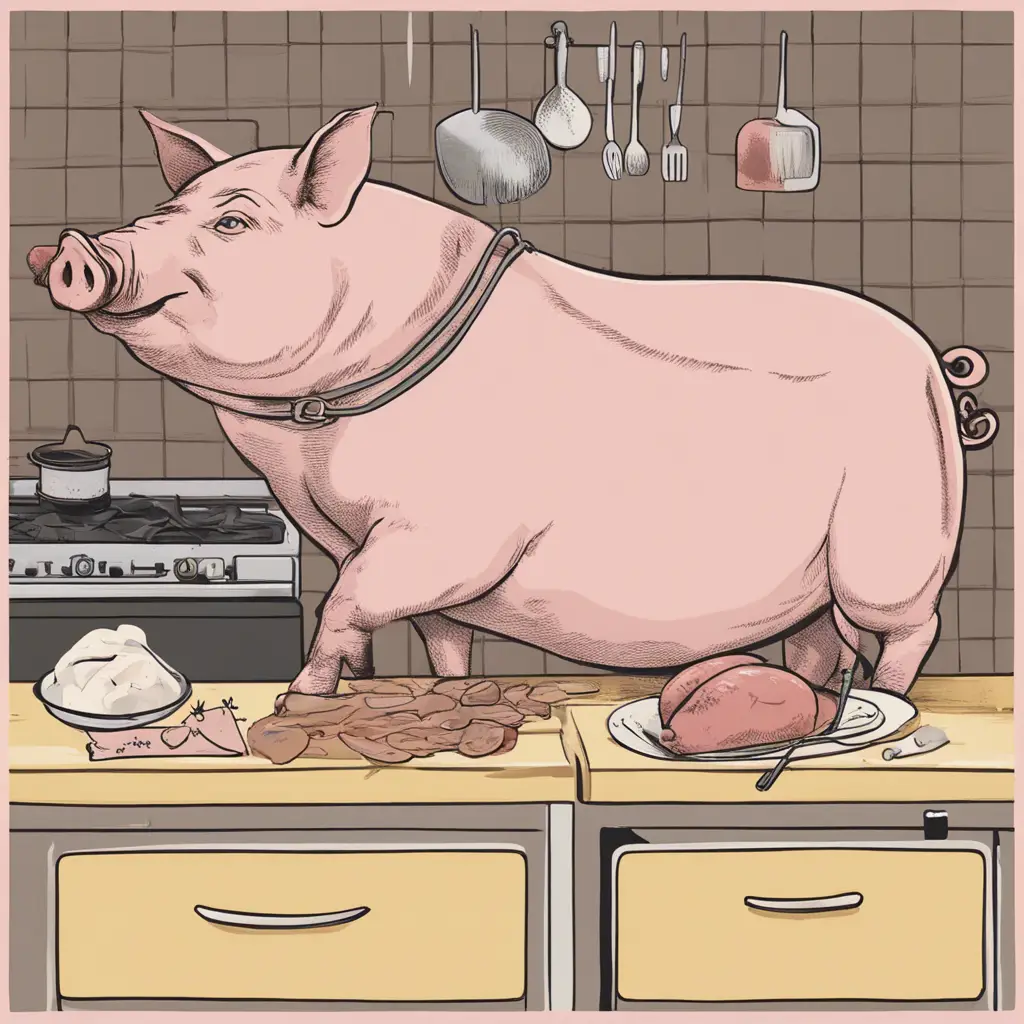
lard
noun lard
lɑːrd
A type of fat coming from pigs used for cooking.
She used lard to fry the potatoes.
lard
lɑːrd
Cargando…
lɑːrd
A type of fat coming from pigs used for cooking.
She used lard to fry the potatoes.
lɑːrd
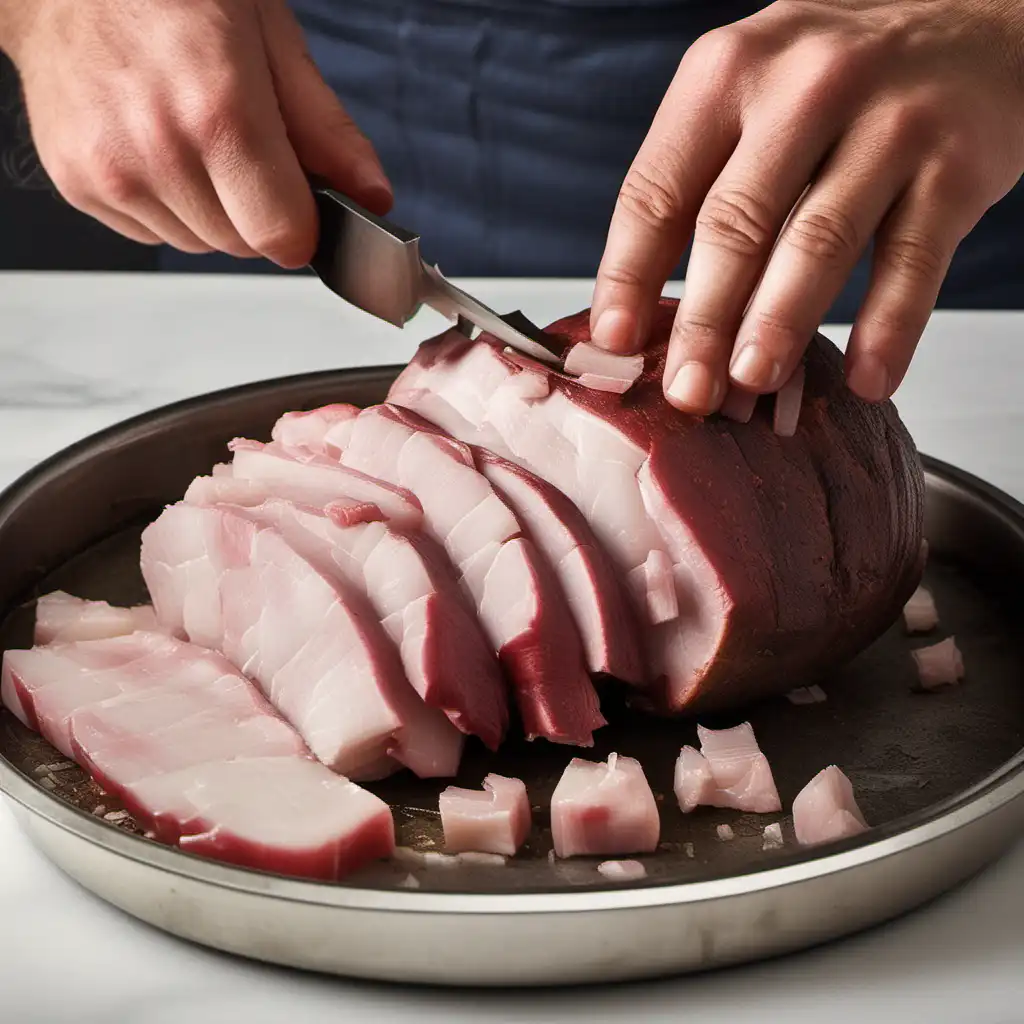
To put lard on or in food.
She larded the roast to add flavor.

lɑːrd
To add something extra, usually more than necessary or desired.
He larded his speech with unnecessary details.
No se pudo cargar el audio. Inténtalo de nuevo más tarde.
Lard is a type of fat that is obtained from pigs. It is usually white and solid at room temperature. It is commonly used in cooking to add flavor and moisture to food. Lard can be used to fry foods, as a replacement for butter in baking, or as a spread on bread. It is often used in traditional dishes like pies, pastries, and sausages. When cooking with lard, it is important to use it in moderation, as it is high in saturated fats.
Butter and lard are both types of fats used in cooking, but they come from different sources and have different properties.
Butter is made from the cream of cow's milk. It is a solid at room temperature but softens easily when heated. It has a creamy, rich flavor and is often used in baked goods, sauces, and as a spread.
Lard is made from pig fat. It is also a solid at room temperature but has a higher melting point than butter, making it better for high-heat cooking like frying.
The choice of whether to use butter or lard often comes down to personal preference or cultural tradition in cooking.
However, for those concerned about health, it's worth noting that while butter is high in saturated fat, lard is even higher and can increase the risk of heart disease.
Abrir palabra: Butter →Both fat and lard are types of animal fat, but they are different in their source and properties.
Fat can come from many different animals and parts of the animal, and can be solid or liquid at room temperature. Fat is commonly used in cooking and baking, and is also found in many foods.
Lard specifically refers to fat that comes from the fatty tissue of pigs. It is a solid fat at room temperature and has a distinct flavor that is often used in cooking and baking, particularly in pastry and pie crusts.
Fat is a more general term, while lard specifically refers to pig fat. Both can be used in cooking and baking, but lard is more commonly associated with certain traditional dishes.
Abrir palabra: Fat →Ghee is a form of clarified butter that is commonly used in Indian cuisine. It is made by melting butter and separating the milk solids from the liquid fat.
Ghee is commonly used in Indian dishes like curries and rotis, while lard is used in Western cuisine for making pie crusts, frying foods, and in baking.
Ghee is a type of clarified butter used mostly in Indian cuisine, while lard is a type of fat derived from pig fat used mostly in Western cuisine.
Abrir palabra: Ghee →Grease and lard are both fats used in cooking, but they come from different sources. Grease comes from meat that has been cooked and rendered, while lard comes from the fat of pigs.
Grease is typically used for cooking meats, frying foods, and making things like gravy. It has a strong flavor and is often used to add flavor to dishes.
Lard is often used in baking and pastry making. It has a more neutral flavor compared to grease and helps to make flaky baked goods like pie crusts and biscuits.
Overall, both grease and lard have their own unique applications in cooking and can be used interchangeably depending on the recipe and desired outcome.
Abrir palabra: Grease →Margarine is a butter substitute made from vegetable oil.
It is often used in place of butter in baking and cooking. Unlike lard, margarine is soft and spreadable at room temperature.
Both lard and margarine can be used in cooking and baking, but they have different applications. Lard is best used in savory dishes that can handle its strong flavor, while margarine is more commonly used as a butter substitute in a variety of dishes.
Abrir palabra: Margarine →Lard and oil are both fats, but lard is a solid fat derived from the fat of pigs, while oil is a liquid fat, usually derived from plants or seeds.
Oil is used for cooking and also as a salad dressing or in other cold dishes. There are many types of oils, including vegetable, olive, canola, and peanut oil, each with their own unique flavor and cooking properties.
Lard is a solid fat from pigs, used for cooking and baking at high temperatures, while oil is a liquid fat from plants, used for cooking, salad dressings, and cold dishes.
Abrir palabra: Oil →Shorten refers to the process of reducing the length of gluten strands in dough or batter. This results in a product that is more tender and crumbly.
Shortening can be achieved through the use of various fats, including lard, butter, and vegetable shortening.
Lard is a specific type of fat that is used for flavor and moisture, while shortening is a technique used to create a tender and crumbly texture in baked goods.
Abrir palabra: Shorten →Lard and suet both come from animal fat, but they come from different parts of the animal and are used in different ways.
Lard is the rendered fat from the abdomen of a pig, and is commonly used in cooking and baking. Suet is the hard fat from around the kidneys of cows and sheep.
It is often used in recipes for making traditional British puddings and pastry. Lard is used in recipes that require a softer fat, like frying or baking, while suet is used in recipes that require a harder fat like puddings or crusts.
Abrir palabra: Suet →Lard and tallow are both types of fat that come from animals, but they come from different parts of the animal and have different properties that make them suited to different uses.
Tallow is the fat that comes from cattle or sheep, and is typically more solid than lard.
Tallow is also used in some traditional dishes, like Scottish haggis.
Lard is good for cooking and baking, whereas tallow is better for soap and candle-making.
Abrir palabra: Tallow →And then right beyond -- there's usually a little chain there -- right beyond they would see the kids being tutored. This is a field trip going on. And so they would be shopping, and they might be more likely to buy some lard, or millet for their parrot or you know a hook, or hook protector for nighttime all of these things we sell.
Ver en YouTube ↗We lived near a supermarket, and whatever they threw away, we would get it, and my mother would make soup. Or she would get a big can of lard, a big can of meal, a big can of flour, a big can of beans, and fix the same meal for months.
them at this minute I'll show you what's gonna happen is that we're evaporating all the moisture out we're cooking on the other chef each term is we're sweating the onions nothing more than cooking the onions and then the lard on
Ver en YouTube ↗They lard their lean books with the fat of others work.
After my triple bypass I got my sheet of healthy and unhealthy foods and I was like, croissants!?! Literally as bad as lard.
Vegetarians are doomed in the Chilean street-food scene, though if they are willing to ingest small quantities of lard, they can enjoy the ever-popular squash, salt and lard biscuits known as sopaipillas.
Honestly, I'll take a little lard over the 20 chemicals and ingredients I can't pronounce in some store-bought tortillas.
We never had a bathtub. Mom would bathe me in the wooden or tin washtub in the kitchen, or in a big lard can.
To cause the face to appear in a mass of flame make use of the following: mix together thoroughly petroleum, lard, mutton tallow and quick lime. Distill this over a charcoal fire, and the liquid which results can be burned on the face without harm.
I can still memory - taste the fresh buttermilk pancakes and hot buttermilk biscuits - both made with lard! - that were cooked on the top, or in the oven, of that ancient iron stove.
I grew up in Harlem. My grandmother was one of the best cooks around, but the first thing she did on Sunday mornings when she started cooking a daylong meal was to take a big block of lard from the back of the refrigerator and throw it into the pan. I know how Hispanics buy their food, and it is not always nutritious.